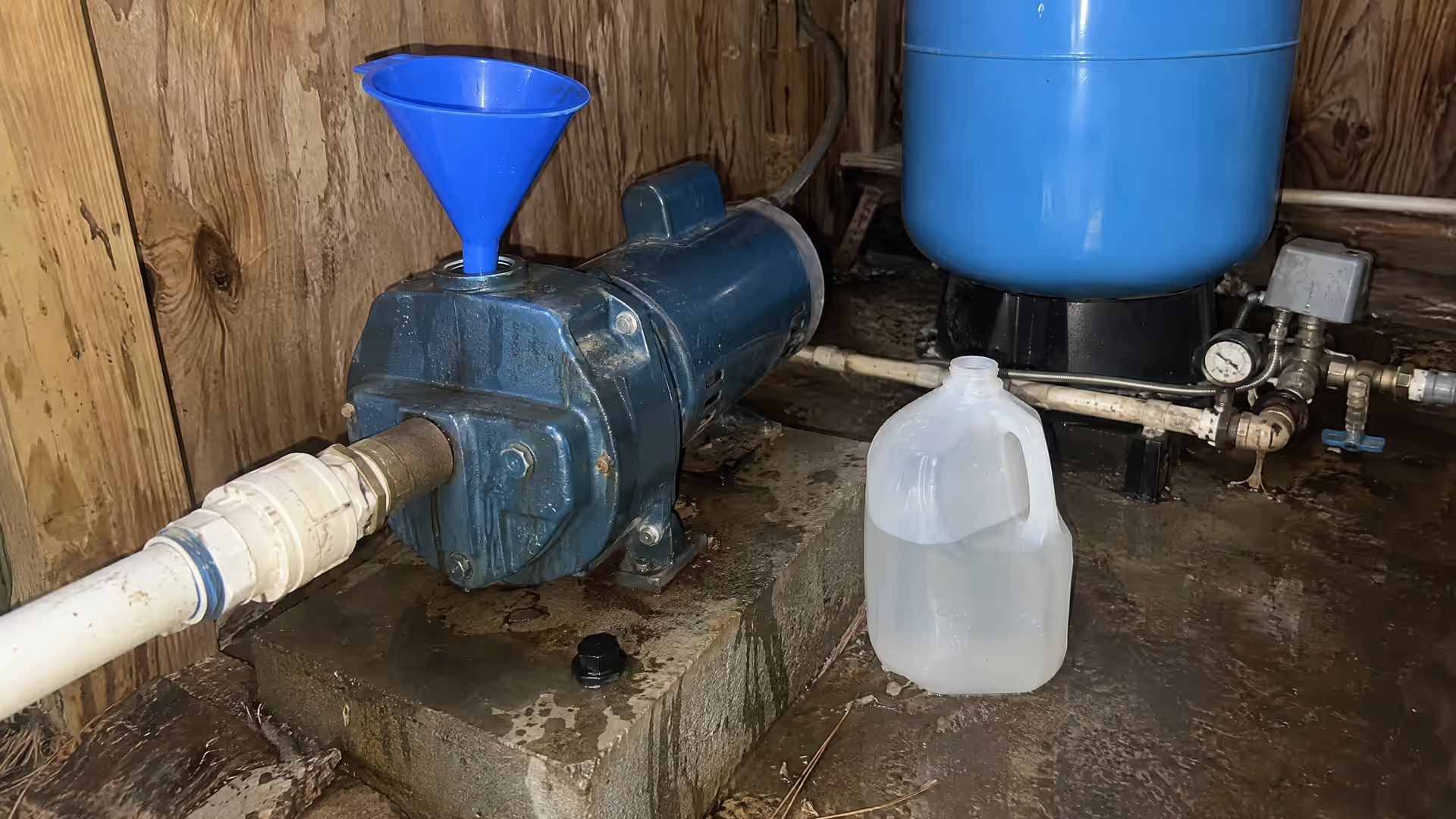
A pump that will not prime is almost never a broken pump. It is a suction line that cannot hold a vacuum. At Fayetteville Well Pump Repair, we vacuum-test your line before we refill anything, because priming it without finding the leak means it drains again in days and you pay twice for one visit. Jet pump pricing sits on our well pump cost page.
Only surface pumps prime. A submersible sits underwater and cannot lose prime. So a priming complaint narrows your system straight to a jet or shallow well pump in a well house, crawlspace or basement. That is worth saying out loud, because it takes the most expensive possible diagnosis off the table before we start.
These pumps lift water by suction, and suction stops working past about 25 ft no matter how big the motor is. Everything above that line has to hold a vacuum. Every threaded joint, the foot valve at the bottom, and the pump housing itself. A pinhole that would only weep a drop under pressure will pull air steadily under vacuum, and air is what breaks your prime.
What is actually wrong
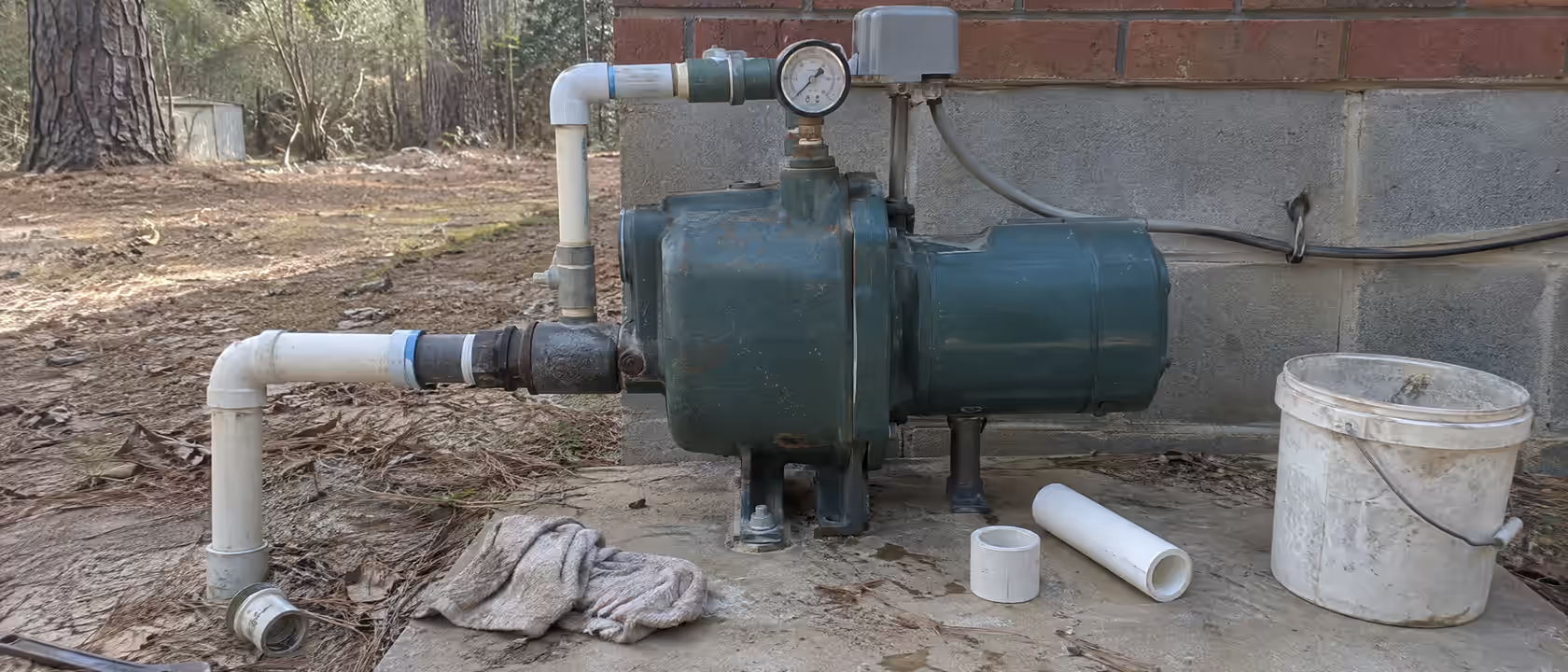
Your foot valve stopped holding
The foot valve is a one-way valve at the bottom of your pipe. It keeps the pipe full between cycles. Sand scores a plastic seat until it stops sealing, and the water drains back into the well. Your pump wakes up to an empty pipe. We fit a Simmons brass foot valve on a sandy well, because brass holds its seat against the same grit that finishes plastic in a season.
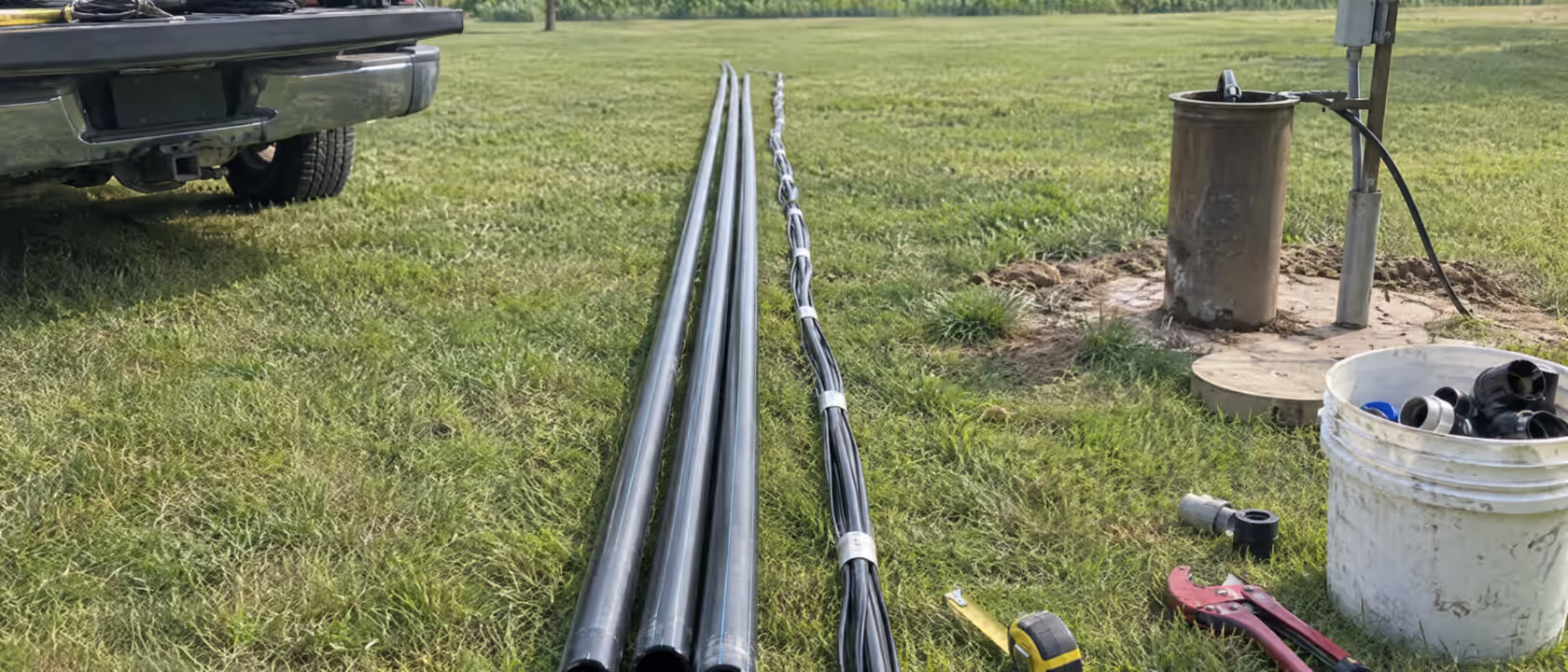
A joint on the suction side is drawing air
Every fitting between the foot valve and your pump is under vacuum while it runs. A joint that shows nothing when the system is pressurized will pull air nonstop in that condition. This is the fault that gets missed most often. We run a vacuum-hold test on the line, which is the only reliable way to see it.
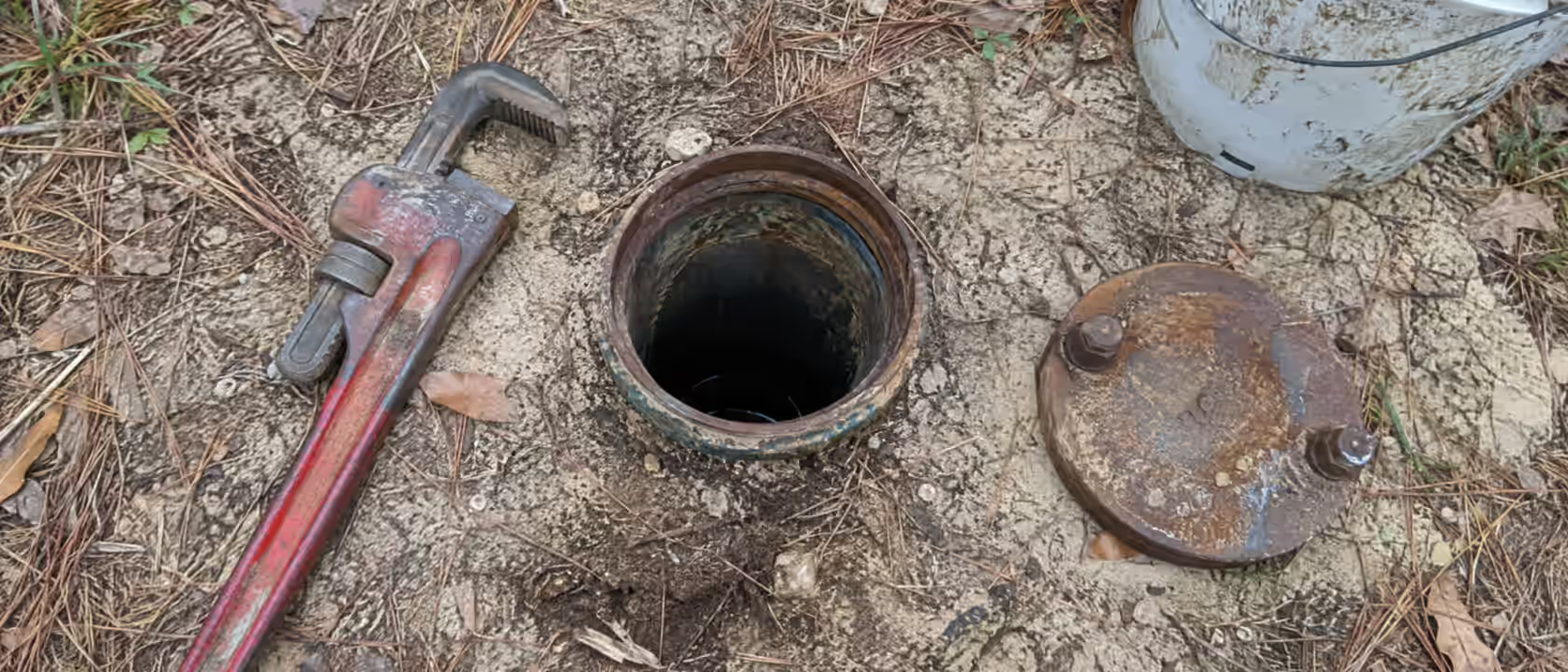
Your water level dropped past the suction limit
A Sta-Rite or Flint & Walling jet that ran fine for twenty years cannot reach water below 25 ft. Nothing broke. Your system just ran past the physics it was built around. We convert you to a deep well rather than selling another repair. Shallow well pump service covers where that line sits.
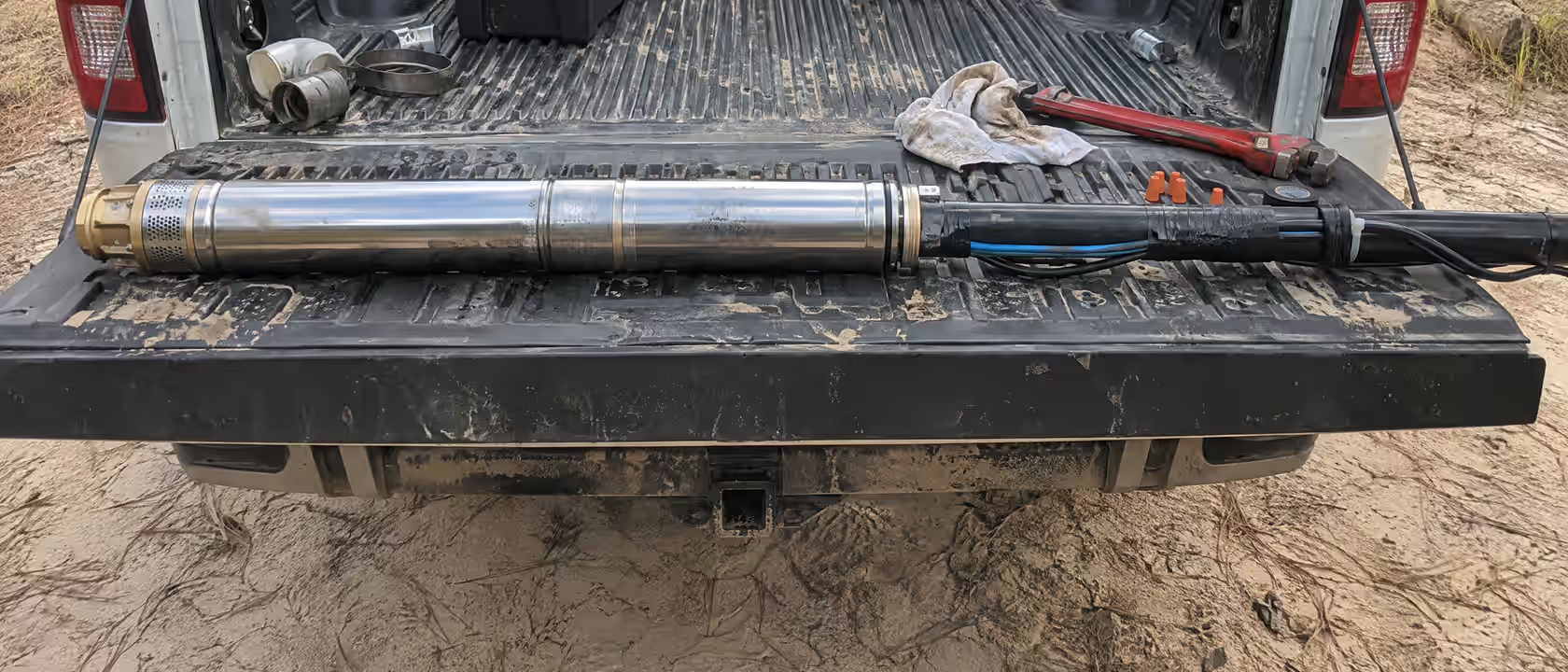
The impeller or the shaft seal wore out
A worn impeller cannot pull the vacuum needed to lift water. A failed shaft seal lets air in at the pump itself. Both look the same to you: the pump primes, then loses it right away. On a pump already past its service life we recommend a Goulds or Red Lion replacement rather than paying for another rebuild.
How we work it out
-
Confirm it is a surface pump
We confirm what kind of pump you have first. A submersible cannot lose prime. Establishing the type takes one look and removes the entire deep-well fault tree from your estimate.
-
Vacuum test the suction line
We put your line under vacuum and watch whether it holds. A line that leaks down has the fault. Refilling it before finding that leak solves nothing.
-
Measure the lift
We check your water level against the pump height to see whether 25 ft has been passed. Past that ceiling no jet pump of any size will hold prime.
-
Replace the seat, then prime
We replace the foot valve first, then the joints, then prime and watch a full cycle. Priming first and diagnosing later is how the same call gets made three times in a month.
Why repeat priming is worth stopping properly
Running dry is what kills the pump
A jet pump running without water has no cooling and no lubrication at the seal. A few minutes is survivable. An afternoon is not. A system that loses prime while your family is out is destroying the pump, not just inconveniencing you, and that turns a $150 valve into a $600 to $1,400 replacement.
An open suction line is an open route
A leak that lets air in where the pipe passes through a pit or a poorly sealed casing top can let surface water in too. The county health department is where a bacteria sample goes. It is worth taking one after any repair that opened the suction side below ground.
The well record settles the depth argument
Water level and total depth on your well record show whether a jet pump was ever right for the property. If the record puts the water well past 25 ft, the fault is a design decision rather than a part, and no valve replacement fixes it.
Numbers worth knowing
| Suction ceiling | About 25 ft |
|---|---|
| Affected pump types | Jet and shallow well |
| Most common cause | Foot valve seat |
| Decisive test | Vacuum hold on suction |
| Valve and joint repair | $150 to $500 |
| Jet pump replacement | $600 to $1,400 installed |
Well pump work in Fayetteville runs $150 to $3,500 for most homes. What decides the number is whether the fault sits outside the well or in it, and how deep the pump hangs.
| What the job is | Typical range | Unit |
|---|---|---|
| External component: pressure switch, control box, wiring, primingThe pump itself is fine. Cheapest outcome and the most common one. | $150 – $500 | installed |
| Pressure tank replacementTank, tank tee, gauge, switch and fittings, sized on drawdown. A waterlogged tank is what makes a pump short-cycle. | $1,000 – $2,300 | installed |
| Shallow well or jet pump, to about 25 ftCommon on Coastal Plain sand wells, where the water table sits high enough that a jet pump still works. | $600 – $1,400 | installed |
| Deep submersible pump, well 100 to 200 ftTypical Fayetteville well depth. Price covers pulling the old pump, drop pipe and wire. | $1,500 – $2,500 | installed |
| Deep submersible pump, well 300 to 400 ft or higher horsepowerDepth drives horsepower and hoist labor together. Every extra 100 ft adds roughly $500 to $1,000 in pipe, wire and time. | $2,800 – $5,500 | installed |
| Full system replacement: pump, tank, wiringWorth doing together when the pump is original and the tank is the same age. | $3,500 – $6,000 | installed |
What moves the number
- Every additional 100 ft of well depth+$500 to $1,000
- Emergency, weekend or after-hours call+25% to 50%
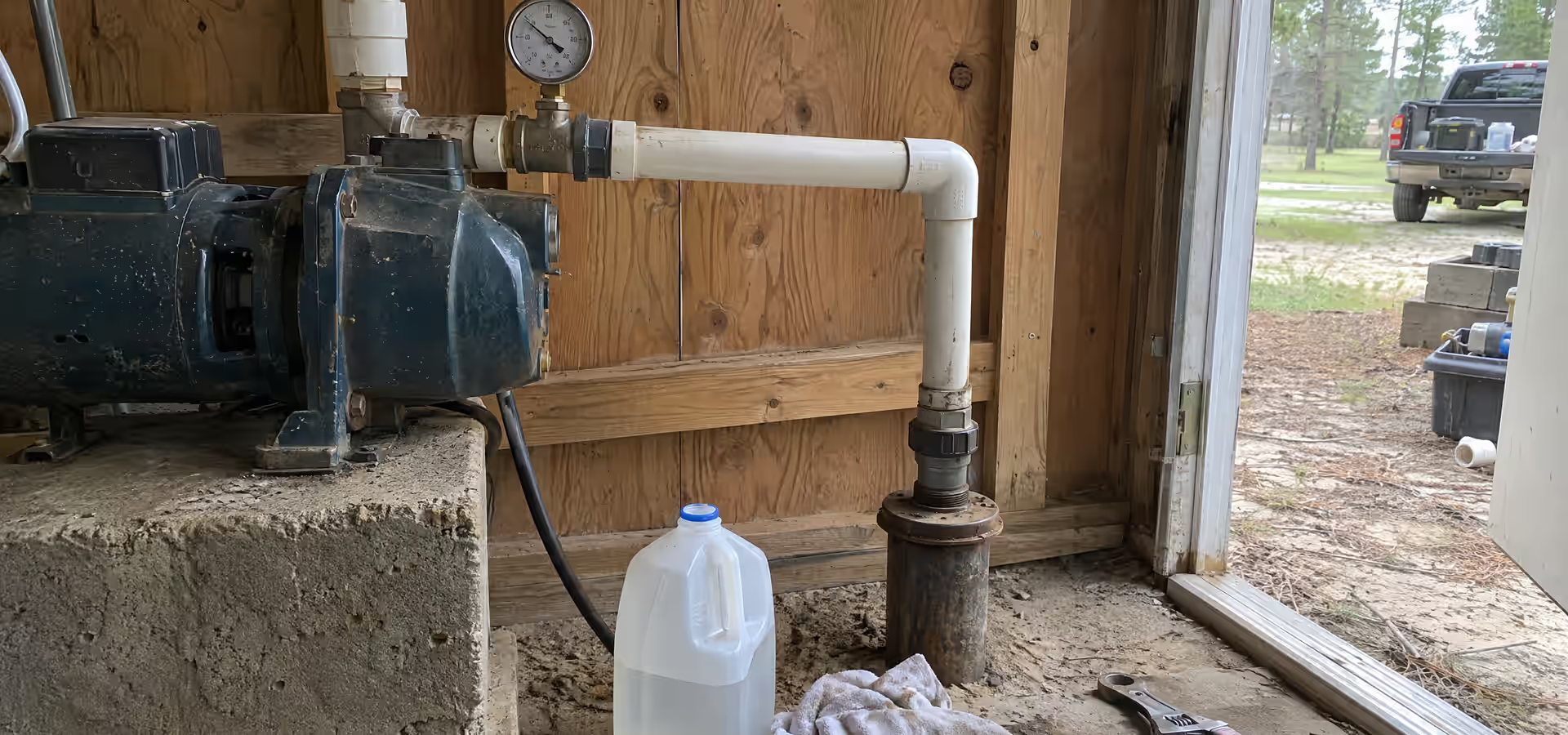
Anyone can prime a pump. The bill for doing it without finding the leak arrives the following week, with the same pump on it.Cumberland County, NC
Who we work for
- Well and Pump Service for Farms Stock water, wash-down, irrigation and a farmhouse on one well. Sized on sustained draw, not acreage.
- Well Service for Mobile Home Parks Shared supply with tenants attached. Past 15 connections it stops being a private well at all.
- Well Service for Churches and Camps Idle most of the week, then a full building. The hardest duty cycle in private water supply.
No water this morning?
Tell us what the pump is doing and we will tell you what it costs to put right.
Questions we get asked
Why does my well pump keep losing prime?
2 faults cause almost all of it: a foot valve that no longer holds the column, or a joint on the suction side drawing air. Both are invisible under pressure and obvious under vacuum.
How far can a jet pump lift water?
25 ft is the practical suction ceiling, with 34 ft the theoretical limit at sea level. Beyond that no amount of horsepower will hold prime, and the system needs a deep-well arrangement instead.
Can I keep priming it myself?
1 or 2 times is reasonable while a repair is arranged. Beyond that the pump is running dry between primes, and dry running removes the cooling and lubrication the seal depends on.
How much does it cost to fix a pump that will not prime?
$150 to $500 covers a foot valve, a check valve or resealing the suction joints, which resolves most of these. A replacement jet pump runs $600 to $1,400 installed.
Who fixes a well pump that will not prime near me?
Fayetteville Well Pump Repair services jet and shallow well pumps across Fayetteville and Cumberland County, vacuum-testing the suction line before refilling it so the same fault does not return.
Does a submersible pump need priming?
No. A submersible sits below the water line and is always flooded, so a priming complaint always means a surface pump and never means the expensive kind of repair.
Repeat priming is the clearest example of a repair that treats the visible half of a fault. The water goes back in, the pump runs, and the leak that emptied it is still open. A vacuum test takes minutes and settles whether this is a valve, a joint or a depth problem. Where the answer is depth, submersible replacement is the conversion that ends it permanently, and jet pump repair covers the surface options.