Every treatment decision on a well starts with a lab result, and without one you are guessing at equipment that costs $595 for a kitchen-tap unit or $4,500 for a whole-house system. Fayetteville Well Pump Repair pulls samples across Cumberland County year round, and a full panel runs $50 to $200.
Nobody regulates private wells the way they regulate city water, so nobody tests your water unless you arrange it. Around here we find the same short list: low pH, dissolved iron, hydrogen sulfide, which is the rotten egg smell, and coliform bacteria after heavy rain. Each one needs different equipment in a specific order, and installing them out of order wastes your money.
All of it comes from the ground. Sandy soil with a shallow water table lets surface water reach your well far faster than fractured Piedmont rock does. That is why bacteria hits climb here after long rain. The same sand is rich in iron and the water runs acidic, so orange stains and blue-green copper stains are routine.
A positive bacteria result is sometimes a wellhead problem, which makes it a repair job, and we say so before selling you a filter.
What is actually wrong
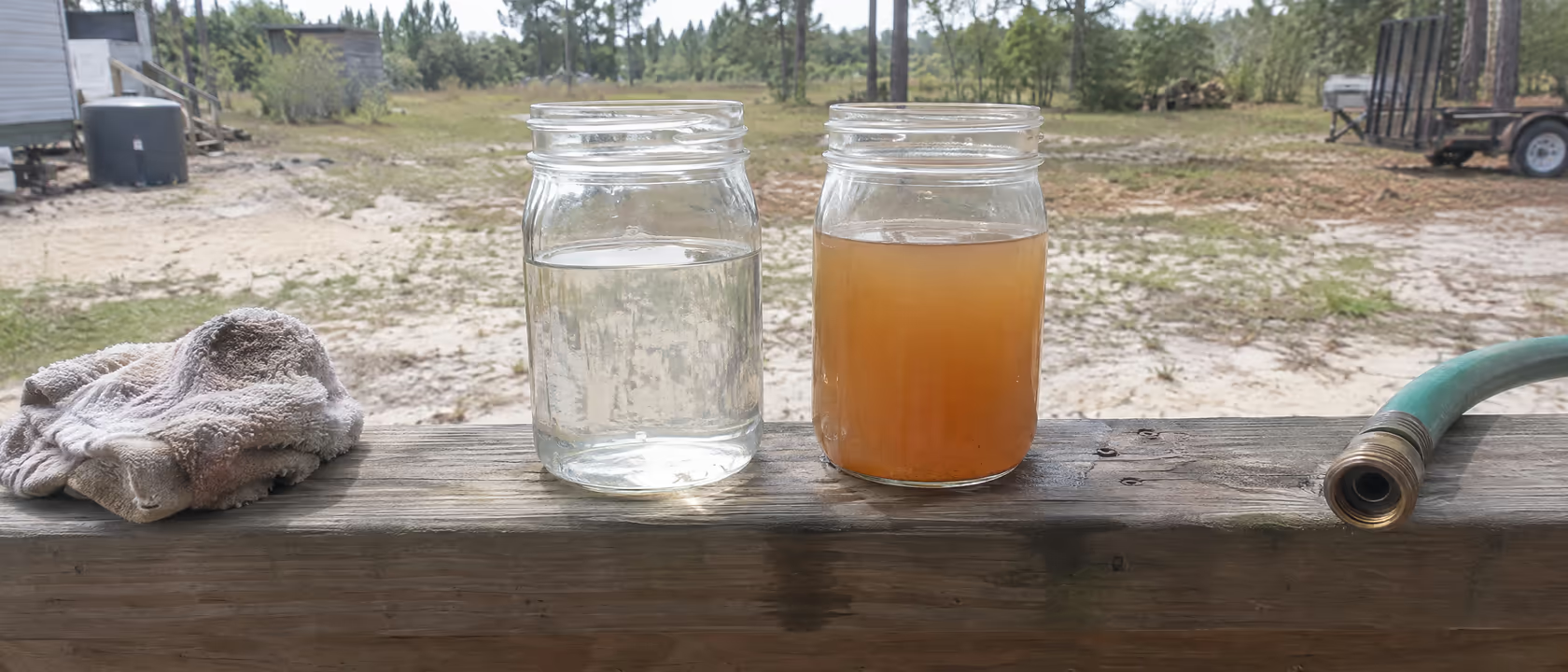
Coliform and E. coli
This is the safety test. Sandy soil and a shallow water table let surface water reach your well faster here than through Piedmont rock, which is why bacteria hits climb after long rain. On a positive result we shock chlorinate and retest. Sometimes we repair the wellhead to close the way in.
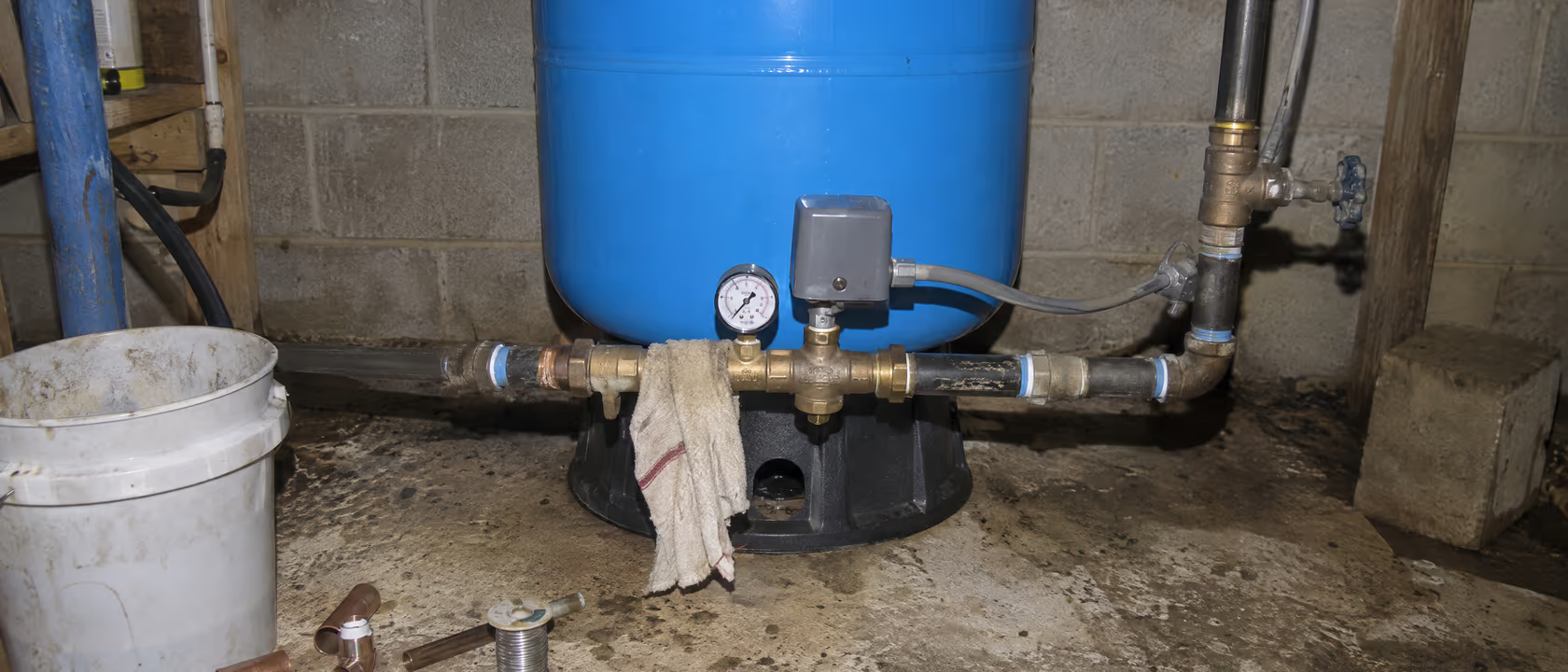
pH and corrosion
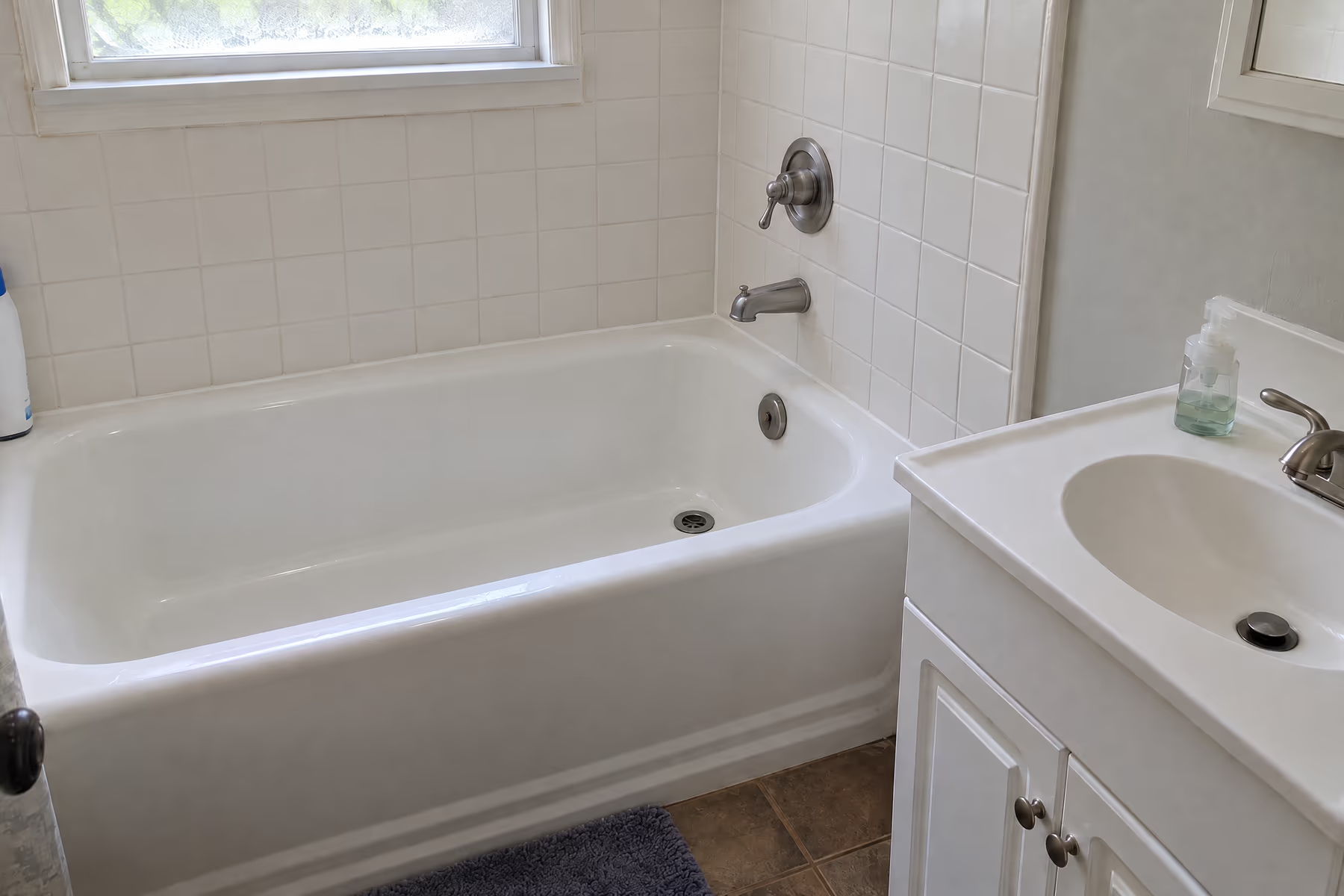
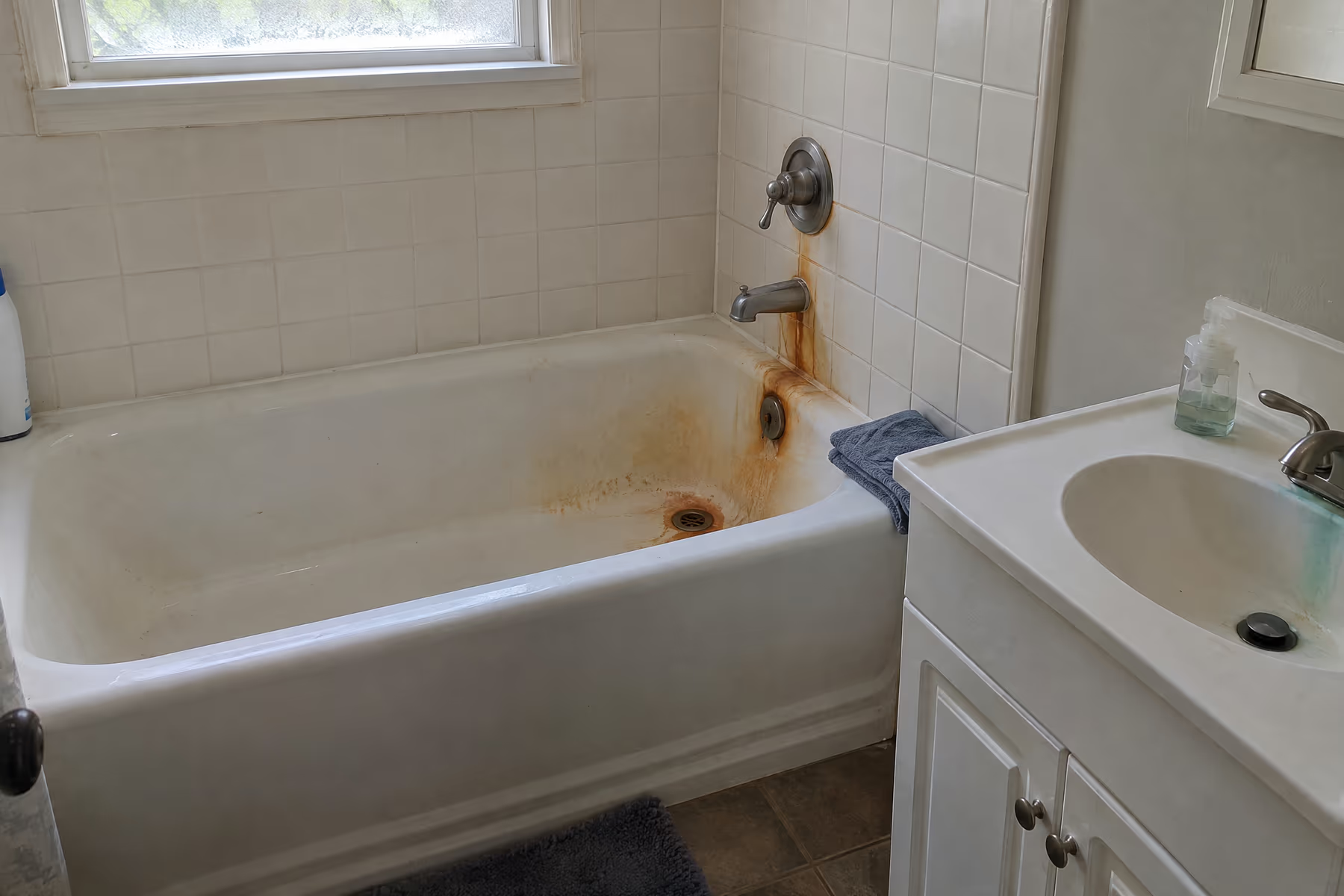
Groundwater here runs acidic. Low pH eats copper out of your pipes. You see it first as blue-green stains on fixtures, then years later as pinhole leaks. We fit an acid neutralizer at $1,195 to $1,895 to correct the cause. Repiping a house costs several times that.
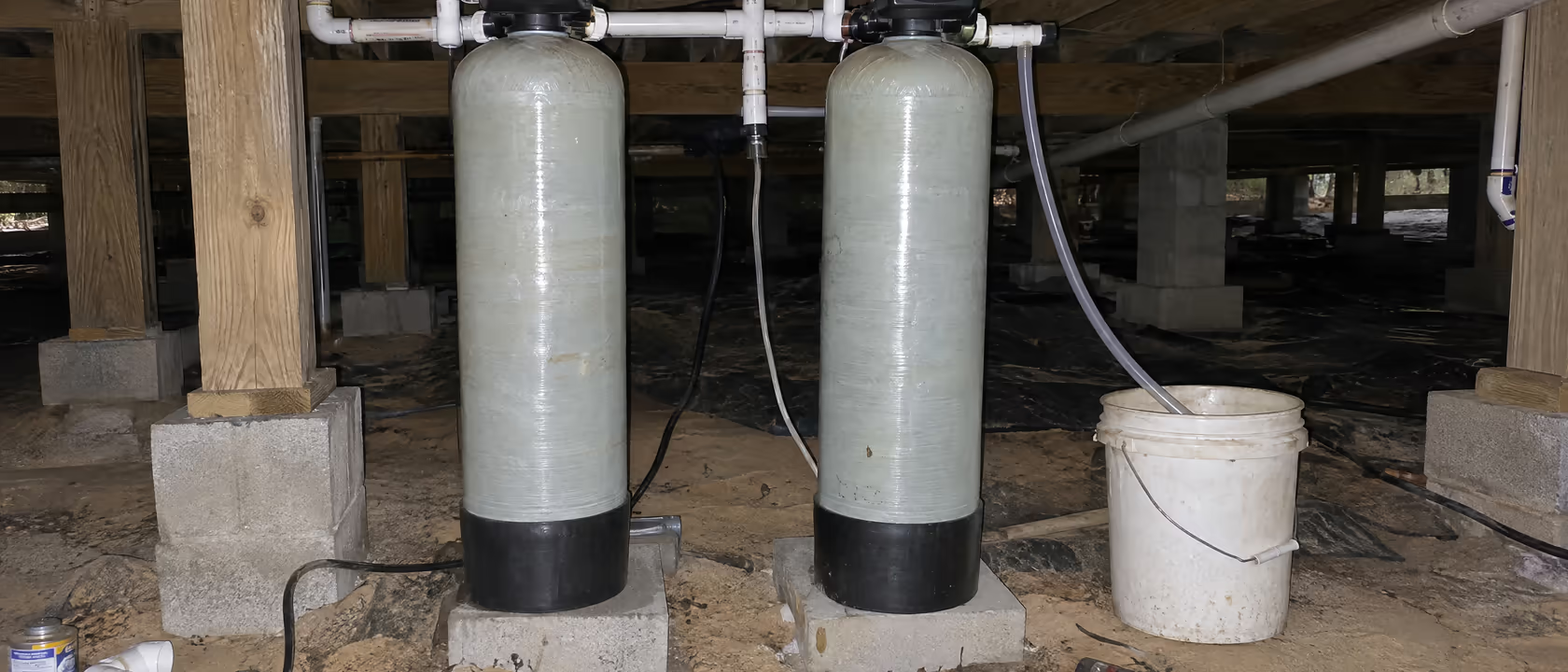
Iron, manganese and hardness
Iron is the orange stain in your toilet bowl and the metal taste in your kettle. We test to separate dissolved iron from iron bacteria. That matters, because they need completely different equipment and the wrong one costs you the same as the right one.
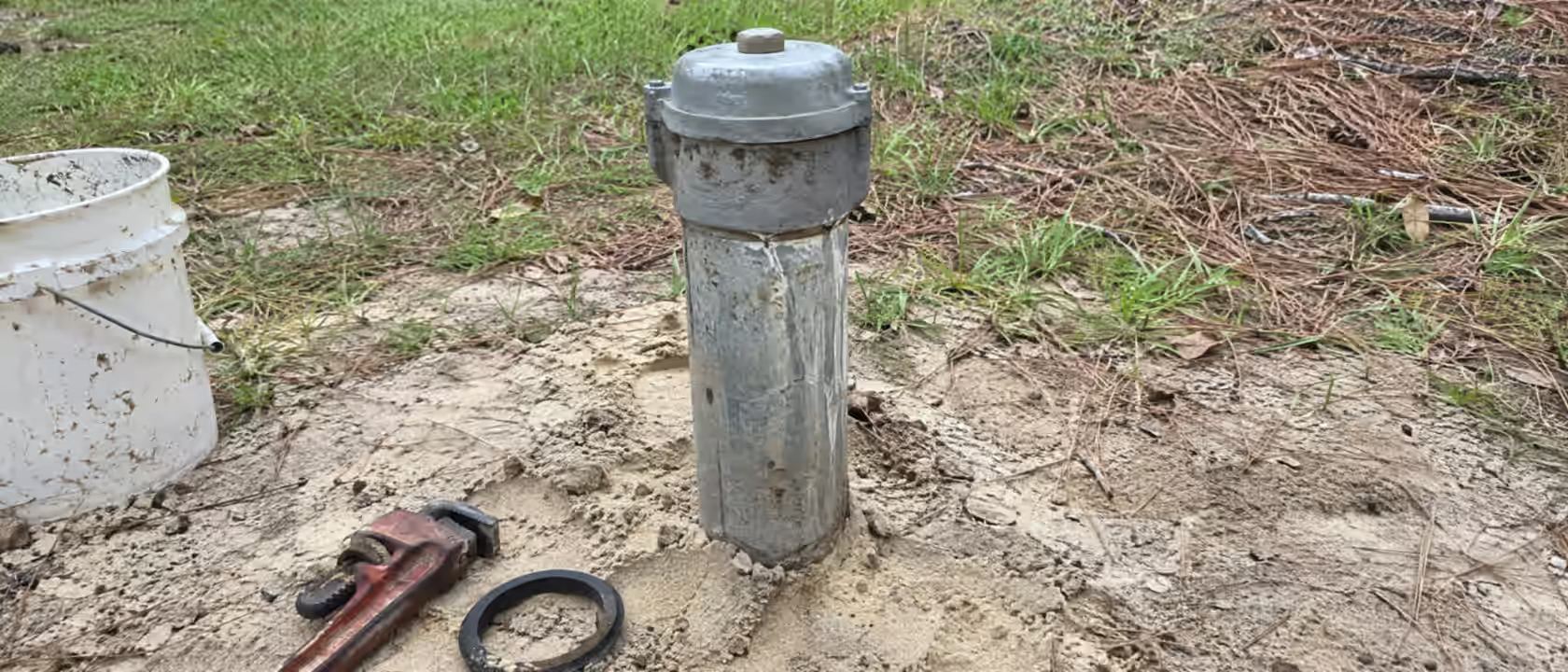
Selling the house or dealing with a lender
A sale involving a private well usually needs a documented bacteria result. We pull the sample, send it to a certified lab and hand you the report.
How we work it out
-
Sample from the right tap
We pull your sample ahead of any treatment already fitted. That way the result describes your well rather than the filter sitting on it.
-
Certified lab analysis
We send your sample to a certified lab. Results come back as a lab document you keep.
-
Read the result against what it changes
We go through which findings need equipment, which need a wellhead repair and which need nothing at all. Plenty of results need nothing.
-
Size treatment only if the numbers call for it
We size treatment only if your numbers call for it, and we install in order: sediment, then pH, then iron, then softening, then UV, then reverse osmosis at the kitchen tap. Out of order, the expensive stages do the cheap stages' work and wear out early.
Standards, intervals and what a result actually obliges you to do
Nobody tests a private well but you
Public systems get tested continuously under federal rules. Your private well sits entirely outside that. A well can run twenty years untested. NGWA guidance is bacteria annually and a full chemical panel every three years, plus an immediate test after flooding or any well work.
15A NCAC 02C and your wellhead
State rules set casing depth, grouting and distance from septic systems. They matter at one specific moment. A coliform result comes back positive, and the way in turns out to be a wellhead that no longer meets the standard. That is a repair, and treating the water instead filters a problem that keeps arriving. Schedule 80 drop pipe and a sound cap are cheaper than chlorinating every year.
Treatment equipment, sized on your result
We fit Fleck control valves on backwashing neutralizers, iron filters and softeners, in Pentair housings. We size off your lab result and peak flow in gallons per minute, never off house square footage. Where the sample comes back positive for bacteria, the fix is often upstream of all of it. A Baker Water Systems cap or a Merrill pitless adapter that no longer seals is a direct route into your casing, and an Amtrol tank downstream of a contaminated well just stores the problem.
Where the county comes in
The Cumberland County Department of Public Health permits new well construction at $320 and handles well-related public health questions. Testing your existing well needs no permit at all.
Numbers worth knowing
| Lab test cost | $50 to $200 |
|---|---|
| Bacteria test interval | annually |
| Full chemical panel interval | every 3 years |
| Common Coastal Plain findings | low pH, dissolved iron, hydrogen sulfide, seasonal coliform |
| Correct treatment order | sediment, neutralizer, iron, softener, UV, point-of-use RO |
| Complete system range | $1,500 to $6,500 installed |
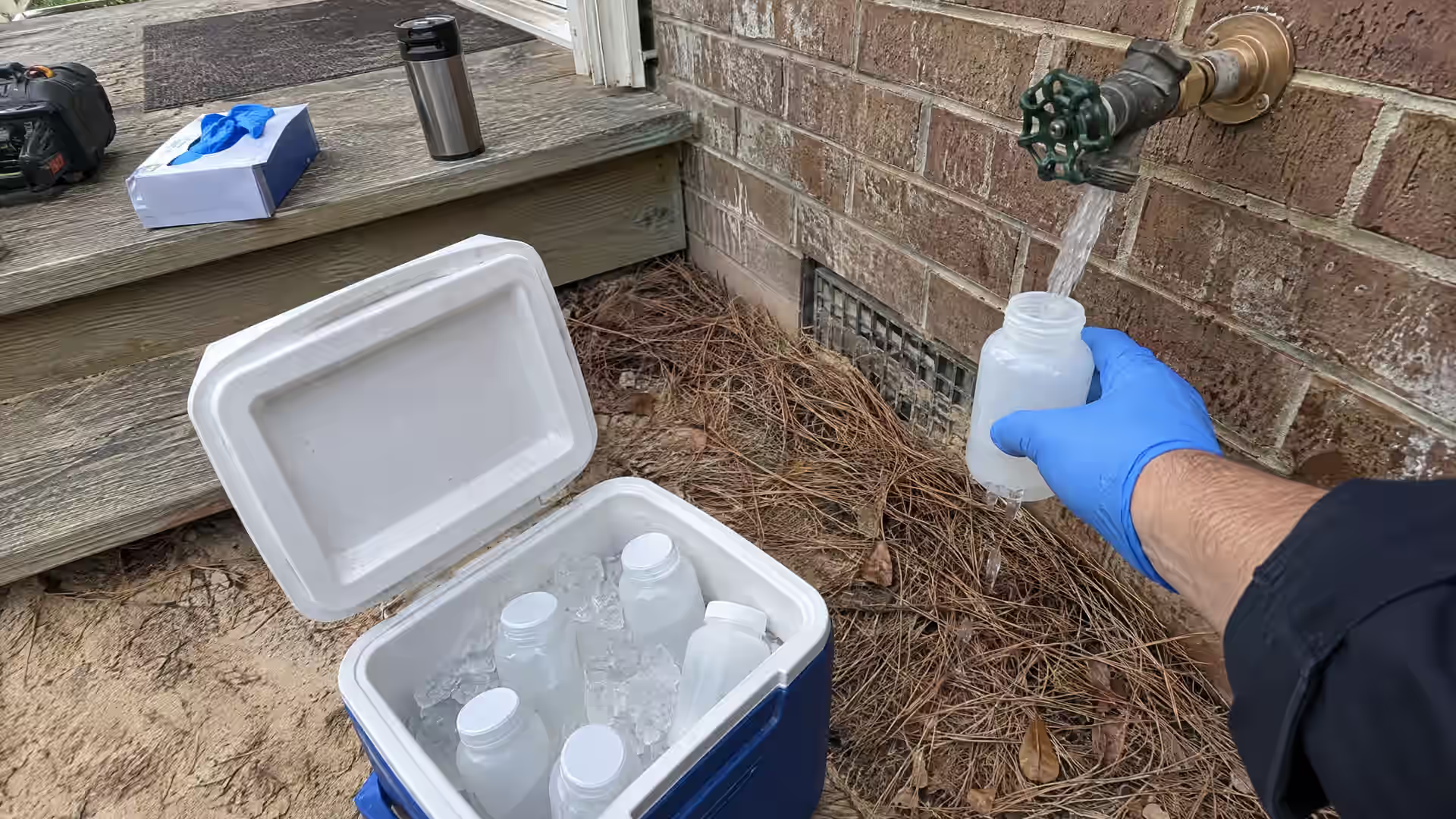
A complete well water treatment system runs $1,500 to $6,500 installed. What you need depends on what a lab test finds, which is why the test comes first and costs $50 to $200.
| What the job is | Typical range | Unit |
|---|---|---|
| Lab water testTells you what is actually in the water and what equipment is the right size. Buying treatment without it is guessing. | $50 – $200 | per test |
| Sediment filterFirst stage. Catches the sand that Coastal Plain wells produce. | $145 – $195 | installed |
| Point-of-use reverse osmosis, kitchen tapDrinking water only, not whole-house. | $595 | installed |
| UV disinfectionHandles bacteria without chemicals. Bulb replacement runs $145 to $160 a year. | $895 – $995 | installed |
| Acid neutralizer, pH correctionCoastal Plain groundwater runs acidic, and low pH eats copper pipe and stains fixtures. | $1,195 – $1,895 | installed |
| Carbon filterTaste and odor. Backwashing units sit at the top of the range. | $1,495 – $2,495 | installed |
| Water softenerSalt runs about $125 a year. | $1,695 – $1,895 | installed |
| Iron and sulfur filterOrange staining and rotten-egg smell. The two most common complaints on iron-rich sand aquifers. | $1,795 – $2,195 | installed |
| Acid neutralizer plus softener packageCheaper together than separately. | $2,695 – $2,995 | installed |
| Complete treatment systemDepends entirely on what the test finds. | $1,500 – $6,500 | installed |
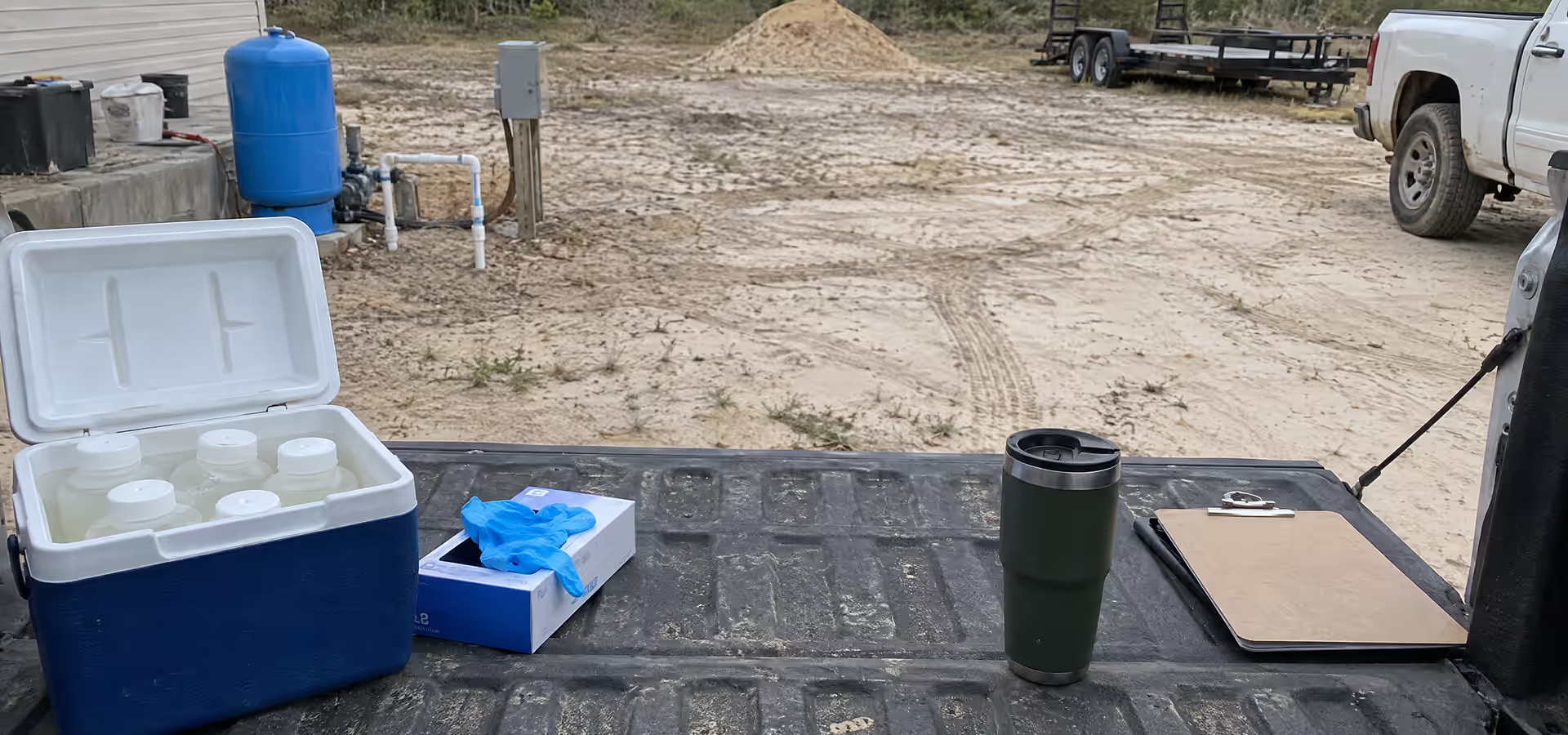
People buy the filter first and test afterwards. It is the most expensive way round, because the wrong equipment still costs full price.Fayetteville Well Pump Repair
Who we work for
- Well and Pump Service for Farms Stock water, wash-down, irrigation and a farmhouse on one well. Sized on sustained draw, not acreage.
- Well Service for Mobile Home Parks Shared supply with tenants attached. Past 15 connections it stops being a private well at all.
- Well Service for Churches and Camps Idle most of the week, then a full building. The hardest duty cycle in private water supply.
Before and after
Want it priced properly?
On-site estimates are free, itemized, and written down before any work starts.
Questions we get asked
How much does well water testing cost in Fayetteville?
A lab test runs $50 to $200 depending on the panel. A basic bacteriological screen sits at the lower end, and a full panel covering pH, iron, manganese, hardness and hydrogen sulfide sits at the upper end.
How often should I test my well water?
Test for bacteria once a year and run the full chemical panel every three years. Test immediately after flooding, after any work on the well, or if the taste, smell or color changes.
Why is there coliform in my well water?
Coliform reaches the aquifer through surface infiltration, and sandy Coastal Plain soil with a shallow water table lets that happen faster than fractured rock does. A damaged well cap or casing gives it a direct route in, which is why a positive result is followed by a wellhead inspection rather than just chlorination.
Does well water testing tell me what filter to buy?
That is the entire point of it. The results decide which equipment is needed and how to size it. Buying a filtration system before testing means guessing at both, and the wrong system costs the same as the right one.
Who tests well water near me in Fayetteville?
Fayetteville Well Pump Repair pulls and submits well water samples throughout Fayetteville and Cumberland County, and goes through the lab report with you before any equipment is discussed.
Call us before you buy any equipment. A $50 to $200 panel comes back as a lab document, we go through it with you, and we size only what the result calls for. Treatment prices are published in full on the cost page. If the water changed suddenly, that is often a pump or wellhead problem, and we check that first.