A bad pressure switch is the most common repair on a private well. It is also why a system that looks dead usually is not. At Fayetteville Well Pump Repair, we test the switch before anyone talks about pulling your pump. The cheapest part on your well makes the same silence at the tap as the most expensive one. A switch runs $150 to $500 installed. A pump runs $1,500 to $2,500. Full pricing sits on our well pump cost page.
Your pressure switch is a small mechanical part doing an electrical job. It feels the water pressure in your system. When pressure drops to the cut-in point, it closes and starts your pump. When pressure reaches the cut-out point, it opens and stops it. Every one of those on-off cycles sparks across two metal contacts inside the cover.
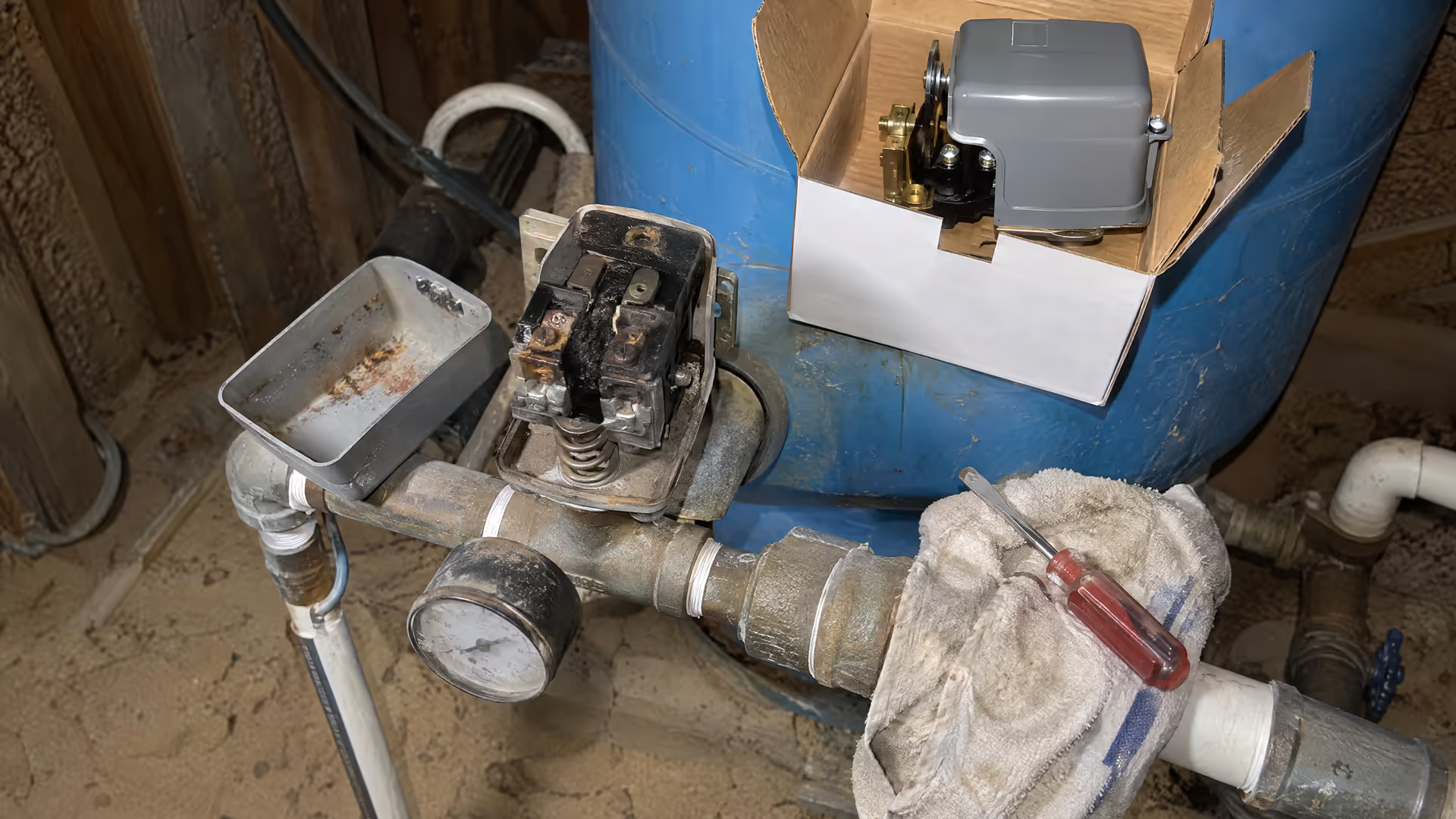
That sparking is what kills the switch. The contact faces pit, then carbon builds up. Eventually they either weld shut or stop closing at all. Welded shut, your pump never turns off. Stuck open, it never turns on. Both are the same $40 part. Both get mistaken for a dead motor by anyone who starts at the wellhead instead of the switch.
What is actually wrong
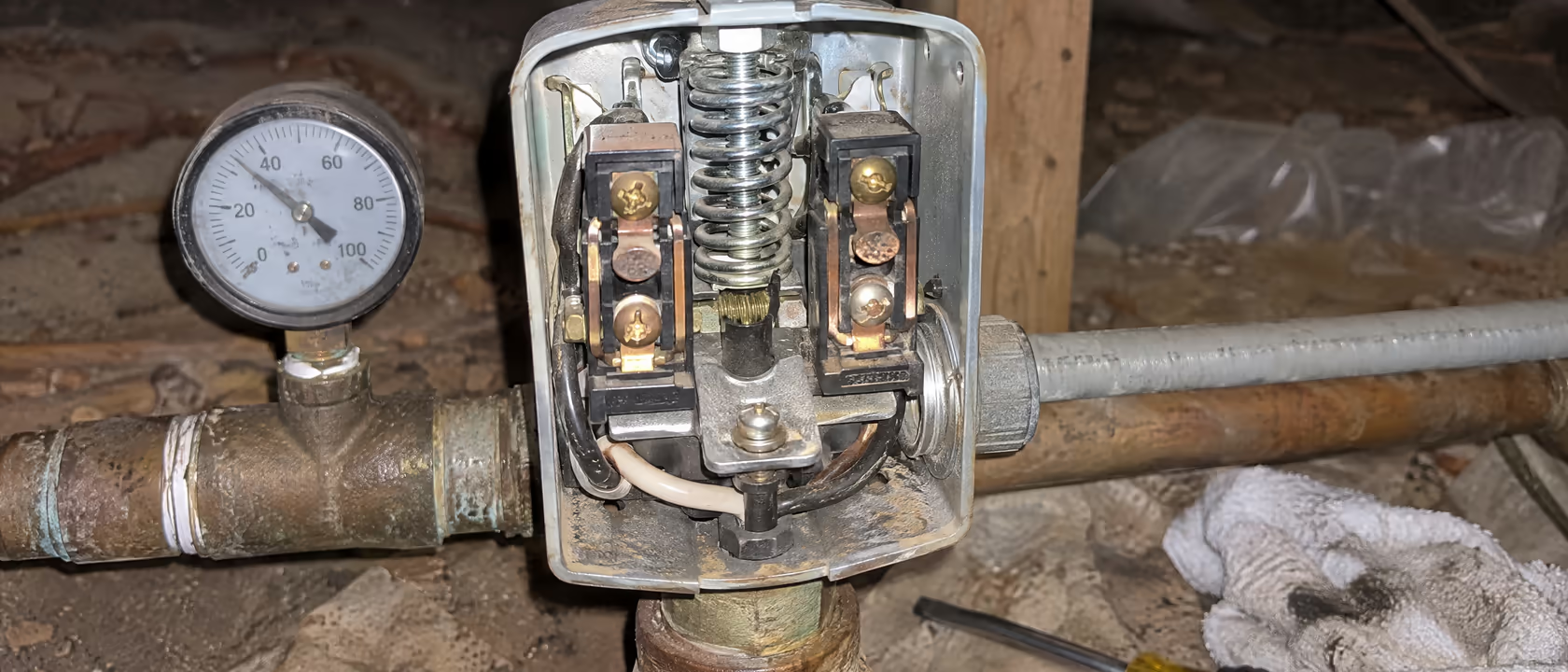
Pitted or burnt contacts
This is the normal way a switch dies. We lift the cover on a Square D Pumptrol and find the contacts blackened, sometimes with a burn mark on the housing. Filing them clean buys you days, because the shape that made the spark has not changed. We treat the switch as a wear part and replace it.
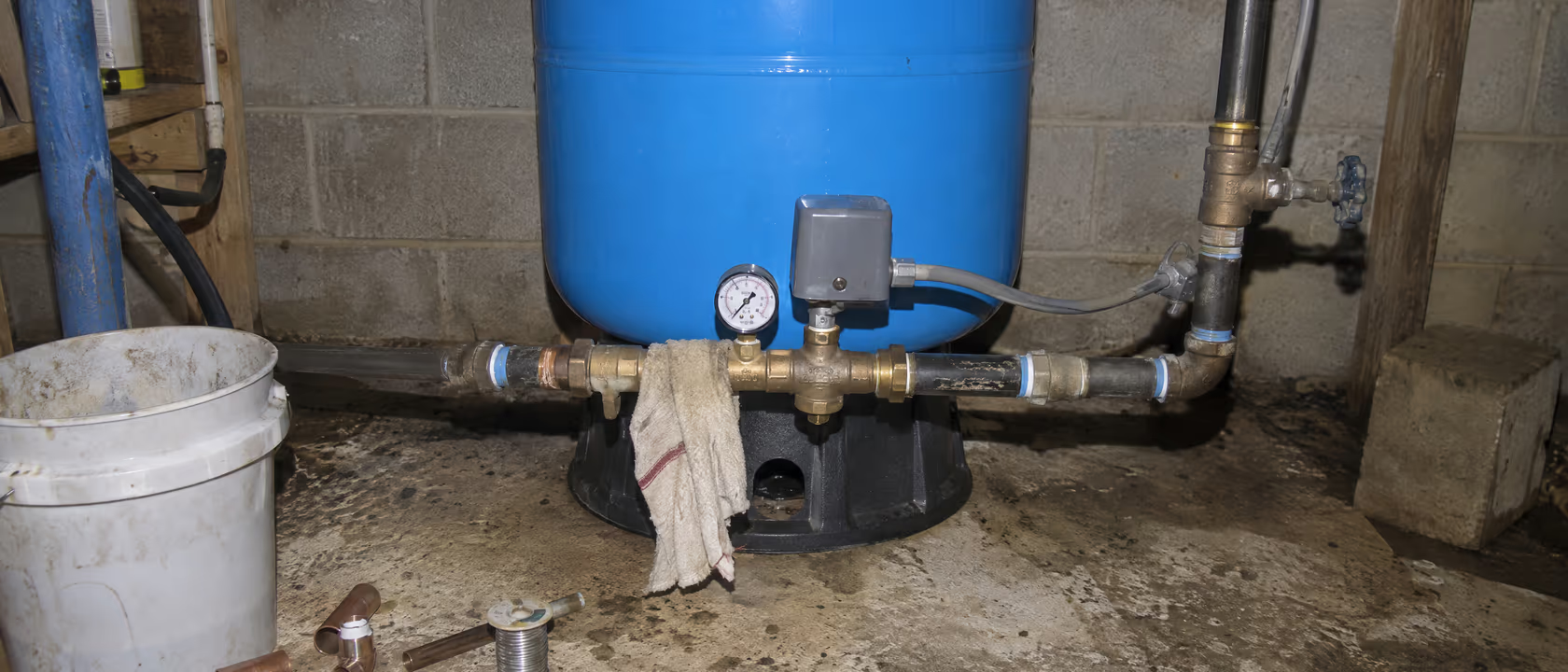
A blocked sensing port
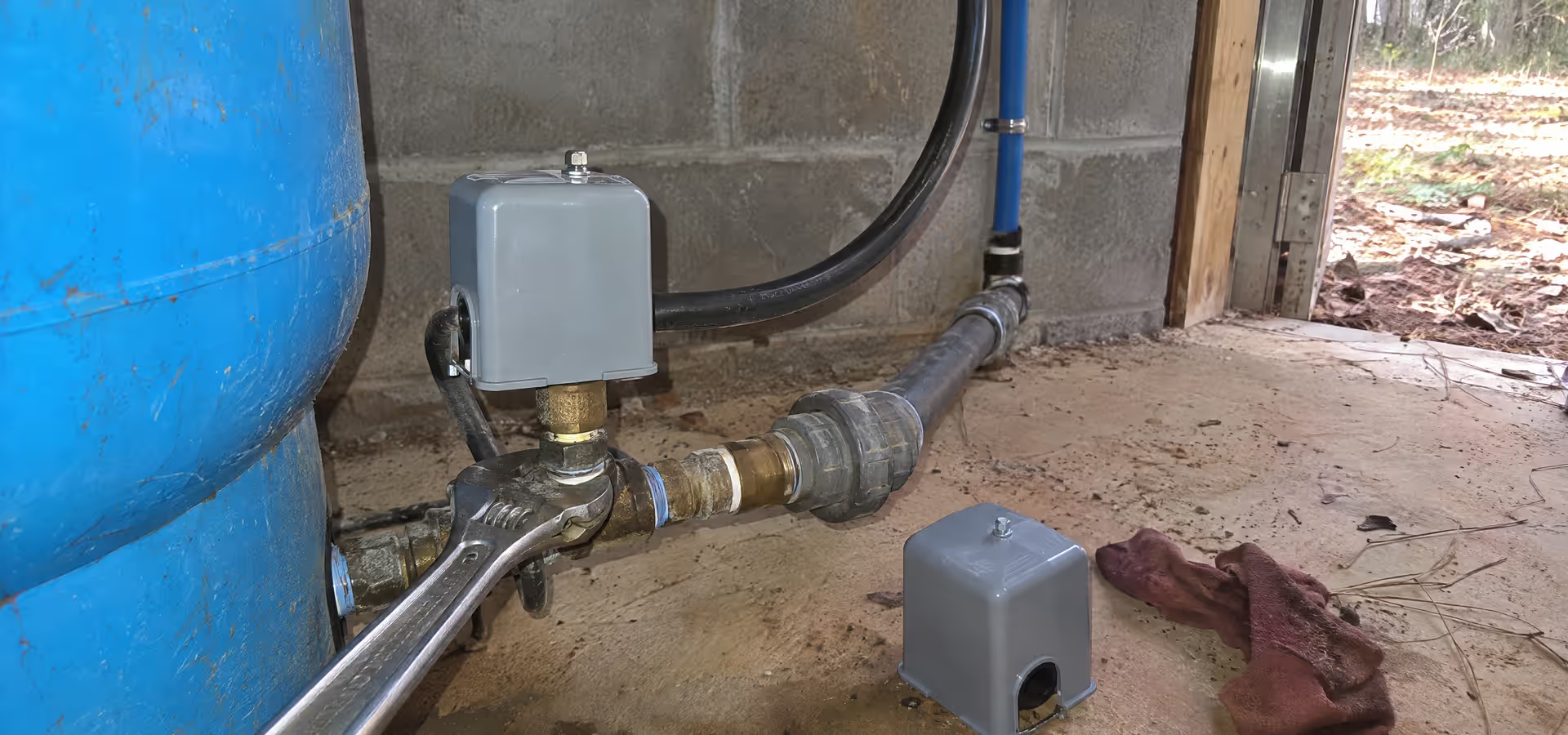
Your switch reads pressure through a tiny hole into the tank tee. Iron and scale close that hole over the years. The switch then feels a pressure your system is not actually at. So it cycles at the wrong points, or stops responding at all. We clear the tee first, because a new switch on a blocked port fails the same way the old one did.
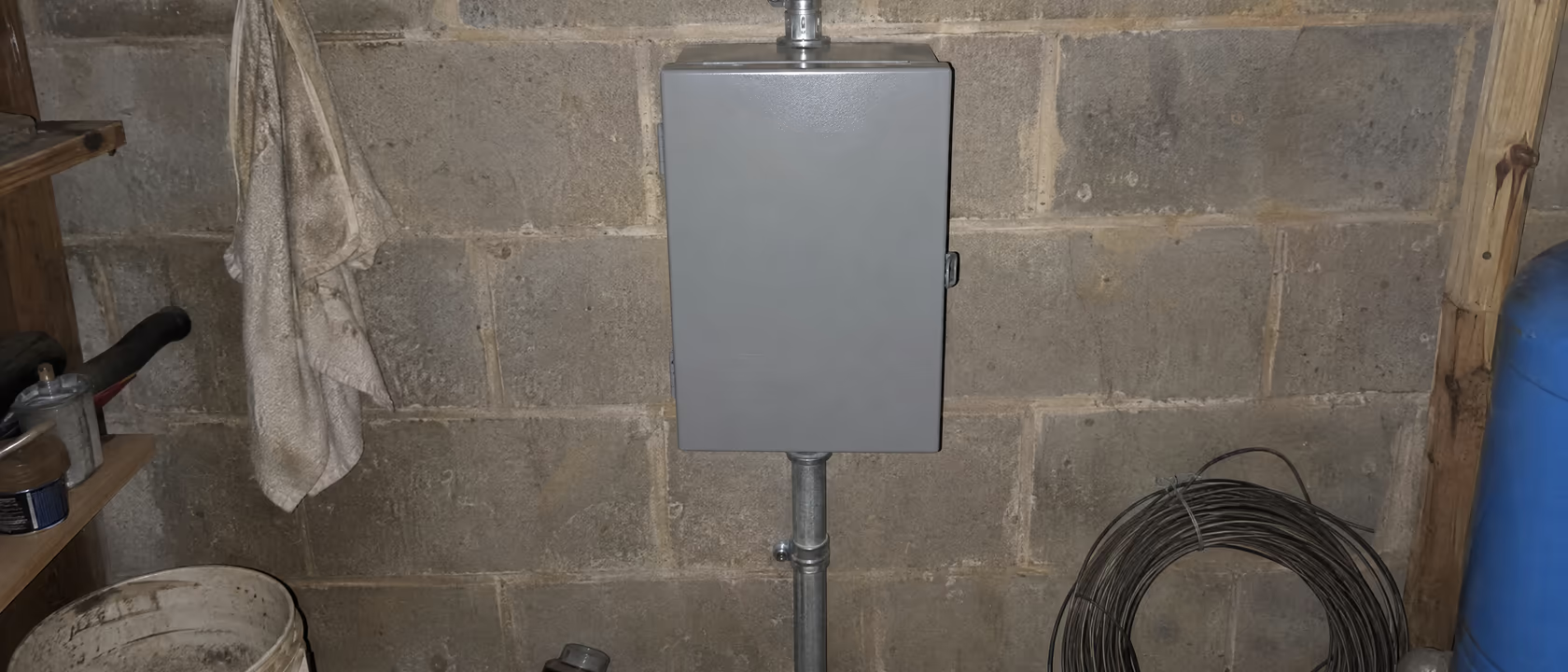
Wrong pressure band for your house
A 30/50 psi switch fitted where a 40/60 psi one belongs gives you weak water upstairs. We change the band with a screw adjustment, but only if your pump and your Amtrol Well-X-Trol tank can carry the higher setting. If they cannot, you need a new switch. A Grundfos SQE holds one steady pressure and removes the band from the question, but that is a different system, and a different price, because the pump changes with it. Low water pressure covers the bigger version of this.
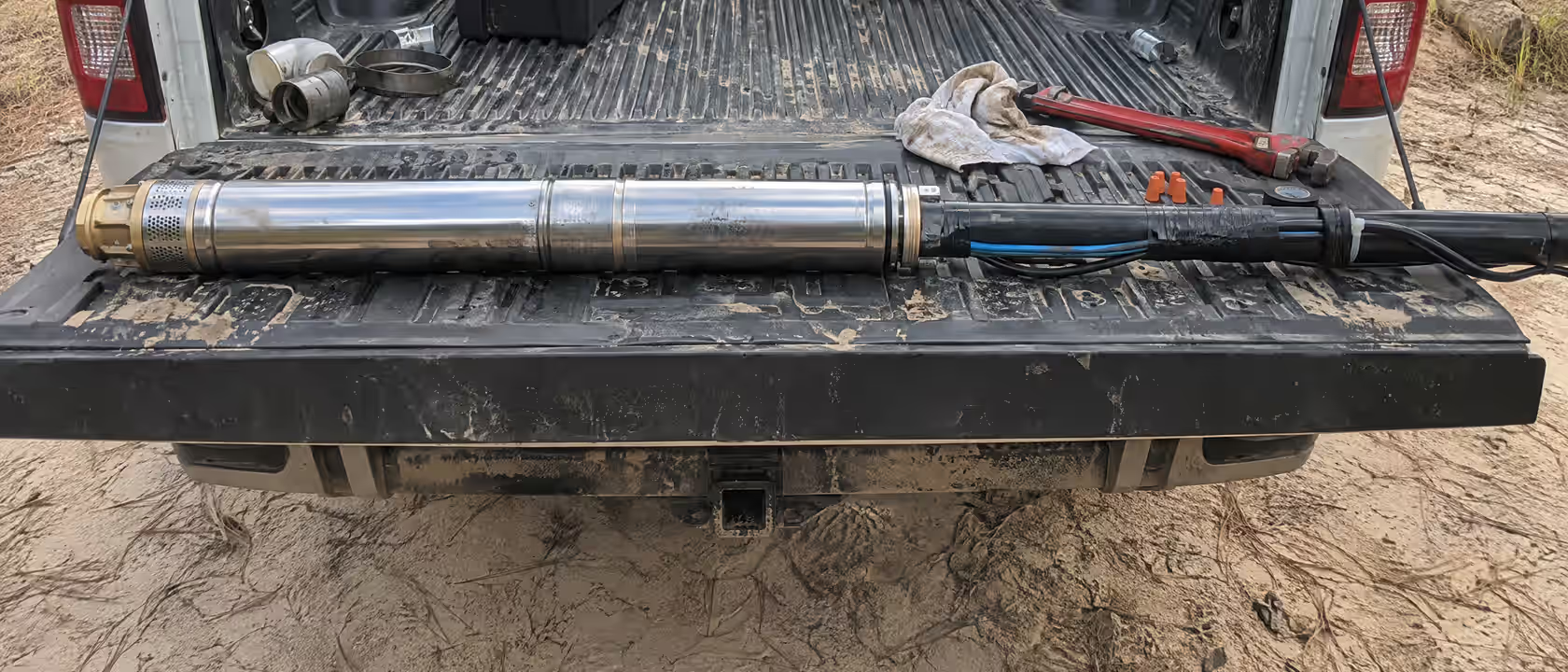
Low pressure cut-off protection
We can fit a switch with a low pressure cut-off, which shuts your pump down when pressure drops below a set floor. That keeps your Franklin Electric motor from running dry when the well draws down. If your well has run short in past summers, this part costs a few dollars more. Skipping it can cost you $1,500 to $2,500 in August.
How we work it out
-
Meter across the contacts
We read the voltage going in and the voltage coming out while your system calls for water. It takes two minutes. It either clears the switch or ends the diagnosis on the spot.
-
Isolate and drain
We shut the breaker off and release the pressure. We never unscrew anything on a live circuit or a charged tank. Draining also lets us look inside the tee.
-
Clear the tee and the port
We clear the port first, then fit the switch. A new switch on a blocked port acts like the old one within weeks.
-
Set the band and check the tank
We set your cut-in and cut-out. Then we check the tank air charge against the new cut-in. Your switch and your tank have to agree, or the pump cycles.
Why a cheap part gets misdiagnosed as an expensive one
The symptom looks exactly like a dead pump
No water at the tap tells you nothing about which part failed. One meter reading across the switch separates a $150 to $500 repair from a $1,500 to $2,500 one. It takes two minutes. Any quote for a new pump written without that test skipped the cheapest step available.
This is not well construction
Switch work needs no permit from the county health department. Permits attach to building a well rather than to repairing one. Anyone charging you a permit fee on a switch replacement is billing for paperwork nobody files.
Repeat failures mean something else is wrong
A switch that has failed twice in three years is reporting a system fault. Short cycling, which means the pump turning on and off every few seconds, burns contacts fast. So we check your well record, your tank air charge and your pump sizing before fitting a third one.
Numbers worth knowing
| Installed range | $150 to $500 |
|---|---|
| Standard band | 40/60 psi |
| Alternative band | 30/50 psi |
| Time on site | Under an hour |
| Failure mode | Pitted or welded contacts |
| Optional protection | Low pressure cut-off |
Well pump work in Fayetteville runs $150 to $3,500 for most homes. What decides the number is whether the fault sits outside the well or in it, and how deep the pump hangs.
| What the job is | Typical range | Unit |
|---|---|---|
| External component: pressure switch, control box, wiring, primingThe pump itself is fine. Cheapest outcome and the most common one. | $150 – $500 | installed |
| Pressure tank replacementTank, tank tee, gauge, switch and fittings, sized on drawdown. A waterlogged tank is what makes a pump short-cycle. | $1,000 – $2,300 | installed |
| Shallow well or jet pump, to about 25 ftCommon on Coastal Plain sand wells, where the water table sits high enough that a jet pump still works. | $600 – $1,400 | installed |
| Deep submersible pump, well 100 to 200 ftTypical Fayetteville well depth. Price covers pulling the old pump, drop pipe and wire. | $1,500 – $2,500 | installed |
| Deep submersible pump, well 300 to 400 ft or higher horsepowerDepth drives horsepower and hoist labor together. Every extra 100 ft adds roughly $500 to $1,000 in pipe, wire and time. | $2,800 – $5,500 | installed |
| Full system replacement: pump, tank, wiringWorth doing together when the pump is original and the tank is the same age. | $3,500 – $6,000 | installed |
What moves the number
- Every additional 100 ft of well depth+$500 to $1,000
- Emergency, weekend or after-hours call+25% to 50%
It is the cheapest part on the system and it fails more than everything else combined. That is not a defect. That is the job it does.Cumberland County, NC
Who we work for
- Well and Pump Service for Farms Stock water, wash-down, irrigation and a farmhouse on one well. Sized on sustained draw, not acreage.
- Well Service for Mobile Home Parks Shared supply with tenants attached. Past 15 connections it stops being a private well at all.
- Well Service for Churches and Camps Idle most of the week, then a full building. The hardest duty cycle in private water supply.
No water this morning?
Tell us what the pump is doing and we will tell you what it costs to put right.
Questions we get asked
How much does a pressure switch replacement cost?
$150 to $500 installed covers the switch, clearing the sensing port and setting the band. The part itself is inexpensive, and most of the figure is the visit and the commissioning that follows.
How do I know the pressure switch has failed?
Two minutes with a meter across the contacts settles it. Voltage arriving and none leaving with the system calling for water means the switch is not closing, and that presents at the tap exactly like a dead pump.
Can I just clean the contacts?
Filing buys you days. The pitting comes from arcing that happens on every cycle, and the geometry that caused it is unchanged afterwards, so the switch fails again shortly.
What is the difference between 30/50 and 40/60?
10 psi at every fixture, and it is most noticeable upstairs. A 40/60 psi band is standard on modern installs, and moving up to it requires the pump and tank to be able to carry the higher cut-out.
Who replaces well pressure switches near me?
Fayetteville Well Pump Repair replaces pressure switches across Fayetteville and Cumberland County, and tests the switch before quoting anything that involves pulling a pump.
Why does my pressure switch keep failing?
Short cycling causes most repeat failures. Contacts wear on cycles, not on hours, so a system starting every few seconds consumes switches quickly and the tank is usually the reason it is doing so.
If your water is off, call and we test the switch first. Two minutes with a meter shows us whether you are looking at a $150 to $500 switch or a $1,500 to $2,500 pump, which is why we run that test before anyone quotes the pump. Where the switch keeps failing, short cycling explains what is consuming it, and pressure tank replacement covers the part usually behind it.