Well service for mobile home parks in Fayetteville, NC begins with a classification question that decides everything after it, because a shared supply past a certain size stops being a private well in the eyes of the state. Fayetteville Well Pump Repair establishes which side of that line a park sits on before specifying anything, and the pump ranges below are published on the well pump cost page.
North Carolina treats a supply serving at least 15 connections, or 25 or more people for 60 or more days a year, as a public water system. A park with 14 occupied lots and a park with 16 are the same pipework and two different regulatory categories, with different testing, different reporting and different operator requirements.
That matters commercially as much as legally. An owner quoted for a park well as though it were a large house is being quoted for the wrong category of system, and the gap shows up later as obligations nobody priced. So the count comes first, the county health department confirms the classification, and the equipment conversation follows it rather than leading it.
What is actually wrong
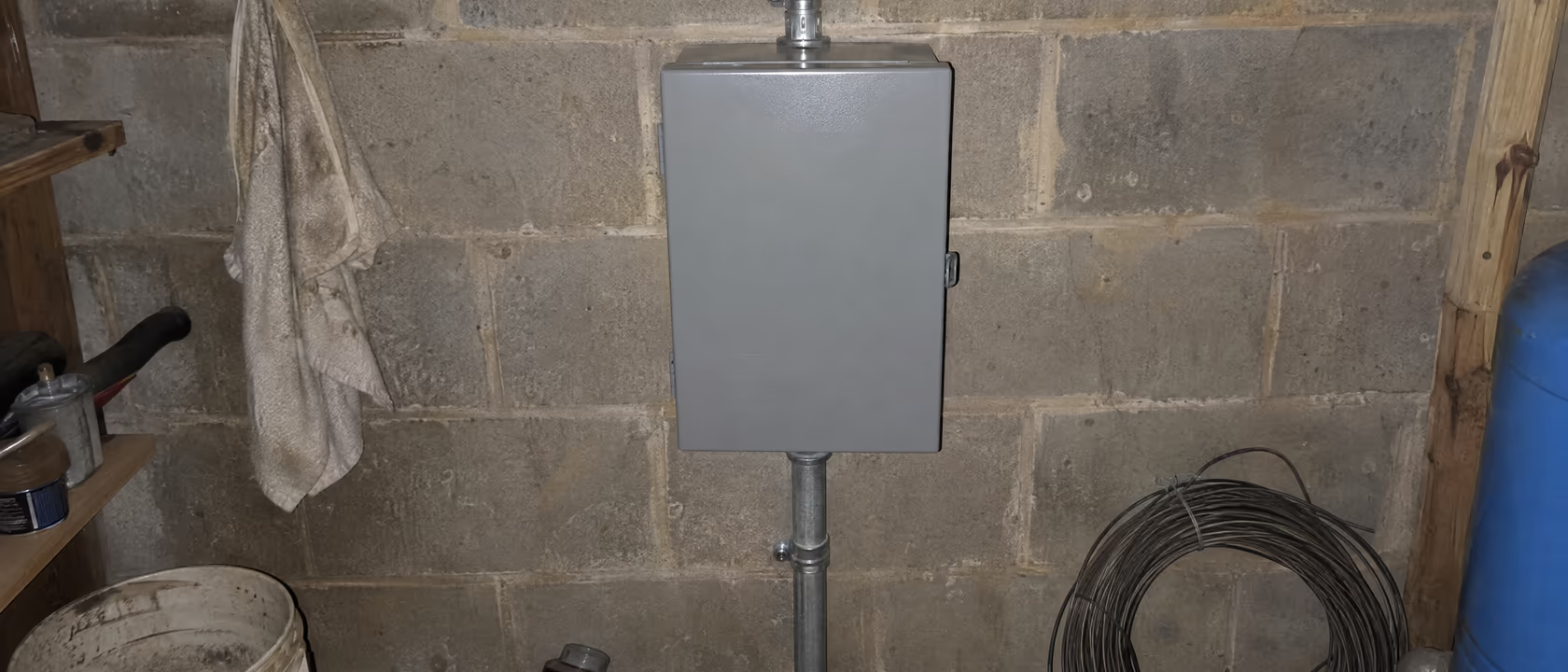
Demand that never really stops
A single household draws in bursts with long recovery between them. Twenty households draw in overlapping bursts that flatten into near-continuous demand, particularly morning and evening. A pump sized on per-home averages is undersized for the overlap, so sizing follows measured peak simultaneous draw rather than lot count multiplied by anything. A Goulds pump end rated at 10 gpm against a park drawing 18 gpm at seven in the morning is not a marginal call.
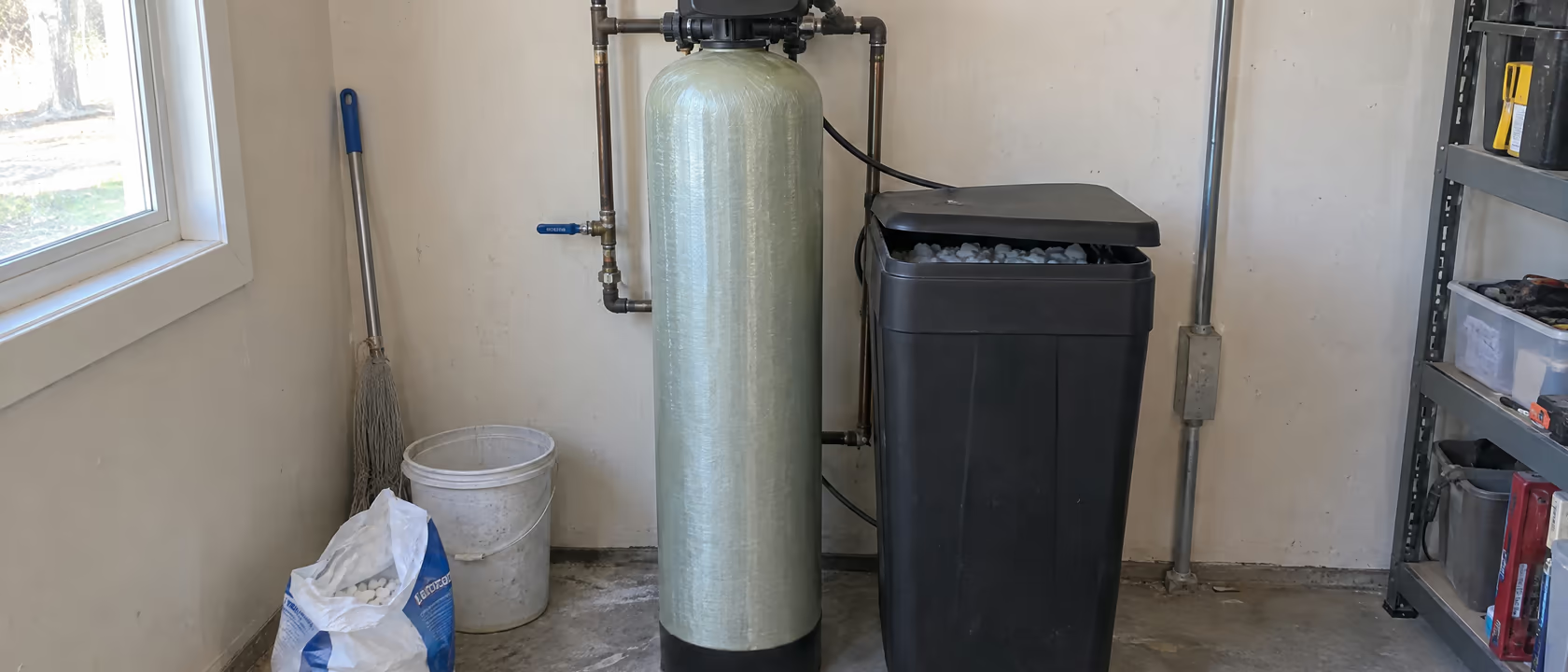
Storage does more here than a bigger pump
Adding horsepower against overlapping demand raises flow and leaves the cycling problem intact. Bulk storage with an Amtrol Well-X-Trol arrangement sized to real drawdown absorbs the peaks and lets a modest pump refill steadily, because the constraint is usually the shape of the demand rather than the capability of the pump.
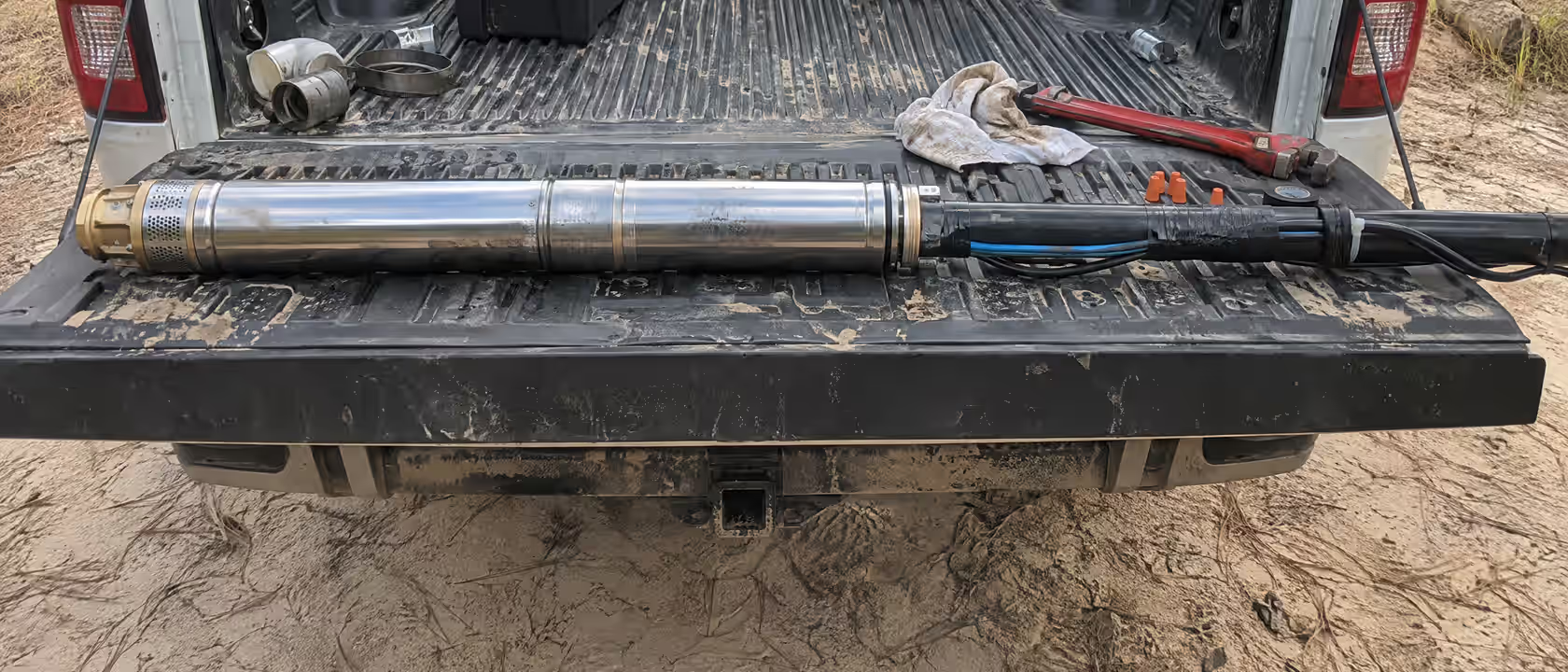
One failure, every tenant
A pressure switch that fails on a house inconveniences one family. The same $40 Square D Pumptrol failing on a park takes water off every lot at once, and the owner hears about it from all of them. That changes the maintenance case entirely: consumable parts get replaced on schedule here rather than on failure.
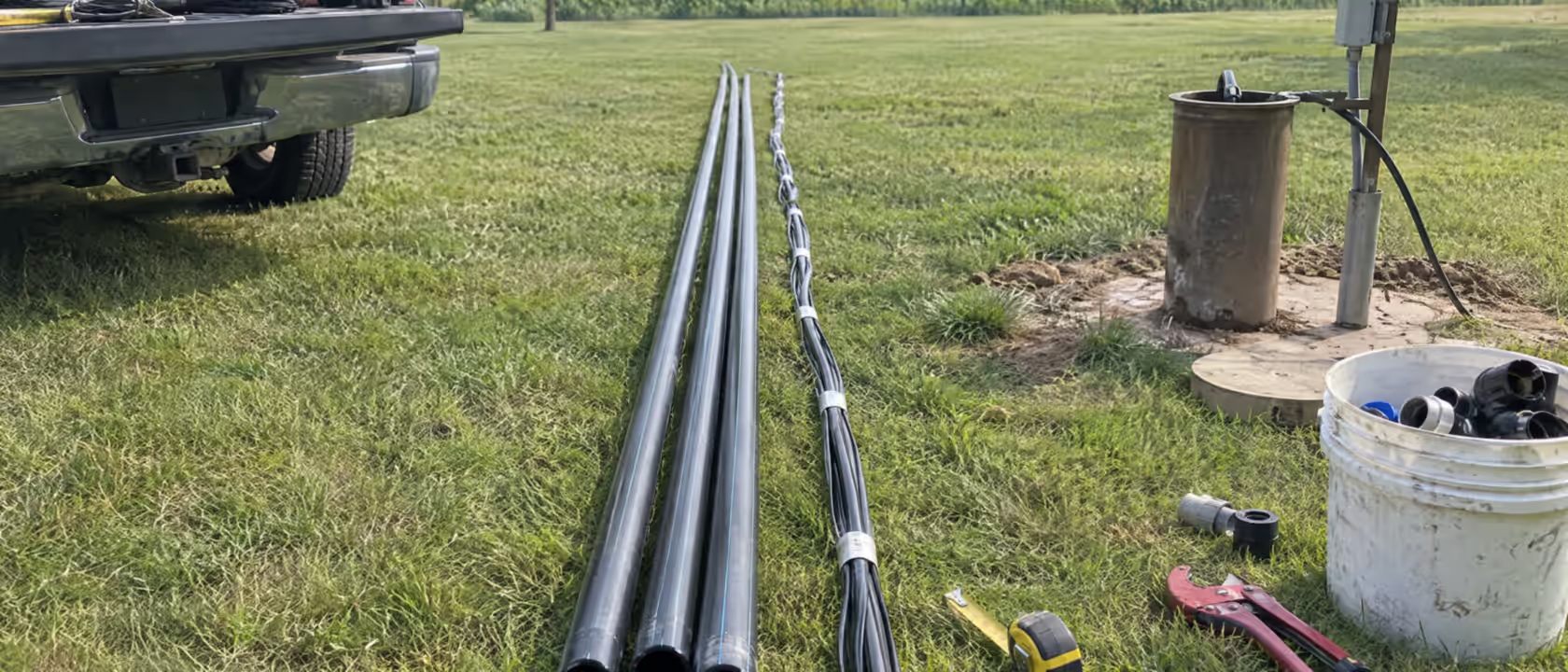
Distribution, not just the well
Buried distribution across a park is often decades old and rarely mapped. A leak on a shared line runs continuously and shows nothing at the surface in sandy ground, so the first symptom is a pump that will not stop. Isolating section by section finds it without trenching the whole park on a guess, and 100 ft of failed line is a repair rather than a replacement.
How we work it out
-
Count connections and occupancy
Occupied lots, people served and days per year. Those three numbers decide the classification before anything technical gets discussed.
-
Confirm with the county
The county health department determines which category a supply falls into. An owner's own reading of the threshold is not the determination.
-
Measure peak simultaneous draw
Morning and evening overlap is the real load. 1 hour at design flow against that figure gives the sustainable rate.
-
Storage first, pump second
Absorb the peaks, then size the pump to refill. A Franklin Electric motor running steadily outlives one starting against every overlap.
The classification, and why it comes first
15 connections or 25 people
That is the line. At least 15 connections, or 25 or more people for 60 or more days a year, and the supply is a public water system rather than a private well. Testing, reporting and operator requirements all change, so the count is established before equipment is specified rather than after it is installed.
Construction standards are unchanged
15A NCAC 02C governs the bore whichever category the supply falls into. Casing depth and full annular grouting are requirements, and on a park the consequence of a shortcut is shared by every tenant rather than by one owner.
PFAS sampling applies here too
Cumberland County sits inside the Chemours private well sampling program, and a park well is a well. Sampling under the 2019 Consent Order is funded rather than owner-paid, and residents request it on (910) 678-1101. Worth establishing before any treatment is quoted for a whole park.
Numbers worth knowing
| Public system threshold | 15 connections or 25 people |
|---|---|
| Qualifying period | 60+ days a year |
| Sizing basis | Peak simultaneous draw |
| Pre-charge | 2 psi below cut-in |
| Pump work | $150 to $5,500 installed |
| Determination | County health department |
Well pump work in Fayetteville runs $150 to $3,500 for most homes. What decides the number is whether the fault sits outside the well or in it, and how deep the pump hangs.
| What the job is | Typical range | Unit |
|---|---|---|
| External component: pressure switch, control box, wiring, primingThe pump itself is fine. Cheapest outcome and the most common one. | $150 – $500 | installed |
| Pressure tank replacementTank, tank tee, gauge, switch and fittings, sized on drawdown. A waterlogged tank is what makes a pump short-cycle. | $1,000 – $2,300 | installed |
| Shallow well or jet pump, to about 25 ftCommon on Coastal Plain sand wells, where the water table sits high enough that a jet pump still works. | $600 – $1,400 | installed |
| Deep submersible pump, well 100 to 200 ftTypical Fayetteville well depth. Price covers pulling the old pump, drop pipe and wire. | $1,500 – $2,500 | installed |
| Deep submersible pump, well 300 to 400 ft or higher horsepowerDepth drives horsepower and hoist labor together. Every extra 100 ft adds roughly $500 to $1,000 in pipe, wire and time. | $2,800 – $5,500 | installed |
| Full system replacement: pump, tank, wiringWorth doing together when the pump is original and the tank is the same age. | $3,500 – $6,000 | installed |
What moves the number
- Every additional 100 ft of well depth+$500 to $1,000
- Emergency, weekend or after-hours call+25% to 50%
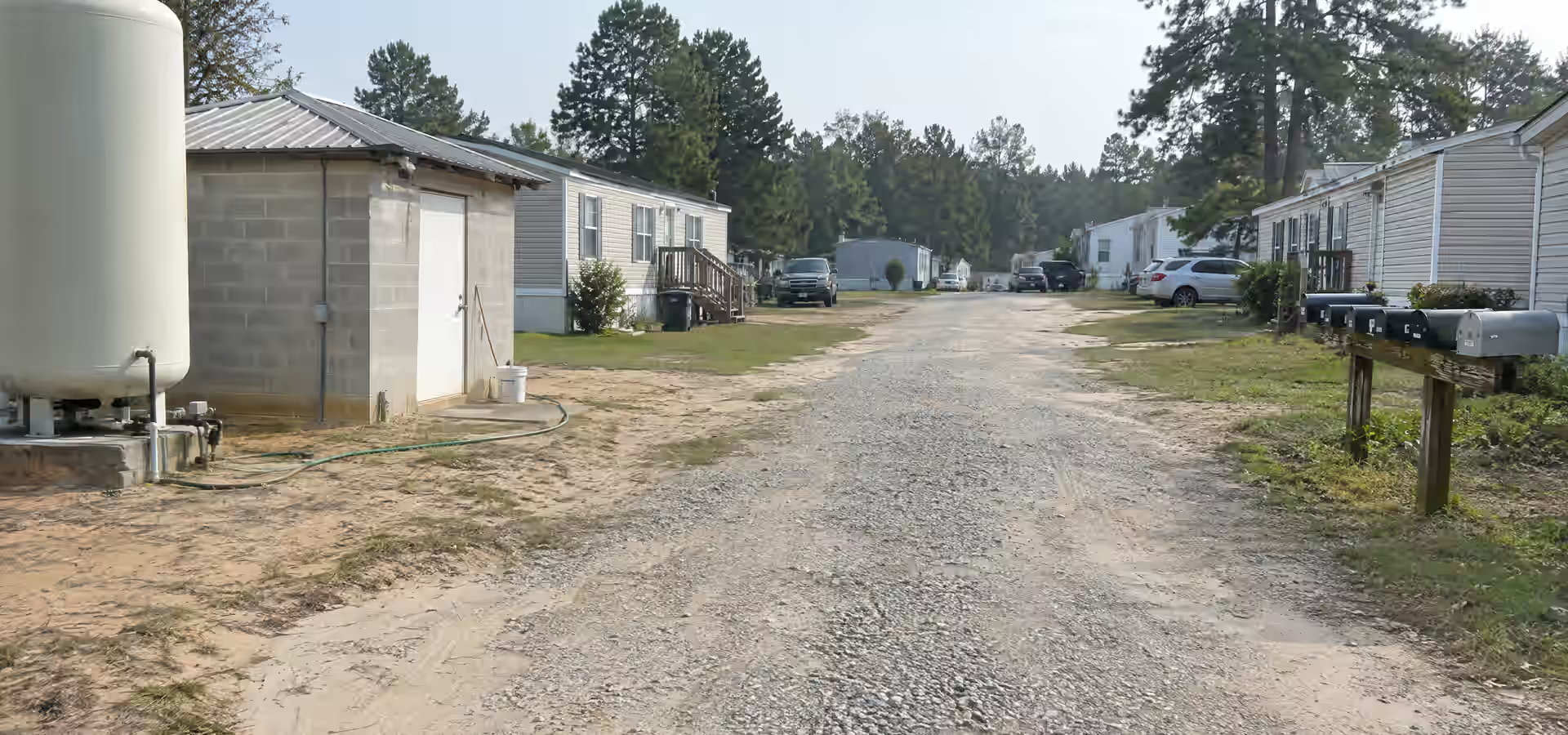
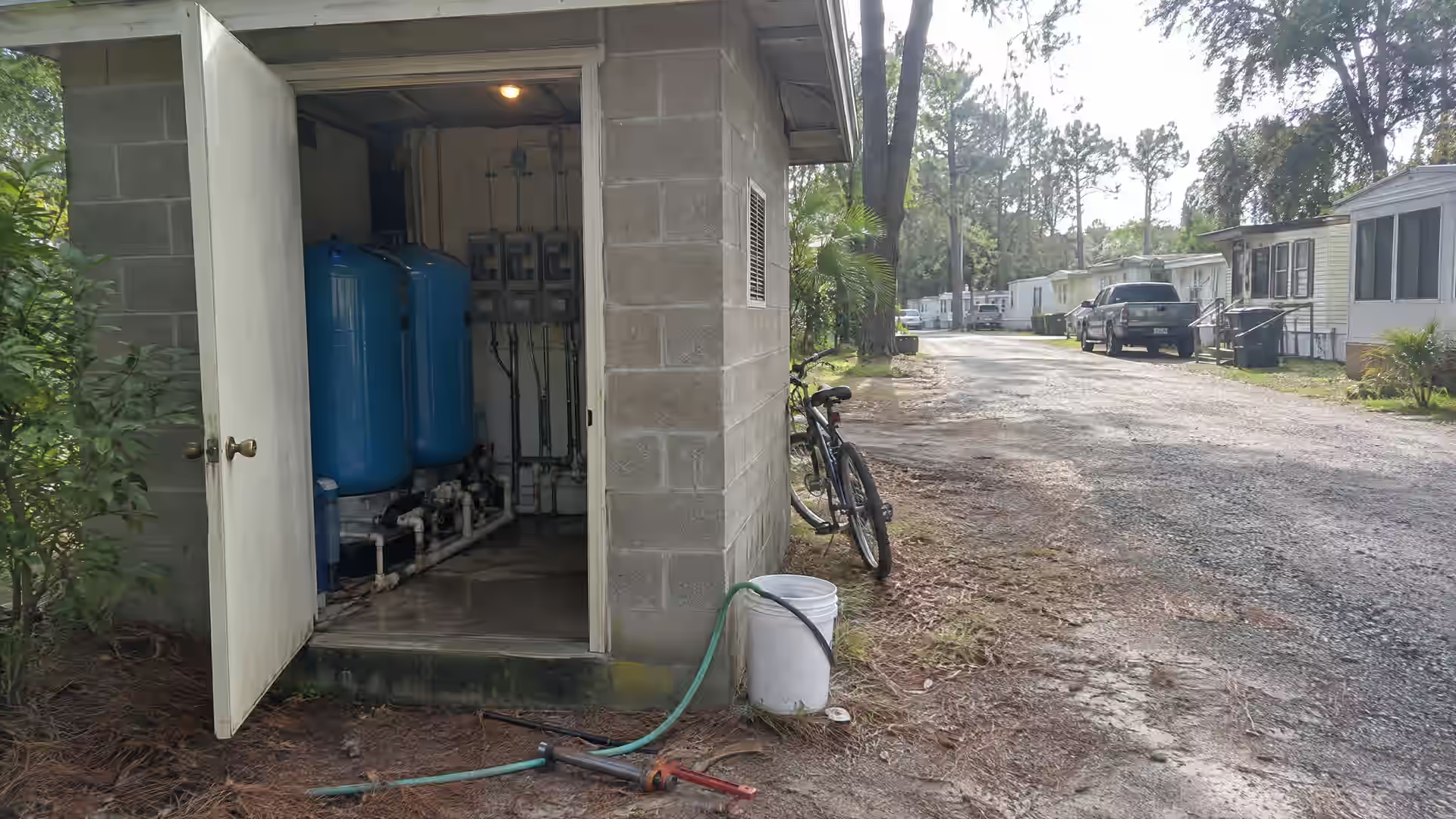
Fourteen occupied lots and sixteen occupied lots are the same pipework and two different sets of obligations. Nobody finds that out at a convenient moment.Cumberland County, NC
Want it priced properly?
On-site estimates are free, itemized, and written down before any work starts.
Questions we get asked
When does a park well become a public water system?
15 connections, or 25 or more people served for 60 or more days a year, is the threshold in North Carolina. The county health department makes the determination rather than the owner.
Do I just need a bigger pump for more lots?
1 common mistake, and an expensive one. Horsepower raises flow without changing the cut-out pressure or the cycling, so overlapping demand needs storage first and pump capacity second.
Why does one small part failing take out the whole park?
$40 buys the pressure switch that decides when the pump runs, and every lot is downstream of it. On multi-tenant supply the consumables get replaced on schedule rather than on failure.
Who services mobile home park wells near me?
Fayetteville Well Pump Repair works on multi-tenant well supply across Fayetteville and Cumberland County, starting with the classification question before any equipment is quoted.
The pump never shuts off. Is that the well?
2 causes dominate on a park: a split in the buried distribution that bleeds continuously, or a pump that can no longer reach cut-out. Isolating section by section separates them without trenching.
A park well is a commercial asset with tenants attached, and the failure modes are the same as a house at ten times the consequence. Classification first, then peak demand, then storage, then the pump. Where the shared line is the fault rather than the well, a pump running constantly covers how it gets traced, and pressure tank replacement covers the storage side.