Fayetteville Well Pump Repair inspects the well on a property you are buying or selling in Cumberland County. We pull the well record, measure the pump setting depth and tank pre-charge, check the wellhead, run a $50 to $200 lab panel, and put every number on one sheet. If a finding points at a repair, the ranges are on our well pump cost page.
The record costs you nothing, the panel costs $50 to $200, and we price the visit in writing before we come out. What we find can move the contract by thousands.
A pressure tank that has lost its charge is a $1,000 to $2,300 item, and it has been short cycling a $1,500 to $2,500 pump, because a tank with no air cushion starts the motor every time a tap opens. An old unsealed bore in the yard is enough to hold up a closing.
Wells around Fayetteville sit in Coastal Plain sand at 100 to 250 ft, and most properties we inspect sit outside the PWC footprint, where the well is the only supply. Sellers are honest and often wrong about the same thing: the pump was replaced once, so a thirty-five-year-old bore gets called fifteen. The record settles it in minutes, which is why we pull it first.
What is actually wrong
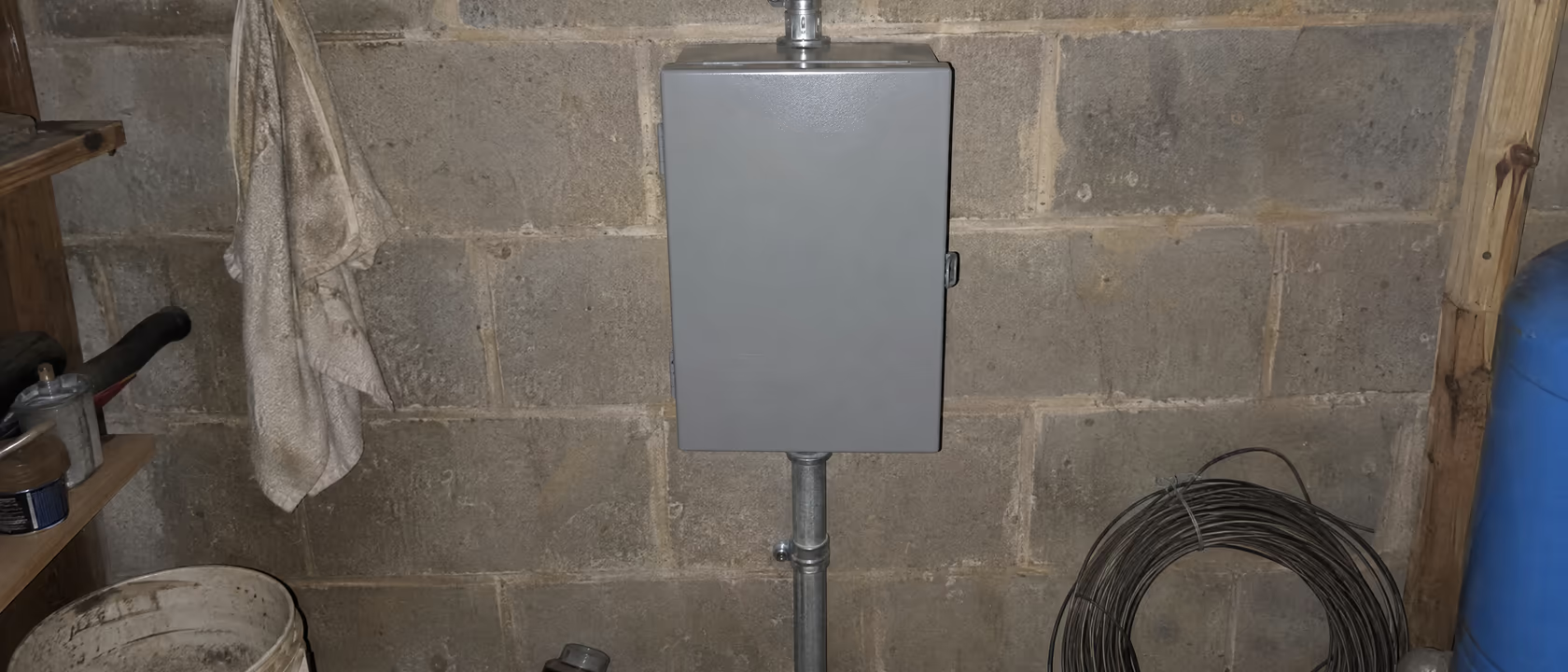
The record, and what it settles
North Carolina holds a well record for wells drilled since the 1980s, with total depth, casing depth and static water level on it. Those three numbers price every future job on the property, so a buyer who has them can read a quote years later and a buyer without them is guessing. Where no record exists, we sound the casing and run a camera instead.
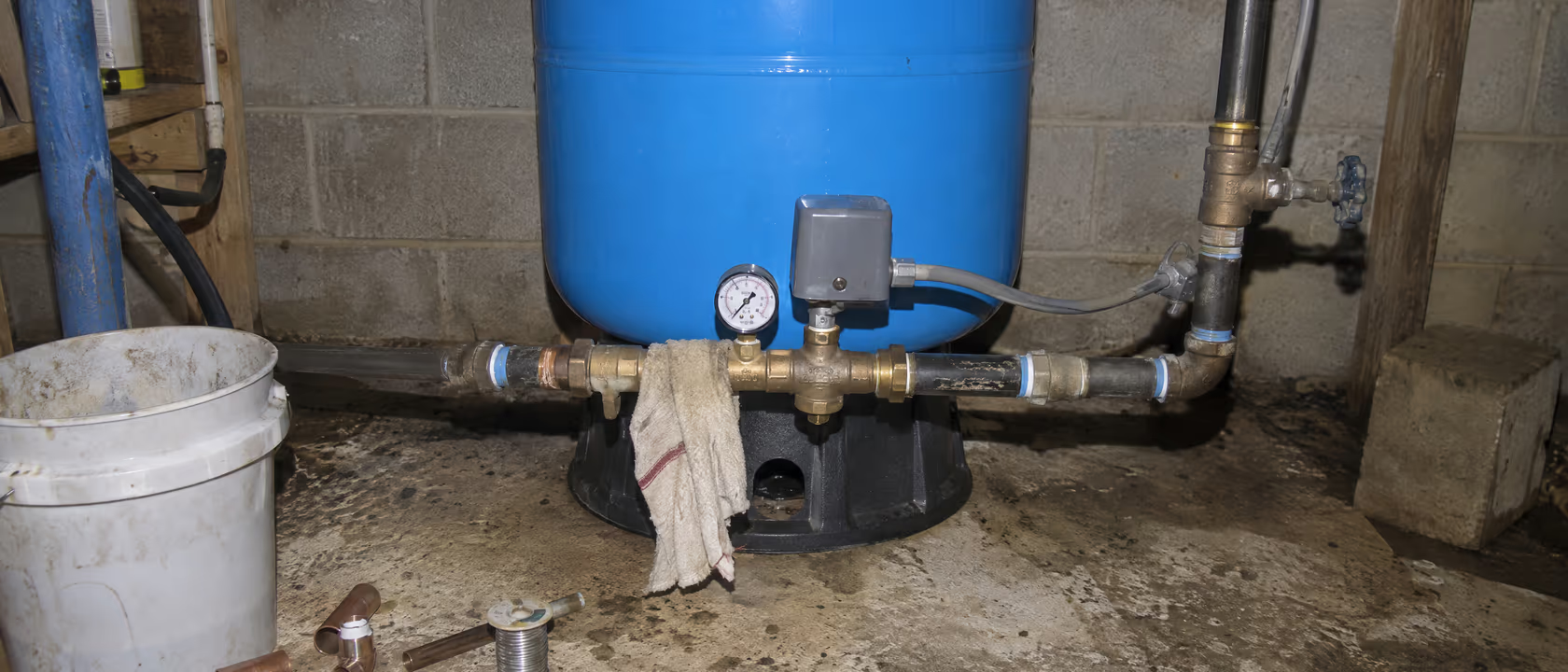
What the tank says about the pump
A flat pre-charge means the pump has been short cycling, and cycling is what ends motors here. When we read an Amtrol Well-X-Trol at 22 psi against a 40 psi cut-in, the finding is more than a $1,000 to $2,300 tank. It is a warning about the Franklin Electric motor and Goulds pump end behind it, which cost $1,500 to $2,500 to replace.
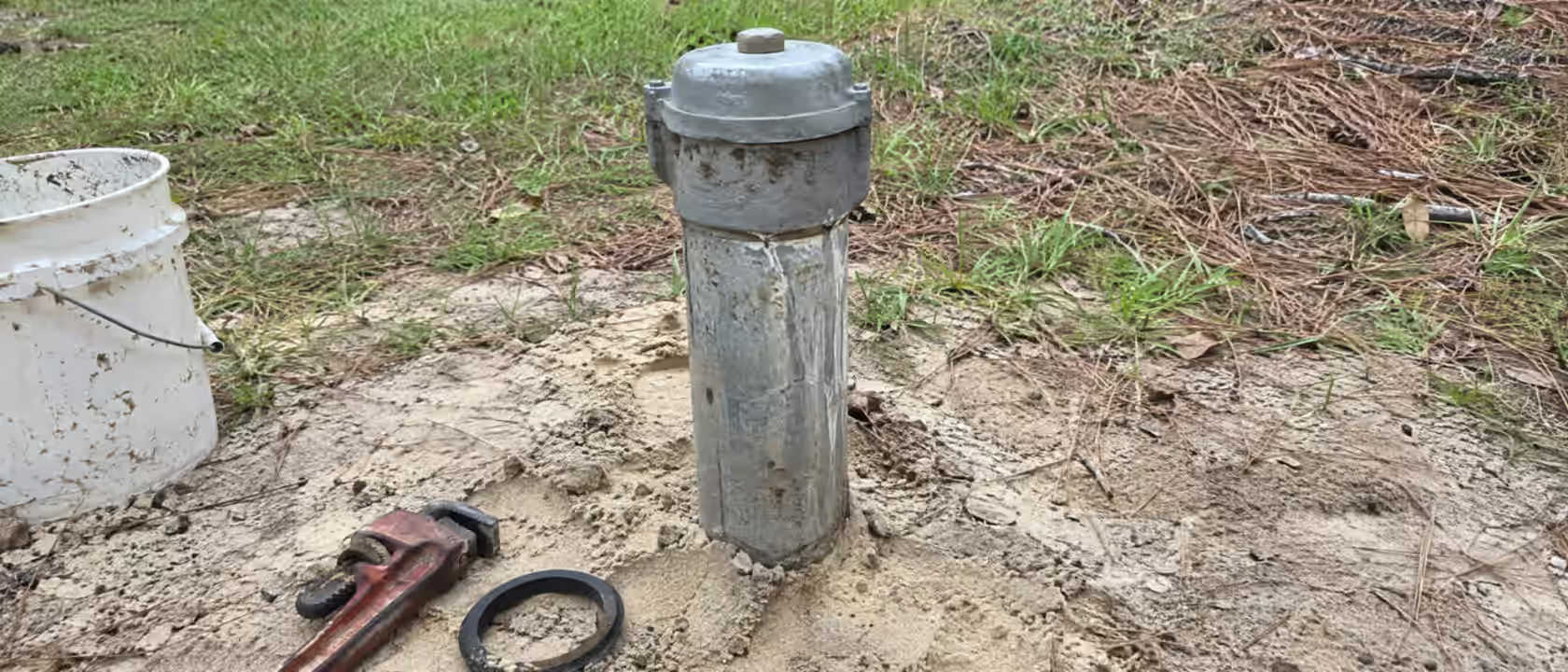
The wellhead, in five minutes
We check the cap, gasket and vent screen, whether the casing stands 12 in above finished grade, and which way the ground falls. That inspection costs nothing and it is where we find most contamination routes. A Baker Water Systems cap seated on a raised casing is the cheapest improvement we can make to an older wellhead, and sometimes that is all it needs.
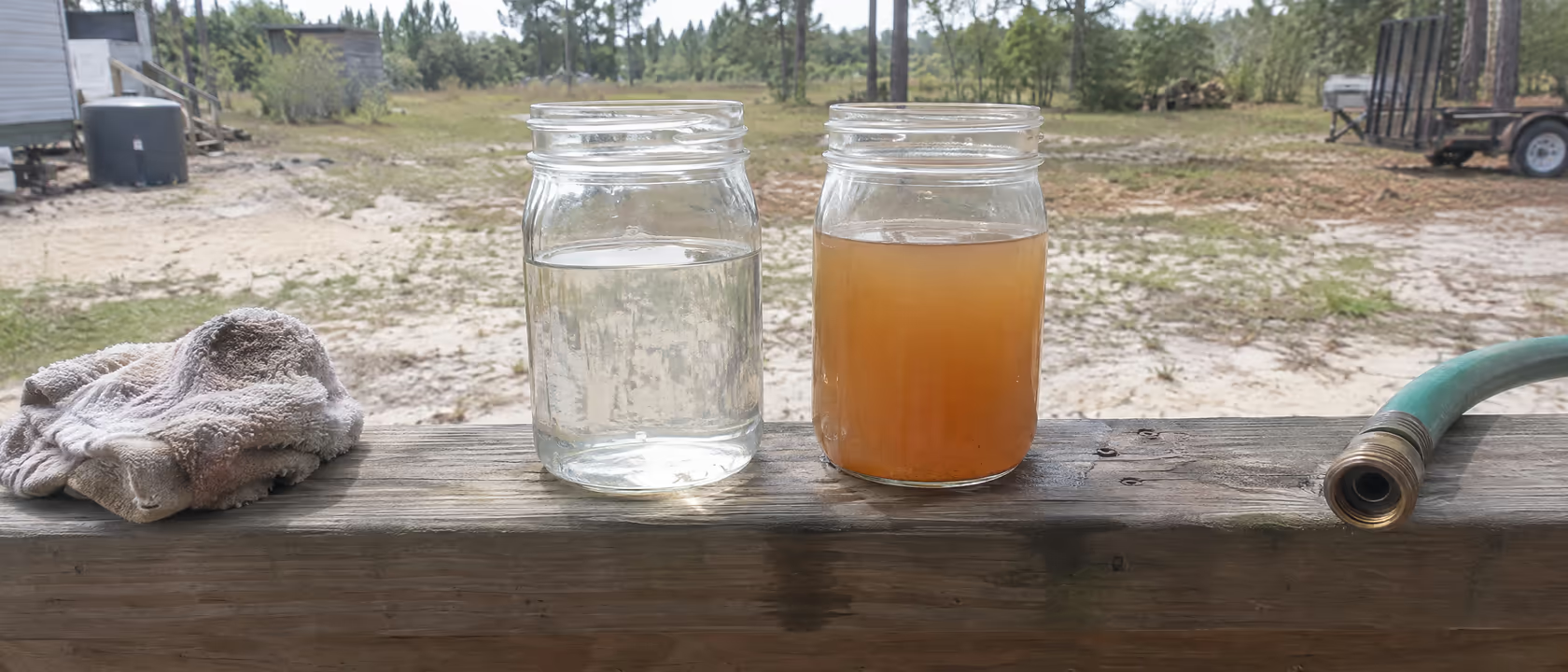
The water, which nobody assumes
$50 to $200 buys a lab panel covering bacteria, iron, manganese, hardness and pH. In this county a PFAS question sits beside it: Cumberland is inside the Chemours sampling program, so that sampling is funded and you request it on (910) 678-1101. We would rather you asked both questions before the closing than after it.
How we work it out
-
Pull the record first
We read depth, casing and static level off the state record before anyone drives out. Those three numbers cost you nothing and they change how we read everything else.
-
Measure the system
We read the working band at the Square D Pumptrol, the pre-charge against the actual cut-in, and the pump setting depth. You will use those three numbers on every well bill for as long as you own the house.
-
Inspect the wellhead and casing
We check the cap, the stick-up and the ground fall, and we run a camera down the casing where sand or a bacteria history says to. Access never gets cheaper than it is before you own the place.
-
Sample, and write it down
We take the panel sample and put it on one sheet with the four measurements. That sheet is what you negotiate on, and it is what the next service visit starts from.
The things that change a transaction
An unsealed old well transfers with the deed
Old bores turn up on rural property here all the time. 15A NCAC 02C requires an abandoned well to be sealed to full depth, and a cap on the surface does not count, so an undocumented casing can hold up a closing until someone deals with it. Proper abandonment is recorded with the county, which is what makes it evidence you can hand a lender.
What the setback rules out
A well sited too close to a septic drainfield cannot be repaired into compliance. On a small lot, the only durable answer can be a new well on a compliant site, which is a different number from a repair and belongs in your negotiation before you sign.
Where the samples go
The Cumberland County Department of Public Health handles bacteria samples for private supplies. We use the same laboratory before and after any remedial work so the two results compare, because in a transaction both sides are reading them and a change of lab reads as a change of story.
Numbers worth knowing
| Lab panel | $50 to $200 |
|---|---|
| Records exist from | The 1980s |
| Pre-charge | 2 psi below cut-in |
| Minimum stick-up | 12 in above grade |
| Tank replacement | $1,000 to $2,300 installed |
| Pump replacement | $1,500 to $2,500 |
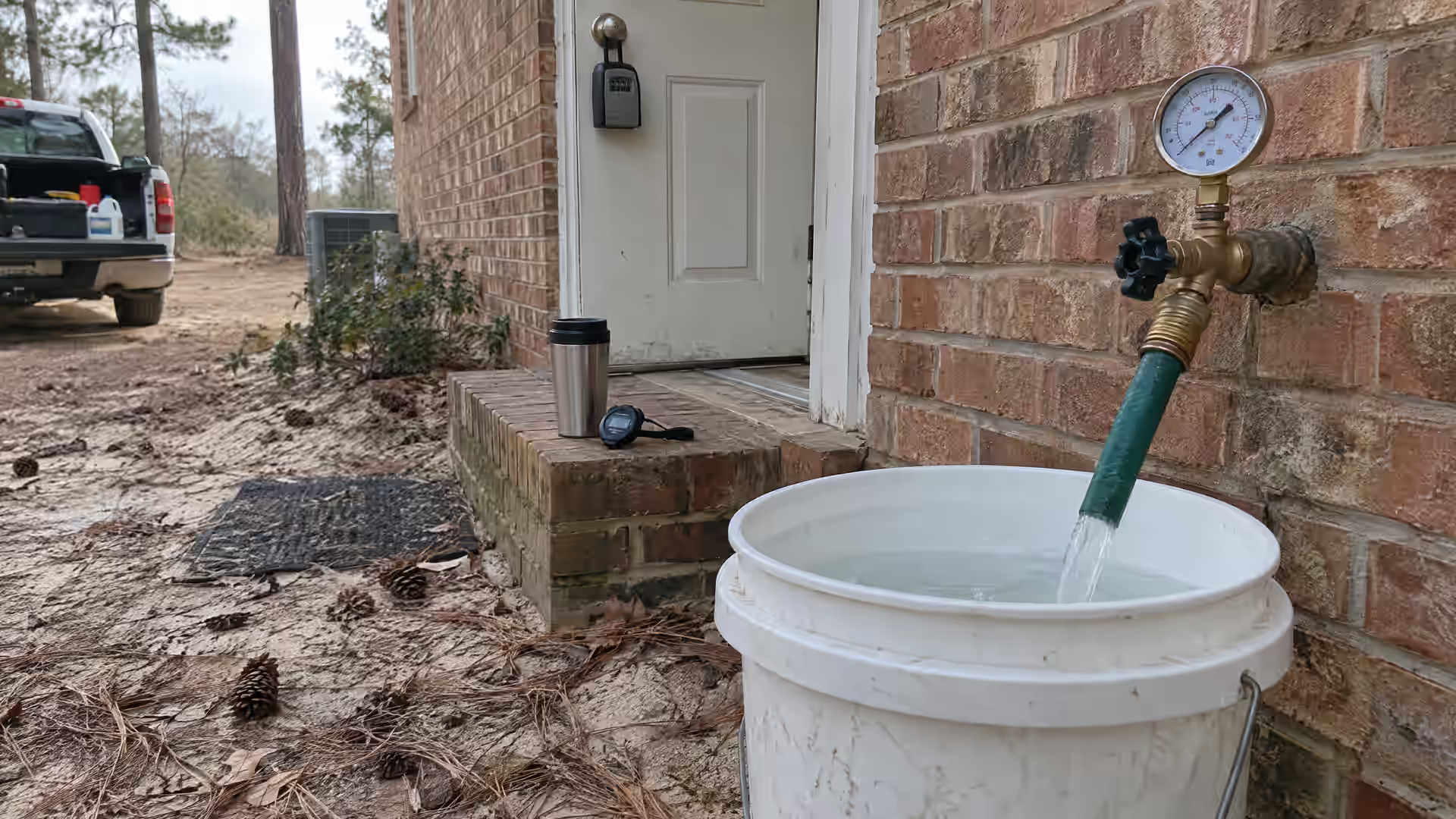
Well pump work in Fayetteville runs $150 to $3,500 for most homes. What decides the number is whether the fault sits outside the well or in it, and how deep the pump hangs.
| What the job is | Typical range | Unit |
|---|---|---|
| External component: pressure switch, control box, wiring, primingThe pump itself is fine. Cheapest outcome and the most common one. | $150 – $500 | installed |
| Pressure tank replacementTank, tank tee, gauge, switch and fittings, sized on drawdown. A waterlogged tank is what makes a pump short-cycle. | $1,000 – $2,300 | installed |
| Shallow well or jet pump, to about 25 ftCommon on Coastal Plain sand wells, where the water table sits high enough that a jet pump still works. | $600 – $1,400 | installed |
| Deep submersible pump, well 100 to 200 ftTypical Fayetteville well depth. Price covers pulling the old pump, drop pipe and wire. | $1,500 – $2,500 | installed |
| Deep submersible pump, well 300 to 400 ft or higher horsepowerDepth drives horsepower and hoist labor together. Every extra 100 ft adds roughly $500 to $1,000 in pipe, wire and time. | $2,800 – $5,500 | installed |
| Full system replacement: pump, tank, wiringWorth doing together when the pump is original and the tank is the same age. | $3,500 – $6,000 | installed |
What moves the number
- Every additional 100 ft of well depth+$500 to $1,000
- Emergency, weekend or after-hours call+25% to 50%
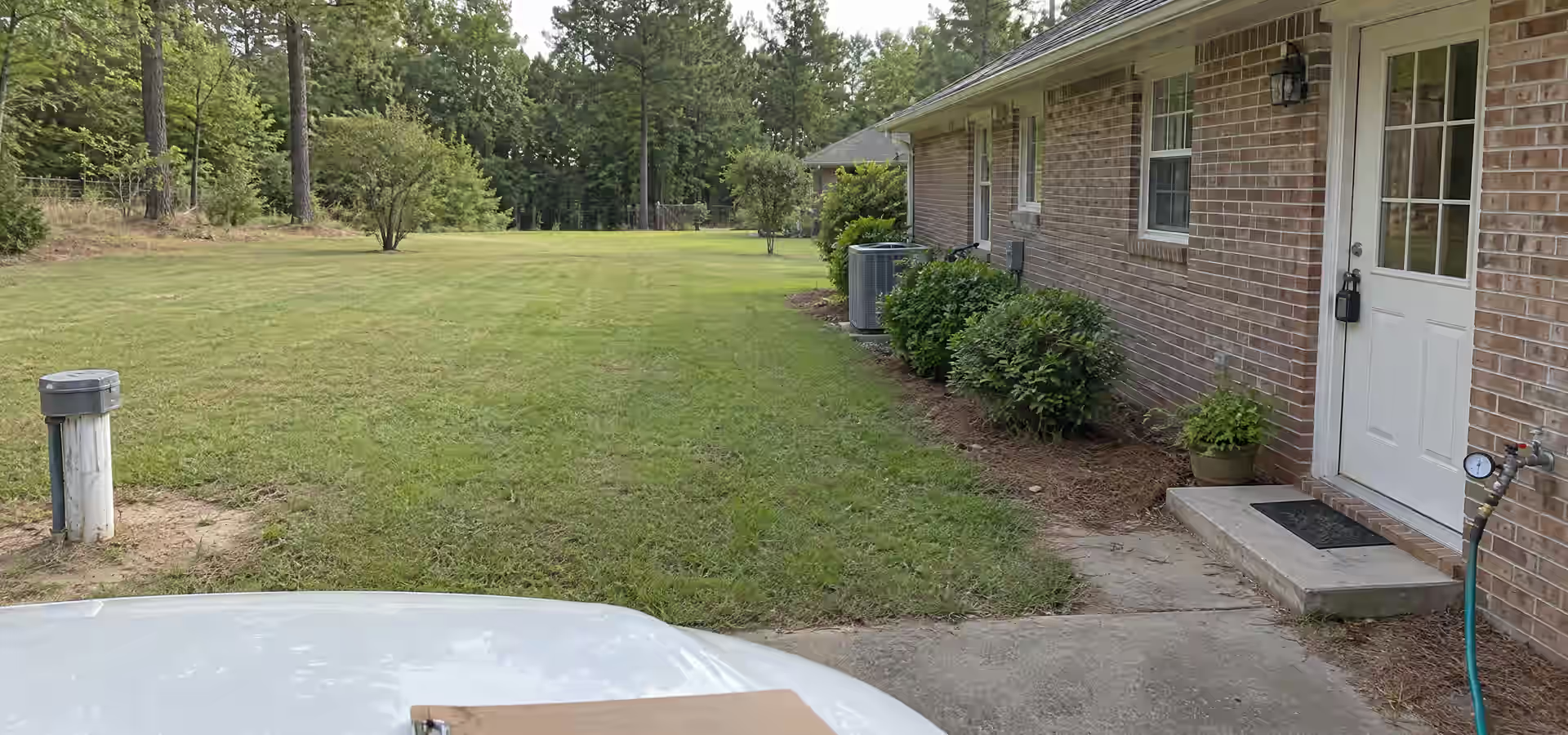
Every buyer asks what the roof is like. Almost nobody asks how deep the well is, and only one of those two numbers is written down somewhere free.Cumberland County, NC
Who we work for
- Well and Pump Service for Farms Stock water, wash-down, irrigation and a farmhouse on one well. Sized on sustained draw, not acreage.
- Well Service for Mobile Home Parks Shared supply with tenants attached. Past 15 connections it stops being a private well at all.
- Well Service for Churches and Camps Idle most of the week, then a full building. The hardest duty cycle in private water supply.
Want it priced properly?
On-site estimates are free, itemized, and written down before any work starts.
Questions we get asked
Does a home inspection cover the well?
Usually one test: water arrives at pressure on the day. Pump age, setting depth, casing condition, tank pre-charge and water chemistry are the four-figure items it leaves out, and we check all five.
How old is the well I am buying?
The well record answers that for anything drilled since the 1980s. Sellers often quote the age of the pump instead, because the pump is the part somebody replaced within living memory.
What should a pre-purchase well inspection include?
The state well record, the pump setting depth, the tank pre-charge against measured cut-in, the wellhead and casing, and a laboratory panel. If you get less than that, you have a working-on-the-day test.
Who inspects wells for a home sale near me?
Fayetteville Well Pump Repair runs pre-purchase well inspections across Fayetteville and Cumberland County and hands over the measurements on one sheet, so buyer and seller are reading the same numbers.
There is an old well casing in the yard. Does it matter?
Yes. An unsealed abandoned bore is an open path into the aquifer and it transfers with the property. Sealing it is required and recorded, and an undocumented casing can hold up your closing.
If you are under contract, call before the inspection window closes and we fit the visit inside it. If you are listing, we can run the same checks ahead of time so the numbers are yours to show.
Where the findings point at the casing instead of the equipment, well casing repair covers what we can fix, and well water testing covers what the panel measures.