A filtration system is a set of stages in a specific order, and we take that order from your lab result. At Fayetteville Well Pump Repair, we test first and buy second, because buying before testing means paying full price for the wrong tank. The $50 to $200 panel is where we start. Every stage and its price sits on our well pump cost page.
You called about orange stains, a rotten egg smell or blue-green marks at the fixtures, and you want the price. A complete system here runs $1,500 to $6,500 depending on how many stages your water needs, and a sediment filter alone is $145 to $195 installed. Wells in this county usually arrive soft, acidic and carrying iron, and each of those needs its own stage.
We care more about the order than the brand. We take grit out first so it does not clog the media behind it. We correct pH before the iron stage, because an iron filter below its design pH does not work. Softening comes after iron removal. Disinfection goes last, if you need it at all.
What is actually wrong
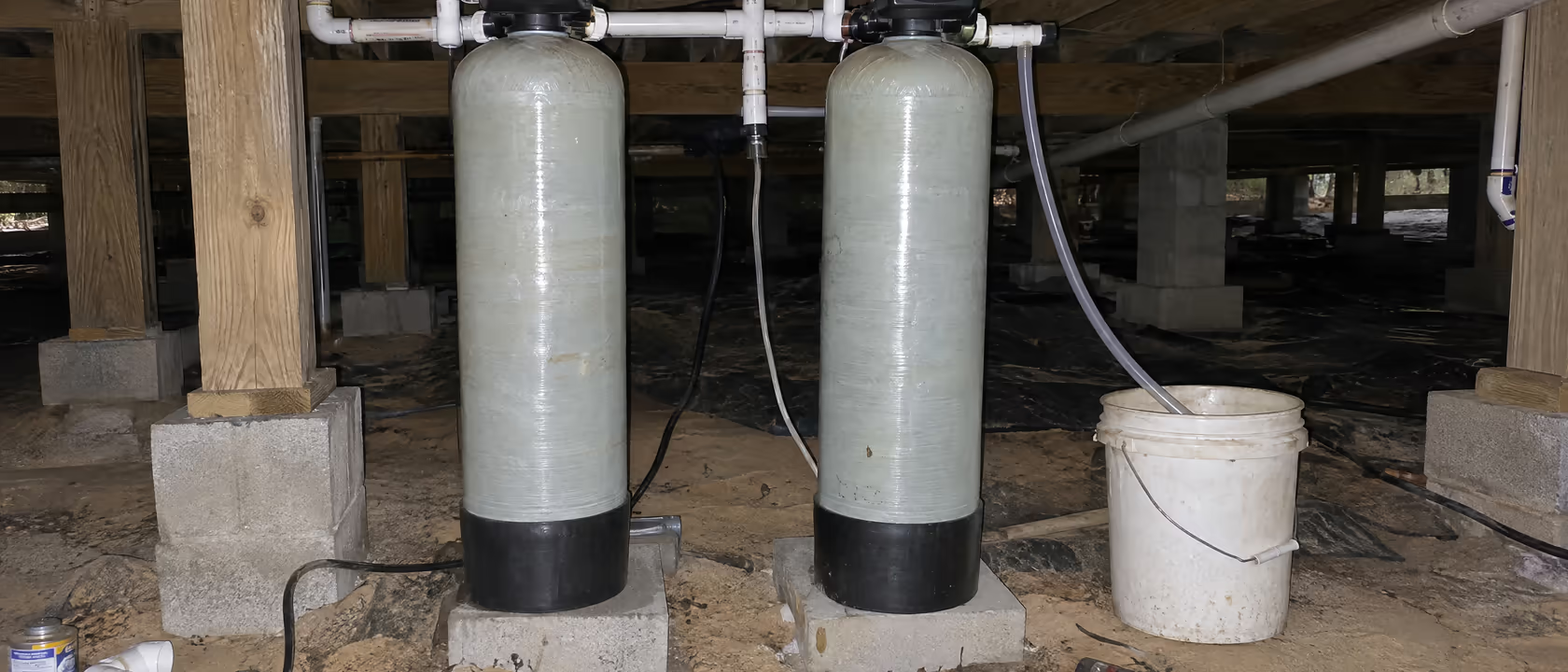
Stage one, sediment
We put a spin-down separator and a Pentair cartridge housing ahead of everything else to pull grit out. On sandy ground this is not optional. Fine grit packs the media bed in any tank downstream and cuts its life badly. It also protects your fixtures and appliances, which is the part you notice first.
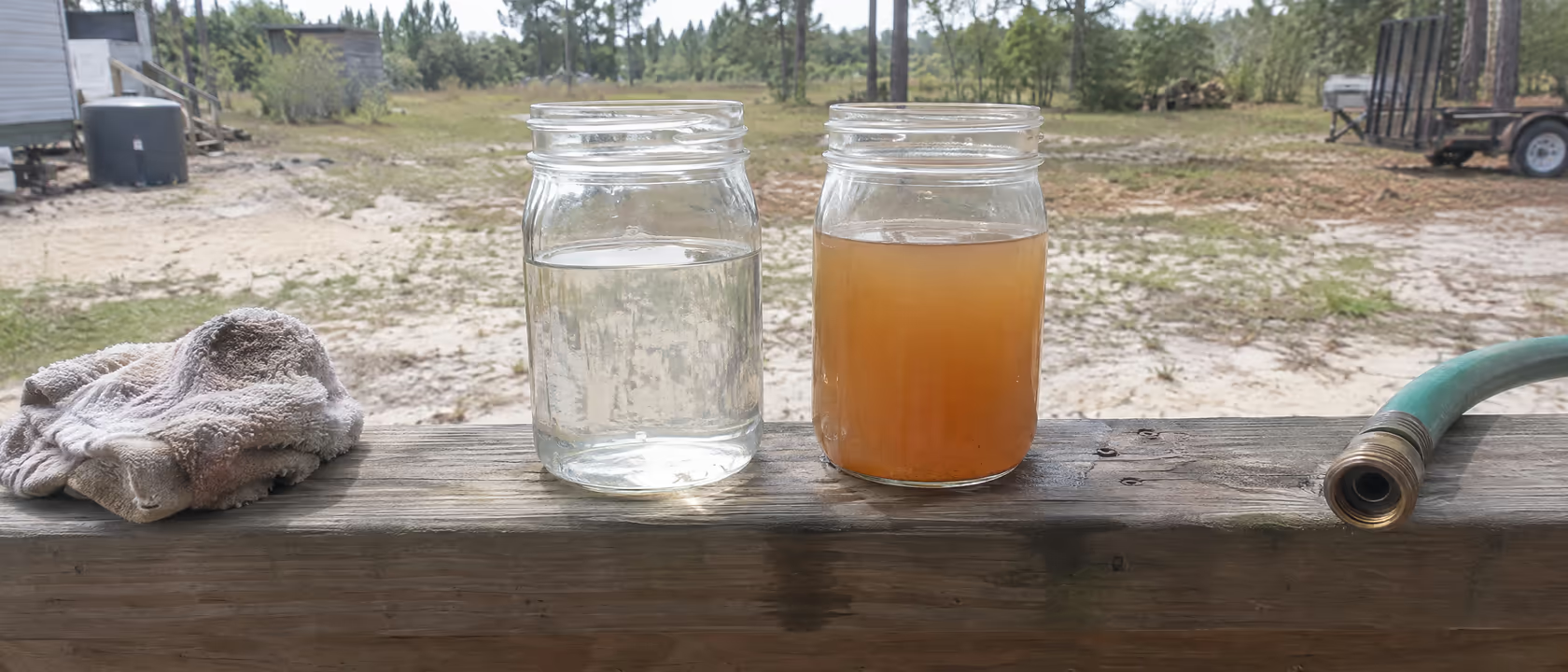
Stage two, pH correction
Acidic water eats your copper pipe and leaves blue-green stains at the fixtures. We fit a calcite neutralizer on a Fleck 5600SXT head to raise the pH and save your plumbing. It has to sit ahead of any iron stage. Acid neutralizer work covers the sizing in detail.
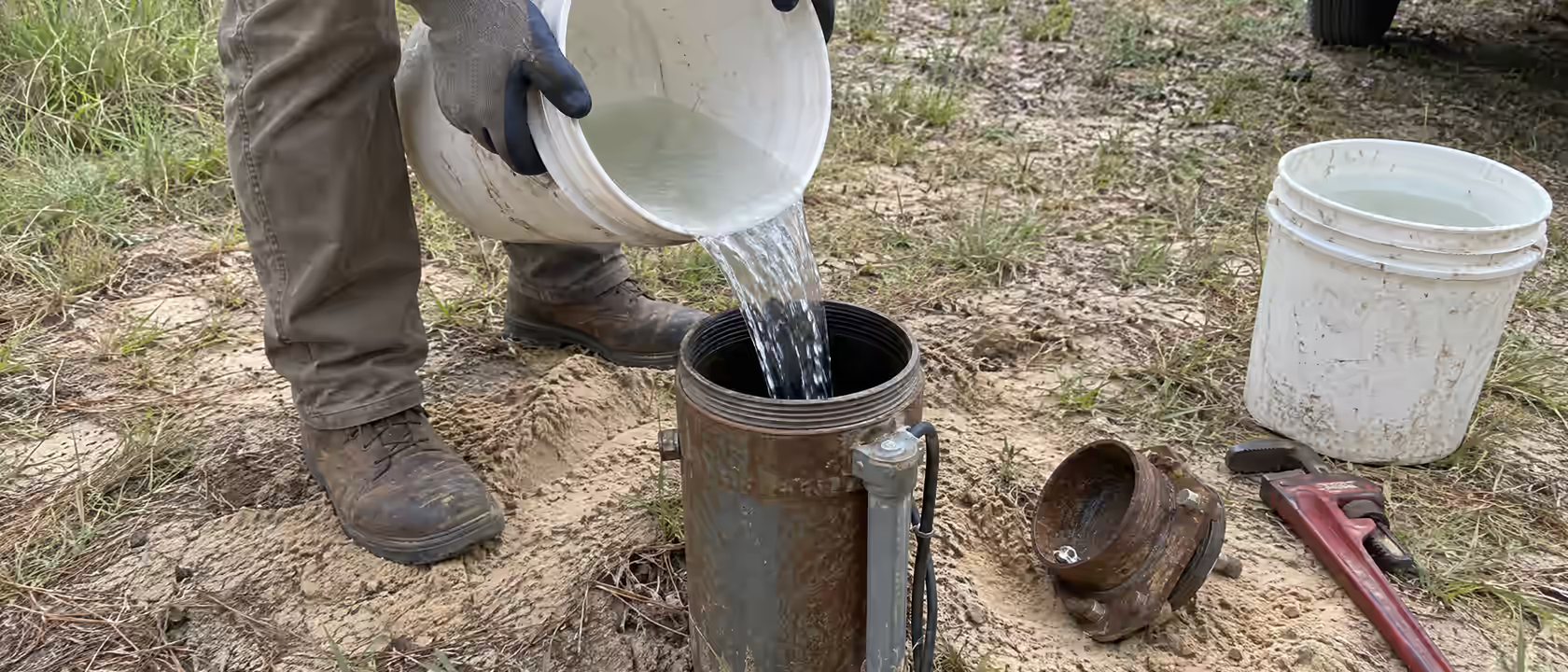
Stage three, iron and sulfur
Orange stains and a rotten egg smell usually turn up together on our ground. We fit an oxidizing filter that handles both in one tank, as long as the pH ahead of it is right. Backwash flow decides your tank size, because a bed that cannot lift during cleaning channels and stops working inside a year.
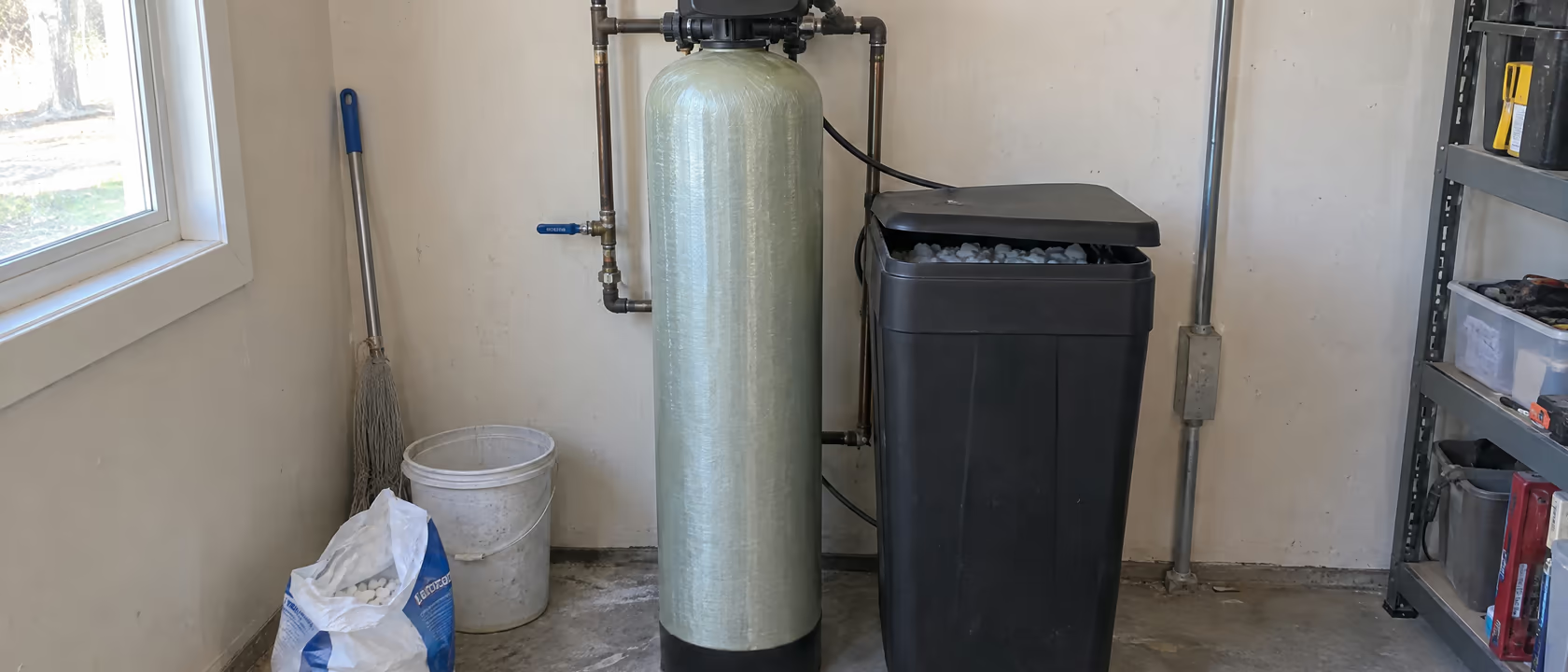
Stage four, softening and polishing
We fit a softener after the iron stage rather than before it, because resin fouled with iron loses capacity and never fully recovers. If your concern is drinking water rather than the whole house, a unit at the kitchen tap does that job for a fraction of a whole-house install.
How we work it out
-
Run the panel
We run a $50 to $200 lab panel covering iron, manganese, hardness, pH and bacteria. Everything we do after this step runs off those numbers instead of your description of the symptoms.
-
Measure the flow you actually have
Backwashing tanks need a minimum flow to clean themselves. If we specified a system above what your pump delivers, it would fail during cleaning, when nobody is watching, so we measure your flow at an outside tap first.
-
Design the sequence
We design the sequence: sediment, then pH, then iron, then softening. We size each stage to your measured load rather than to a package price on a shelf.
-
Install, then retest
We run a second panel after commissioning. It shows you whether the system is doing what we said it would, on paper, before we call the job finished.
What decides whether treatment is the right spend at all
Treatment cannot fix a broken well
Bacteria coming in through a cracked cap or missing grout is a construction problem. 15A NCAC 02C exists to keep surface water out of the borehole. If we fitted a UV lamp downstream of a well that is taking in runoff, we would be treating a symptom you should not have, so we check the wellhead first.
Nobody tests a private well but you
NGWA guidance puts bacteria at annually and a full chemical panel at every three years. Your well sits outside the monitoring that covers city water. A well that has never been sampled has never been assessed by anyone at all.
Flow rate is the real limit
A Franklin Electric motor and a Goulds pump end deliver a fixed rate. Every backwashing tank in your system has to clean itself within it. Adding stages to a modest pump eventually starves the last one, so we check the design against measured flow rather than assumed capacity.
Numbers worth knowing
| Lab panel | $50 to $200 |
|---|---|
| Sediment filter | $145 to $195 installed |
| Carbon filter | $1,495 to $2,495 |
| Complete system | $1,500 to $6,500 |
| Correct order | Sediment, pH, iron, soften |
| Retest after install | Always |
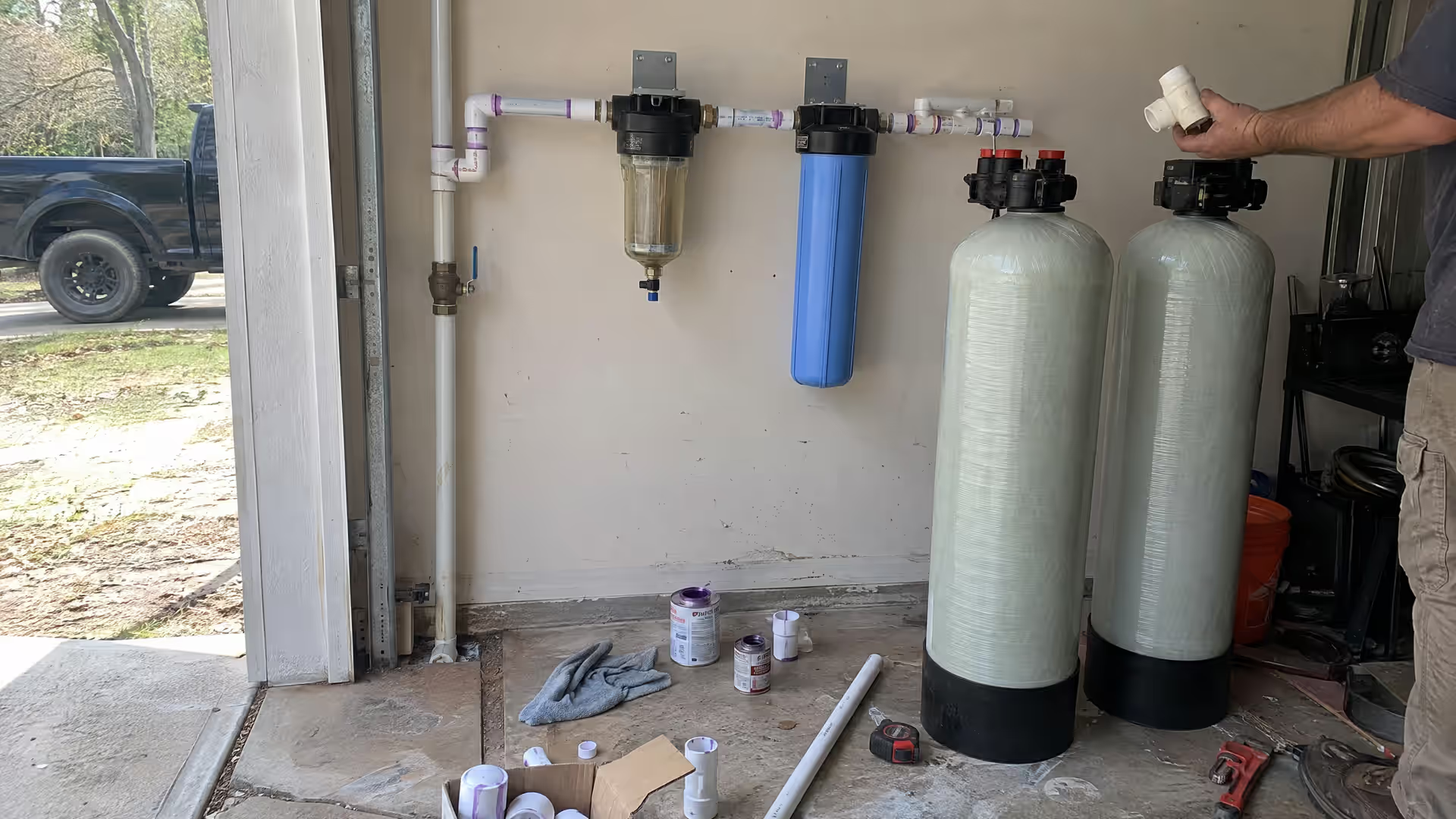
A complete well water treatment system runs $1,500 to $6,500 installed. What you need depends on what a lab test finds, which is why the test comes first and costs $50 to $200.
| What the job is | Typical range | Unit |
|---|---|---|
| Lab water testTells you what is actually in the water and what equipment is the right size. Buying treatment without it is guessing. | $50 – $200 | per test |
| Sediment filterFirst stage. Catches the sand that Coastal Plain wells produce. | $145 – $195 | installed |
| Point-of-use reverse osmosis, kitchen tapDrinking water only, not whole-house. | $595 | installed |
| UV disinfectionHandles bacteria without chemicals. Bulb replacement runs $145 to $160 a year. | $895 – $995 | installed |
| Acid neutralizer, pH correctionCoastal Plain groundwater runs acidic, and low pH eats copper pipe and stains fixtures. | $1,195 – $1,895 | installed |
| Carbon filterTaste and odor. Backwashing units sit at the top of the range. | $1,495 – $2,495 | installed |
| Water softenerSalt runs about $125 a year. | $1,695 – $1,895 | installed |
| Iron and sulfur filterOrange staining and rotten-egg smell. The two most common complaints on iron-rich sand aquifers. | $1,795 – $2,195 | installed |
| Acid neutralizer plus softener packageCheaper together than separately. | $2,695 – $2,995 | installed |
| Complete treatment systemDepends entirely on what the test finds. | $1,500 – $6,500 | installed |
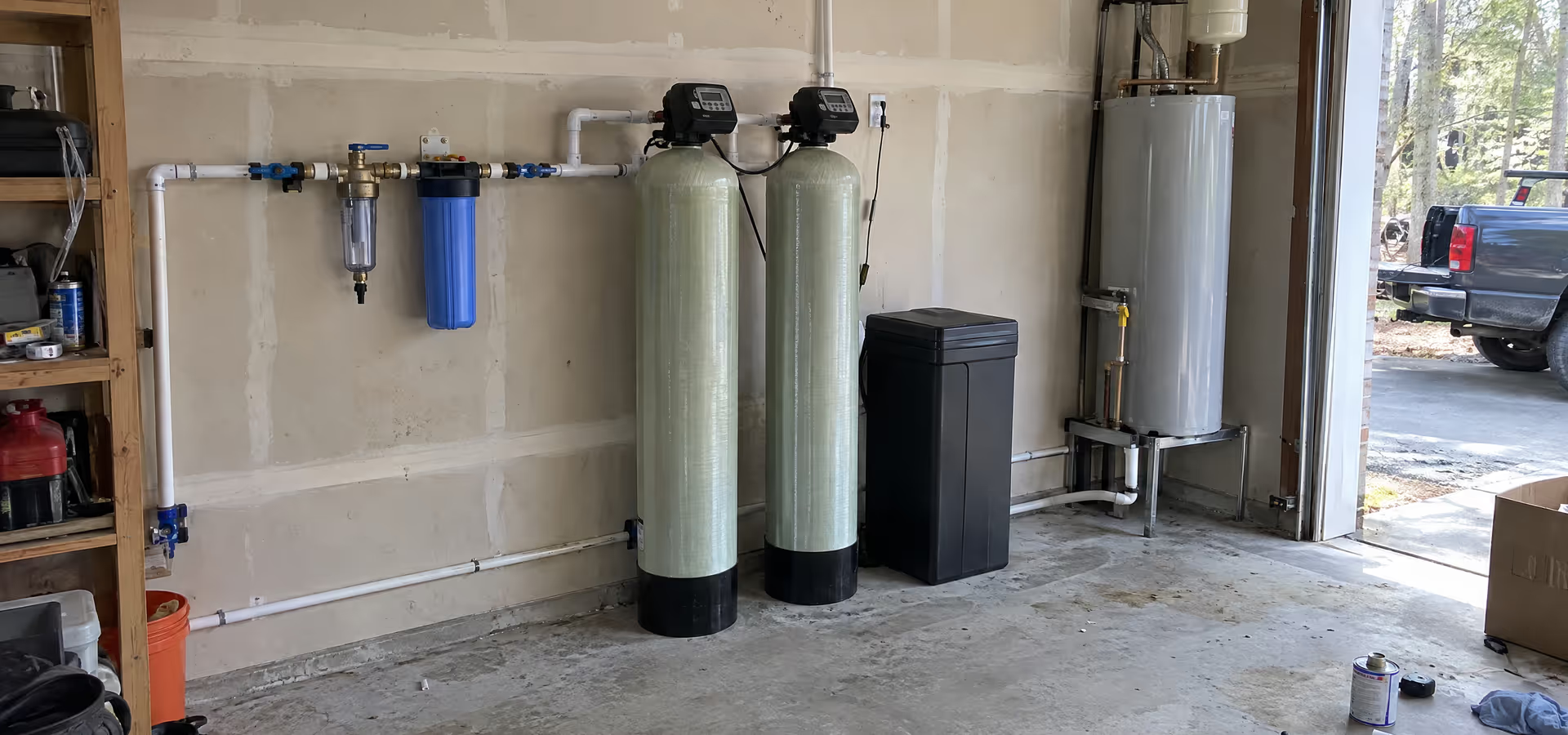
Half the treatment equipment we are asked to look at was bought before anyone tested the water. It works perfectly on a problem this house does not have.Cumberland County, NC
Who we work for
- Well and Pump Service for Farms Stock water, wash-down, irrigation and a farmhouse on one well. Sized on sustained draw, not acreage.
- Well Service for Mobile Home Parks Shared supply with tenants attached. Past 15 connections it stops being a private well at all.
- Well Service for Churches and Camps Idle most of the week, then a full building. The hardest duty cycle in private water supply.
Want it priced properly?
On-site estimates are free, itemized, and written down before any work starts.
Questions we get asked
What filtration does well water in Fayetteville usually need?
Most properties here need three stages: sediment for the sand, pH correction for acidic groundwater, and iron removal. We add softening where the panel shows hardness worth treating.
How much does a whole house filtration system cost?
$1,500 to $6,500 covers a complete system depending on how many stages the panel justifies. A single sediment filter at $145 to $195 installed is the entry point and solves grit but nothing else.
Do I need to test the water first?
$50 to $200 for a lab panel is the cheapest money in this entire process, because it decides which stages you need. Equipment bought from symptoms rather than numbers is the most common expensive mistake here.
Does the order of the filters matter?
Yes. Sediment comes first to protect the media behind it, pH correction precedes iron removal because oxidation fails at low pH, and softening follows iron so the resin does not foul.
Who installs well water filtration systems near me?
Fayetteville Well Pump Repair designs and installs treatment trains across Fayetteville and Cumberland County, sizing each stage against a lab panel and the measured flow rate of the existing pump.
Will filtration make my well water safe to drink?
Filtration cannot repair the well. Where bacteria are entering through a cracked cap or an ungrouted annulus, treatment masks the result while the route stays open, so we check the wellhead first.
Call us before you buy a tank. We run the $50 to $200 panel, size each stage to the result, and run a second panel after the install so you can see what changed. Well water testing covers what the panel measures, and iron filter installation covers the stage most households here end up needing.