Well service for churches and camps in Fayetteville, NC deals with the hardest duty cycle in private water: long idle periods broken by sharp, heavily-attended peaks. Fayetteville Well Pump Repair sizes for the peak and commissions for the idle, because the two failure modes are opposite and a system tuned for one fails at the other. Pump ranges sit on the well pump cost page.
Six days of nothing does its own damage. Water standing in a pressure tank, a rarely-used branch line or a hall kitchen grows the sulfate-reducing bacteria that produce slime and a rotten-egg smell, seals dry out, and a tank quietly loses its air charge with nobody drawing water to reveal it. None of that fails while the building is empty. It fails on Sunday morning.
Then the peak arrives. Restrooms, a kitchen and a baptistry drawing together for three hours is a load a modest well can genuinely meet, provided there is storage between the demand and the pump. Sized without that storage, the pump chases the peak, short cycles through it, and pays for it over a few years rather than in one visit.
What is actually wrong
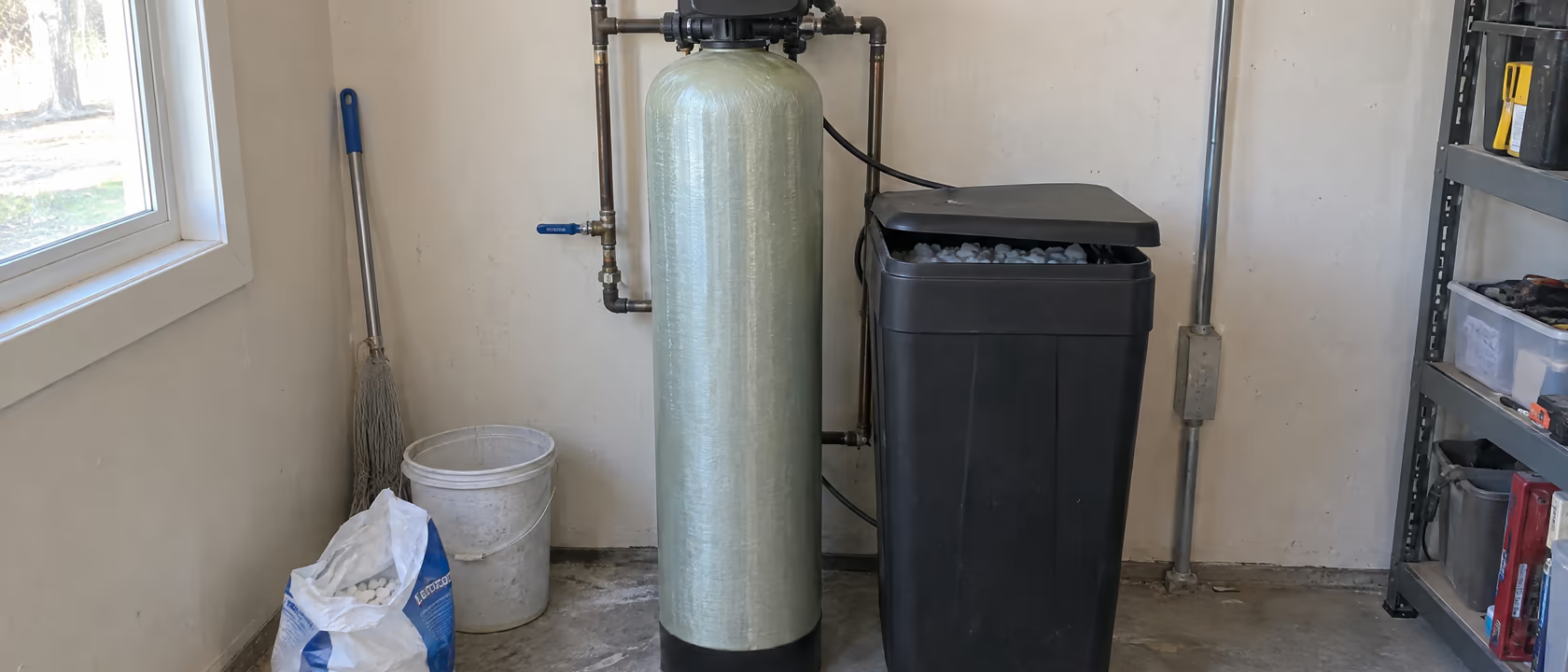
Storage is what makes the peak survivable
A well that recovers steadily can serve a large gathering if the water is already in a tank when people arrive. Bulk storage refilled across the week converts a demand problem into a scheduling one. Sizing follows the largest gathering and its duration, with a Goulds pump end matched to the refill rate rather than to the peak, and an Amtrol Well-X-Trol pre-charged 2 psi below cut-in holds the pressure side steady behind it.
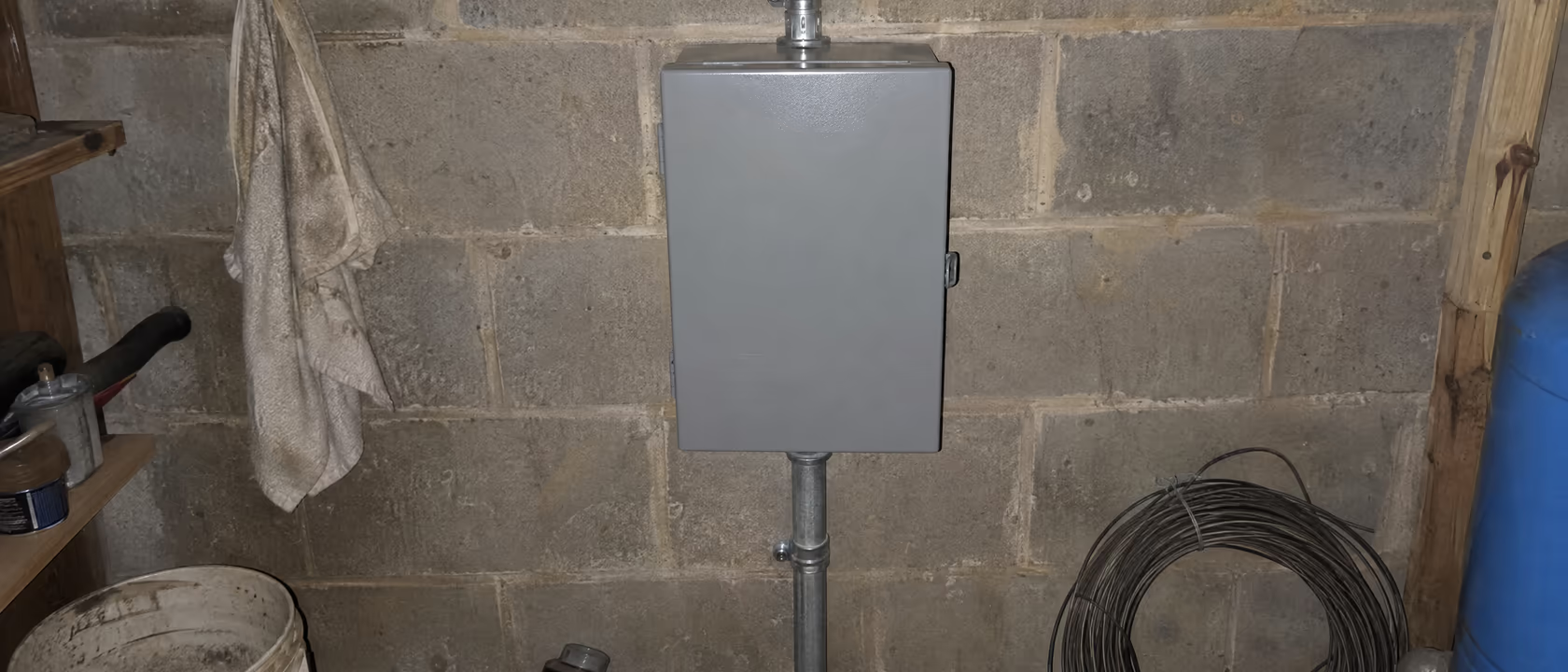
What the idle week does
Stagnation is the characteristic complaint here and it is not contamination in the usual sense. Standing water at room temperature in a dead leg is a good environment for bacteria, so the answer is flushing before use and a sample afterwards. Shock chlorination clears a colony, and how fast it returns says whether the well has an ongoing route in.
Seasonal camps and the shut-down
A camp closed over winter and reopened in spring has every problem an idle building has, plus freeze exposure. Draining and isolating outside taps and irrigation costs nothing in November. A plastic filter housing is the cheapest item on the assembly and the first to split, and it takes the Square D Pumptrol and the tank tee with it when it goes.
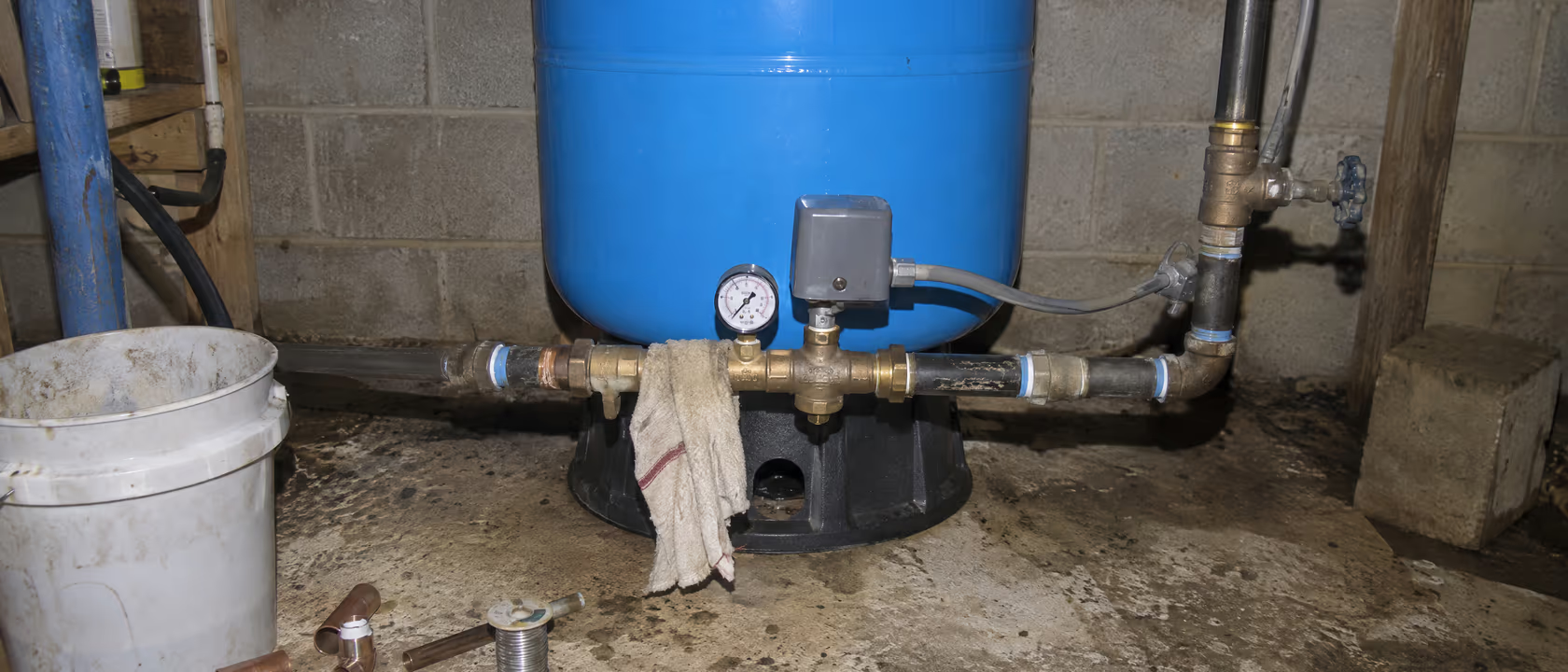
Commission it before the season, not during
A pump that has not started in six weeks has contacts that have been sitting, a tank whose charge has leaked away and seals that have dried. All of that arrives at once on the first real call for water. A Franklin Electric motor pushed straight into a peak on a flat tank is being asked to do the worst version of its job.
How we work it out
-
Size the gathering, not the building
Largest attendance, how long they are on site, and which fixtures run together. That is the peak the storage has to cover.
-
Check the classification
A supply serving 25 or more people for 60 or more days a year is a public water system in North Carolina, and a regular congregation or a season of camps can reach that.
-
Flush, then sample
In that order, before a season or after a long gap. Flushing proves the water runs. The sample says what is in it.
-
Commission ahead of the peak
Pre-charge, switch, seals and a full cycle under load, on a quiet day. The alternative is finding all four faults with a full building.
The obligations that arrive with an audience
Serving the public changes the category
At least 15 connections, or 25 or more people for 60 or more days a year, makes a supply a public water system rather than a private well. A weekly congregation crosses the people threshold easily, and the county health department determines whether the days threshold is met.
Testing stops being optional
NGWA guidance puts bacteria testing at annually on any private supply, and a building serving people who did not choose the well is the case where that interval is worth keeping to rather than treating as advisory. Sample before a season and keep the results.
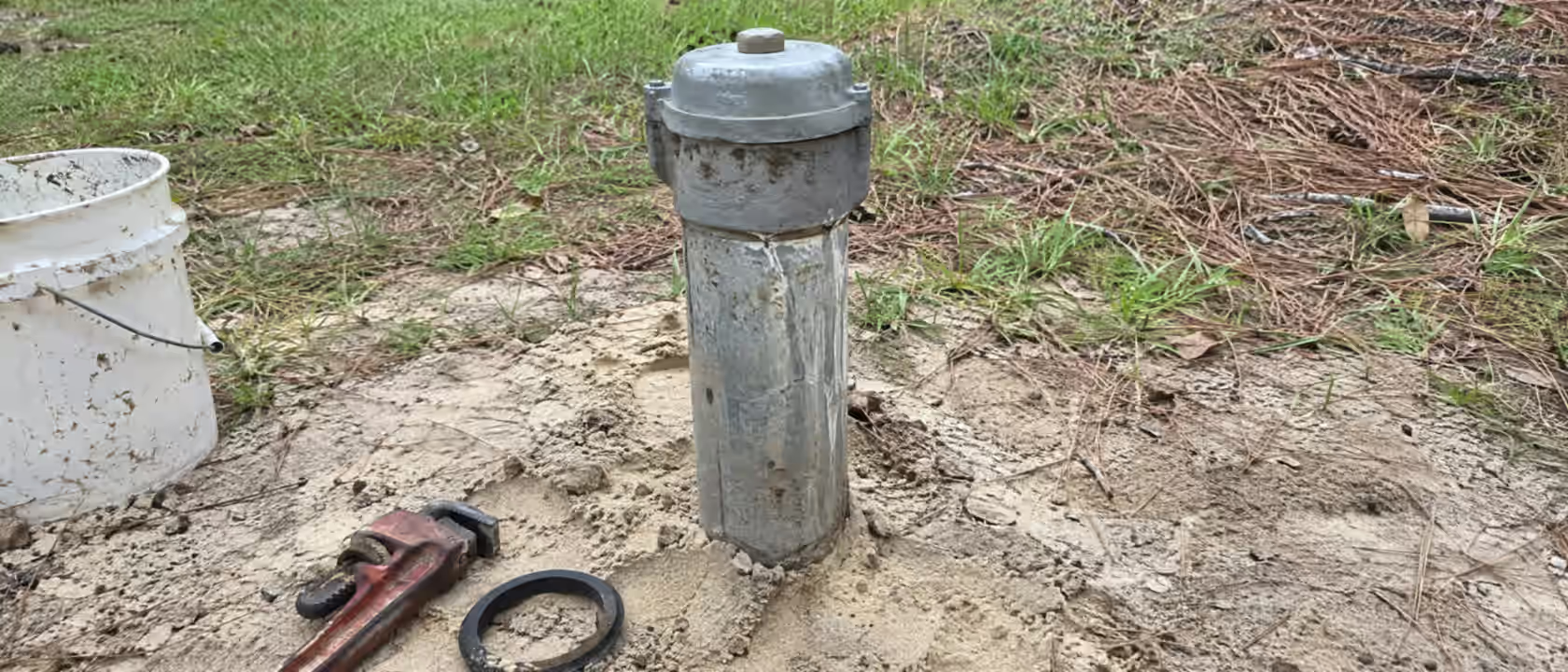
The wellhead still decides everything
12 in of casing above finished grade and an intact cap are what keep surface water out of the annular space. On sites with parking, playing fields and regraded ground the stick-up disappears quietly, so it gets measured rather than assumed.
Numbers worth knowing
| Duty cycle | Long idle, sharp peak |
|---|---|
| Sizing basis | Largest gathering and duration |
| Public system threshold | 25 people, 60+ days |
| Bacteria testing | Annually, minimum |
| Pre-charge | 2 psi below cut-in |
| Pump work | $150 to $5,500 installed |
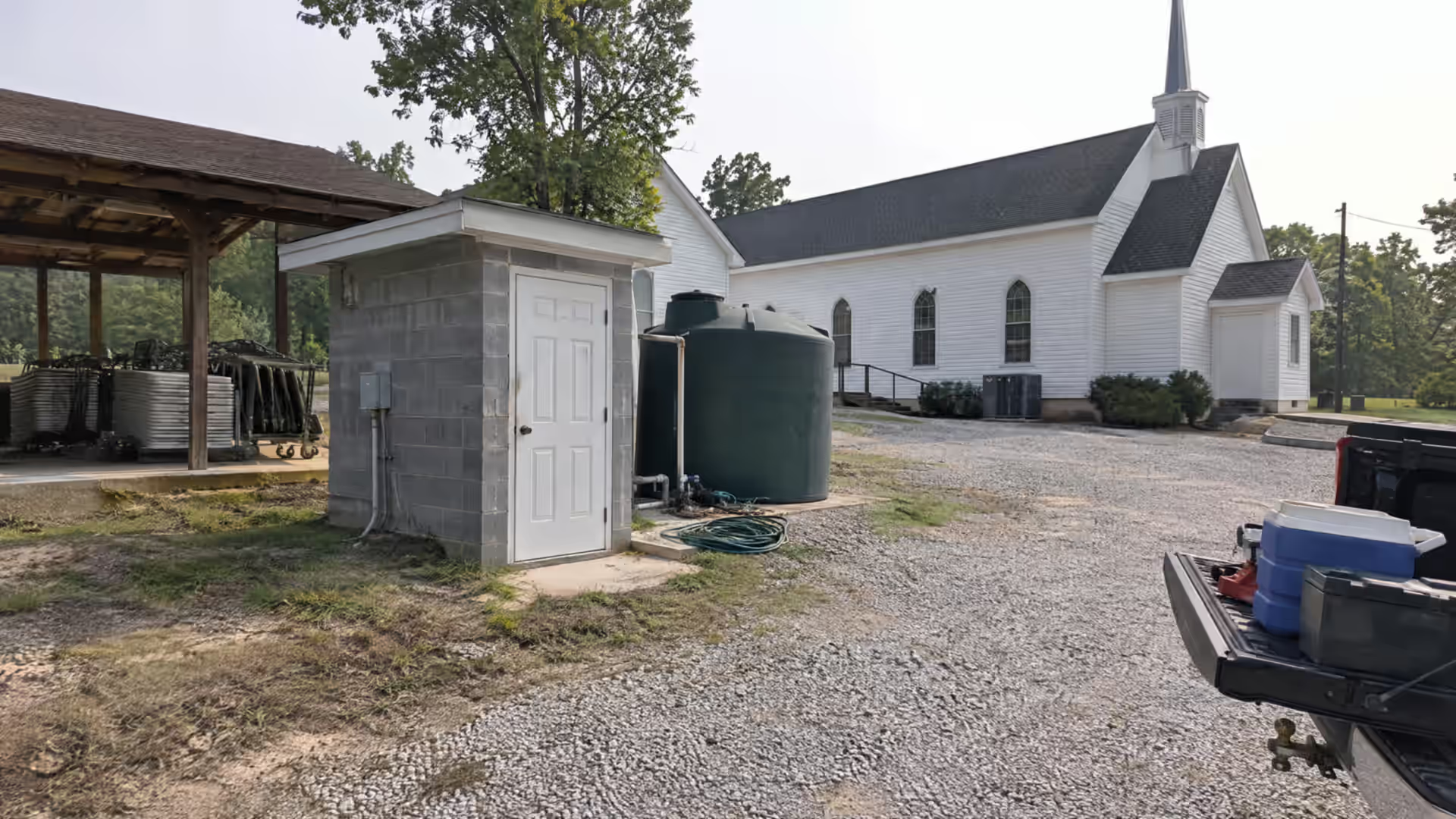
Well pump work in Fayetteville runs $150 to $3,500 for most homes. What decides the number is whether the fault sits outside the well or in it, and how deep the pump hangs.
| What the job is | Typical range | Unit |
|---|---|---|
| External component: pressure switch, control box, wiring, primingThe pump itself is fine. Cheapest outcome and the most common one. | $150 – $500 | installed |
| Pressure tank replacementTank, tank tee, gauge, switch and fittings, sized on drawdown. A waterlogged tank is what makes a pump short-cycle. | $1,000 – $2,300 | installed |
| Shallow well or jet pump, to about 25 ftCommon on Coastal Plain sand wells, where the water table sits high enough that a jet pump still works. | $600 – $1,400 | installed |
| Deep submersible pump, well 100 to 200 ftTypical Fayetteville well depth. Price covers pulling the old pump, drop pipe and wire. | $1,500 – $2,500 | installed |
| Deep submersible pump, well 300 to 400 ft or higher horsepowerDepth drives horsepower and hoist labor together. Every extra 100 ft adds roughly $500 to $1,000 in pipe, wire and time. | $2,800 – $5,500 | installed |
| Full system replacement: pump, tank, wiringWorth doing together when the pump is original and the tank is the same age. | $3,500 – $6,000 | installed |
What moves the number
- Every additional 100 ft of well depth+$500 to $1,000
- Emergency, weekend or after-hours call+25% to 50%
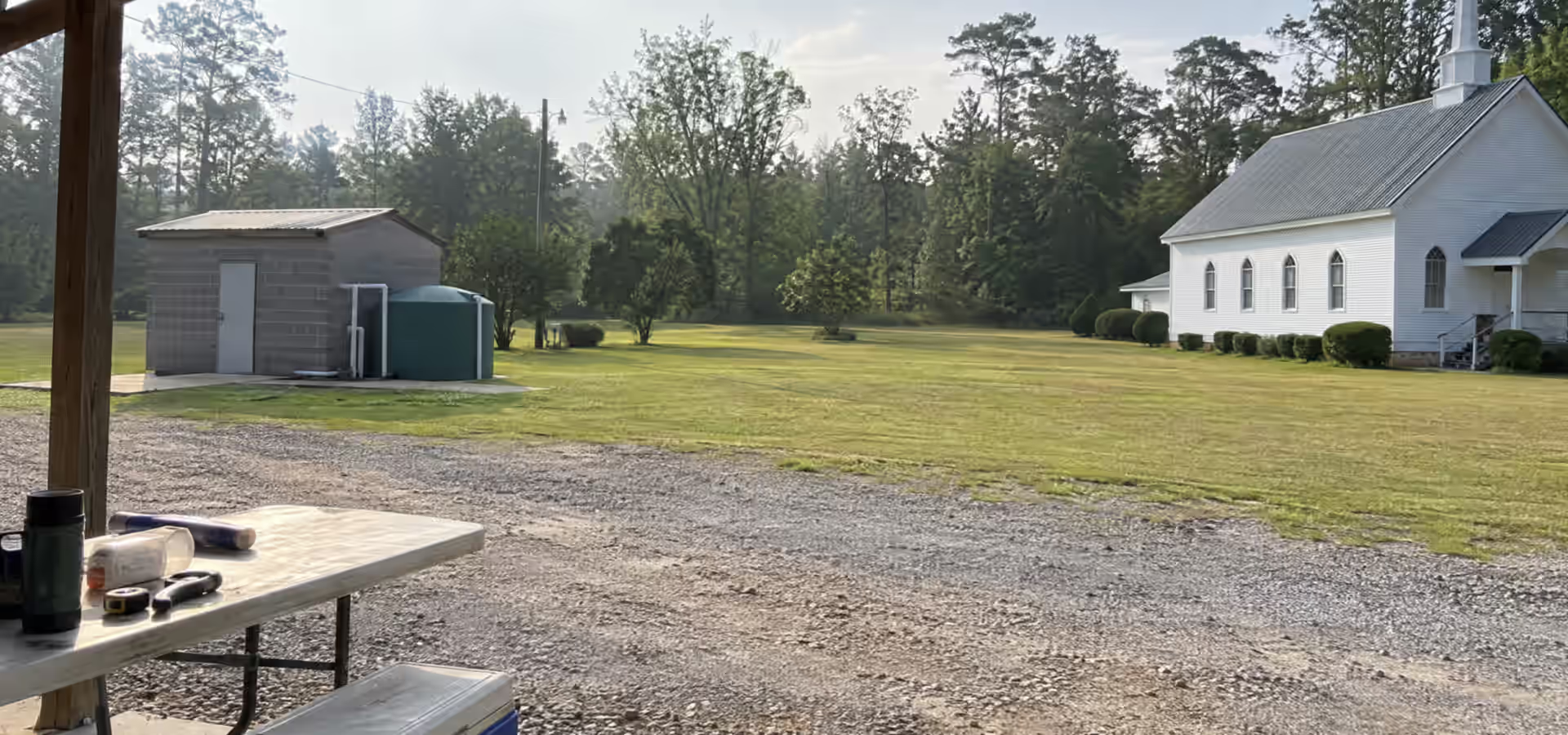
The well is fine on Tuesday. Nobody has ever called us on a Tuesday.Cumberland County, NC
Want it priced properly?
On-site estimates are free, itemized, and written down before any work starts.
Questions we get asked
Why does the water smell when the building has been closed?
Standing water in a tank or a rarely used branch line lets sulfate-reducing bacteria establish. It is a stagnation problem rather than a well problem, and flushing followed by a sample is the right first move.
Can a small well serve a large congregation?
1 factor decides it: whether there is storage between the demand and the pump. A well that recovers steadily across the week can cover a sharp peak if the water is already in a tank when people arrive.
Does a church well count as a public water system?
25 or more people served for 60 or more days a year is the threshold, and a weekly congregation reaches the people figure easily. The county health department makes the determination.
Who services church and camp wells near me?
Fayetteville Well Pump Repair works on intermittent high-occupancy supply across Fayetteville and Cumberland County, commissioning ahead of a season rather than responding during one.
What should we do before a camp season opens?
4 things, in order: flush the system, sample it, check the tank pre-charge against cut-in, and run a full cycle under load. All four are cheap on a quiet day and expensive with a full site.
Intermittent high-occupancy supply is the duty cycle nobody designs for, because the building looks like a house for six days a week. Storage sized to the gathering, a flush and a sample before the season, and a commissioning check on a quiet day cover almost all of it. Where the smell is the complaint, sulfur odor removal covers the sources, and well water testing covers what a panel actually measures.