Well and pump service for farms in Fayetteville, NC starts from a different number than household work does, because a farm draws steadily for hours where a house draws in short bursts. Fayetteville Well Pump Repair sizes agricultural supply from sustained demand and tested yield rather than from property size, and every range quoted here is published on the well pump cost page.
Livestock water, wash-down, irrigation and a farmhouse on one well is the arrangement we find most often, and it is the arrangement that fails first. Each of those loads has a different shape. A house peaks for a few minutes at a time. A trough line runs whenever stock drink. Irrigation runs for hours at the driest point of the year, when the aquifer is already at its seasonal low.
Sizing to the sum of those loads is not the answer either, because they rarely peak together. What matters is the largest sustained draw the system has to hold, and how long it has to hold it. That figure comes off a drawdown test at design flow rather than off a rule of thumb, which is why we measure before quoting anything on a working property.
What is actually wrong
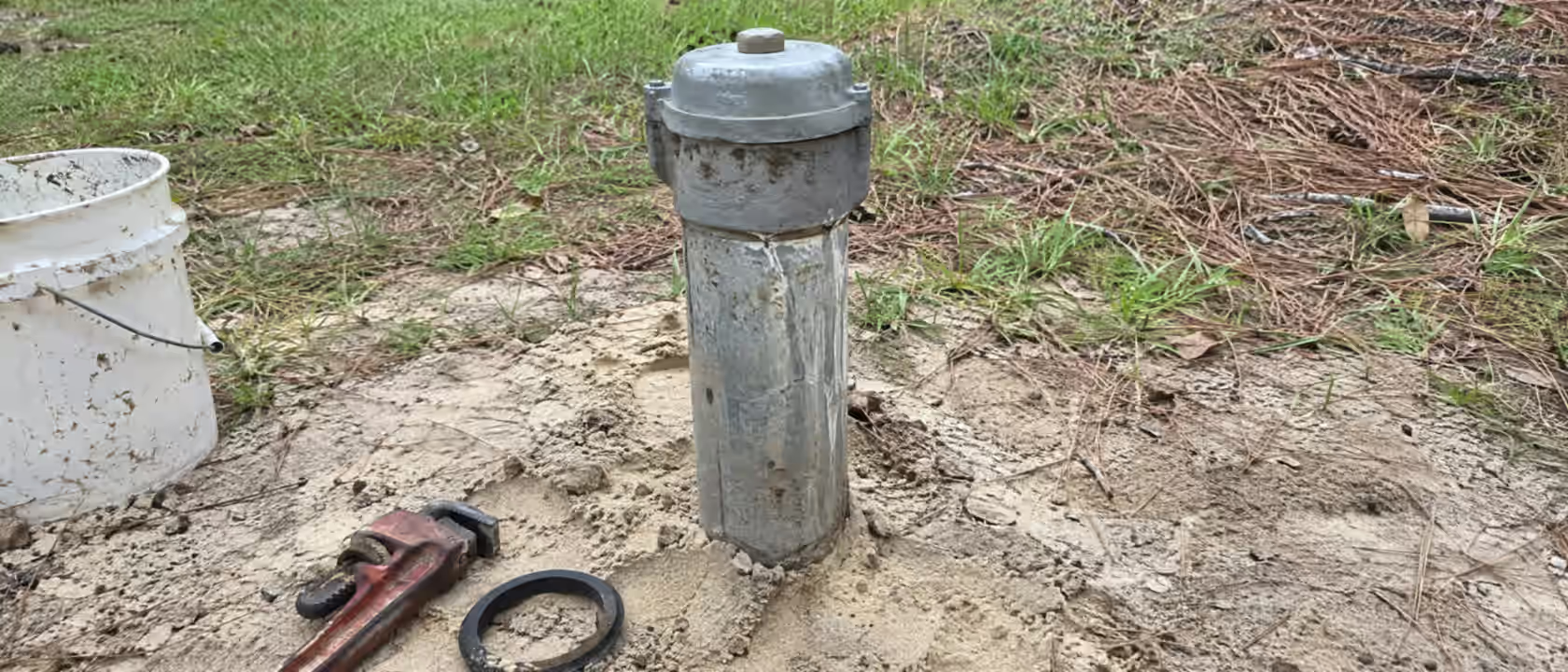
Livestock and trough supply
Stock water is continuous duty at modest flow, which is easier on a pump than irrigation and harder on the controls. Float valves cycle a pump constantly unless there is storage between them, so a tank ahead of the trough line converts a cycling problem into a steady one. Short cycling burns out more motors in this county than age does, and a trough line is where it starts.
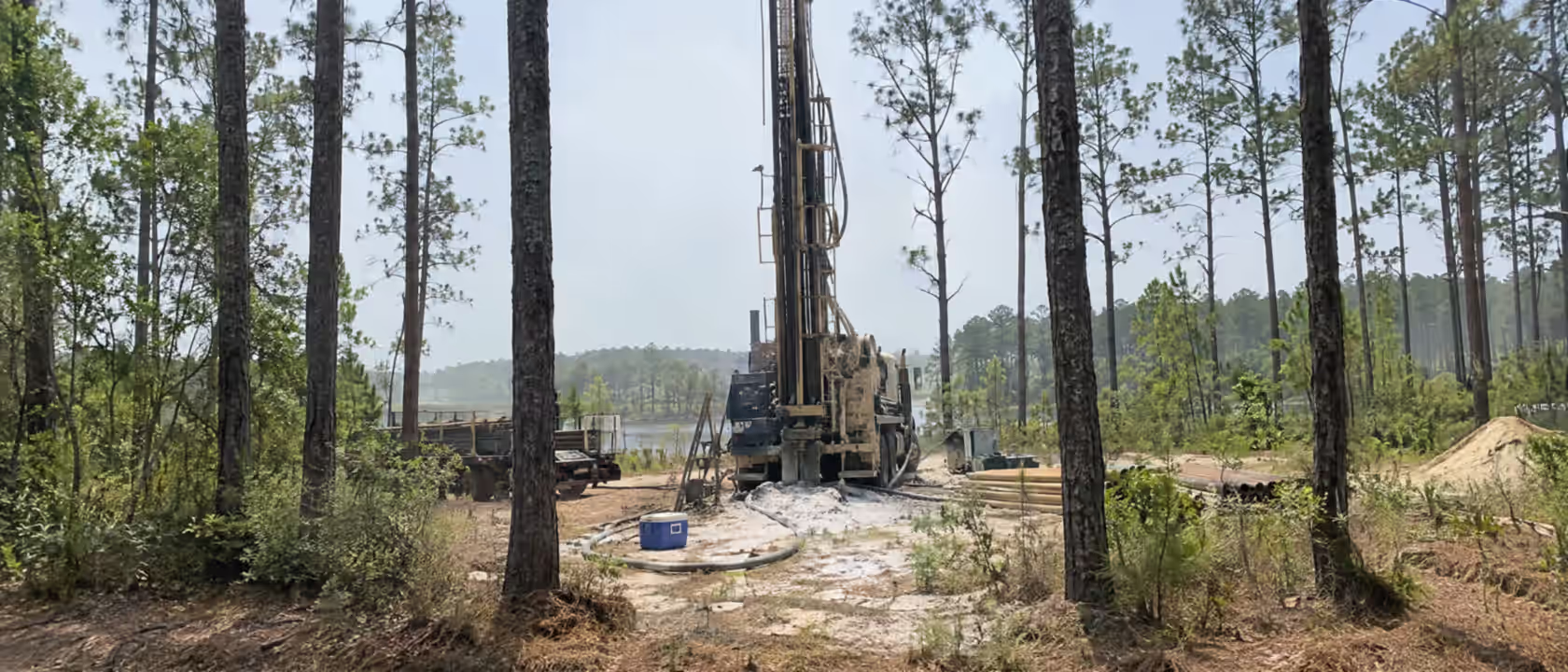
Irrigation on the same well as the house
This is the most common failure on a farm. Sustained irrigation draw pulls the level toward the pump intake, the pump starts moving air, and it burns out during the dry stretch when it was needed. A Franklin Electric motor is cooled by the water moving past it, so losing suction is what ends it rather than the hours themselves. A separate irrigation well keeps that load off the domestic supply.
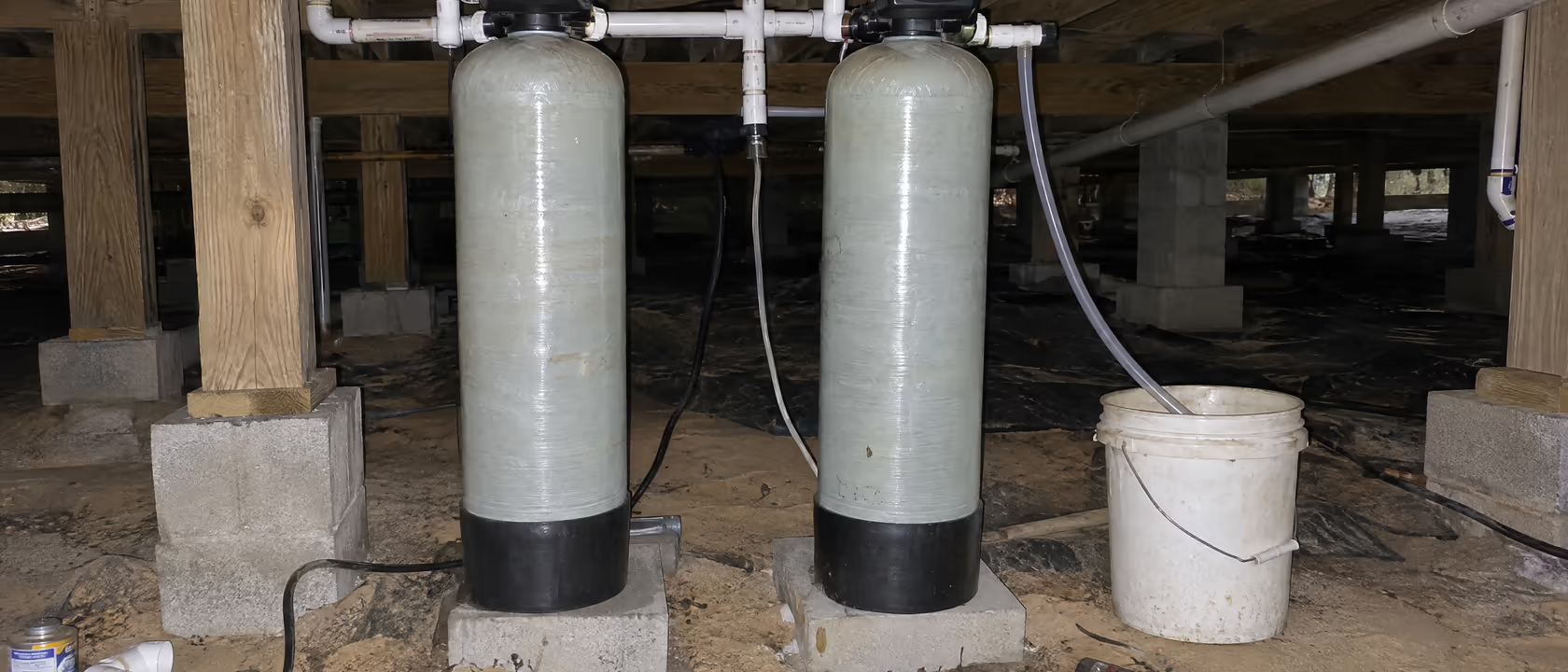
Sand, and what it costs a farm
Coastal Plain sand passes through every pump on the property, and the more hours a pump runs the more of it goes through. Impellers wear and valve seats score on an agricultural duty cycle years before they would on a house. A Simmons brass foot valve and a spin-down separator ahead of a Pentair housing cost very little against a Goulds pump end replaced early.
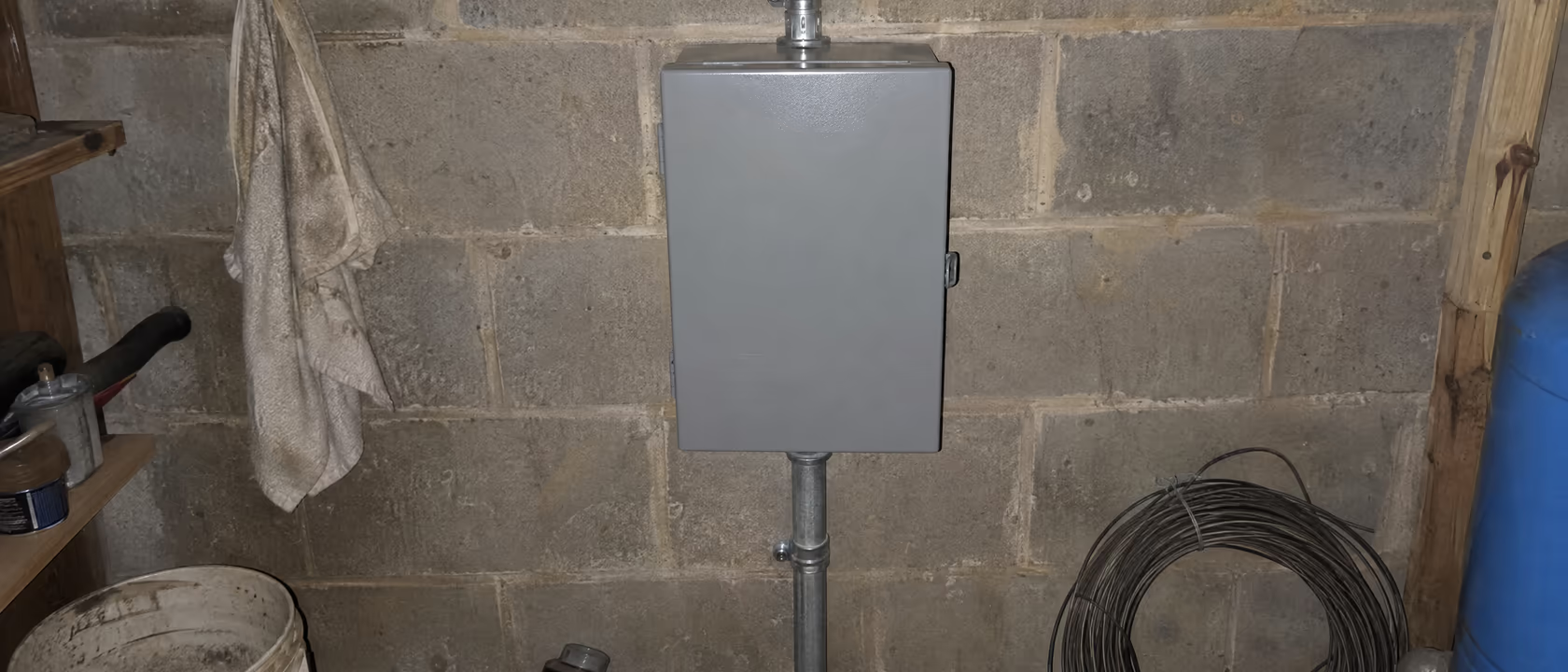
Standby and redundancy
A house without water is an inconvenience. Livestock without water is a same-day problem, so the calculation on a spare pump is different here. Keeping a matched replacement on the shelf turns a two-day wait for a part into an afternoon, which on a working farm is usually cheaper than the pump itself.
How we work it out
-
Map the loads
Every draw on the property, its flow and how long it runs. The largest sustained load is the number the system gets designed around, not the total.
-
Draw the well down
1 hour at design flow gives the sustainable rate. A static reading on a farm well tells you almost nothing about August.
-
Separate what should be separate
Where irrigation is outrunning the well, a second bore costs less over ten years than the pumps the shared arrangement keeps consuming.
-
Size storage before sizing pump
An Amtrol Well-X-Trol sized for real drawdown, pre-charge set 2 psi below cut-in, then the pump chosen against the tested yield.
What changes when a well stops being domestic
There is a line where the rules change
A supply serving at least 15 connections or 25 or more people for 60 or more days a year is a public water system in North Carolina rather than a private well. Farm housing, seasonal labor accommodation and an on-site shop can reach it without anyone intending to, and it changes testing and reporting obligations entirely.
Construction rules do not relax for agriculture
15A NCAC 02C applies to an irrigation or stock well exactly as it does to a domestic one, because the bore reaches the same aquifer either way. Casing depth and full annular grouting are requirements, not upgrades, and a bid that grouts partially is non-compliant rather than cheaper.
Chemicals and the wellhead
Fertilizer, fuel and stock waste all move across a working yard, and 12 in of casing above finished grade with an intact cap is what keeps them out of the annular space. On a farm the ground around a wellhead gets reworked constantly, so the stick-up is worth measuring rather than assuming.
Numbers worth knowing
| Sizing basis | Largest sustained draw |
|---|---|
| Drawdown test | 1 hour at design flow |
| Public system threshold | 15 connections or 25 people |
| Drilling rate | $28 to $60 per ft |
| Pump work | $150 to $5,500 installed |
| Foot valve | Brass on sand wells |
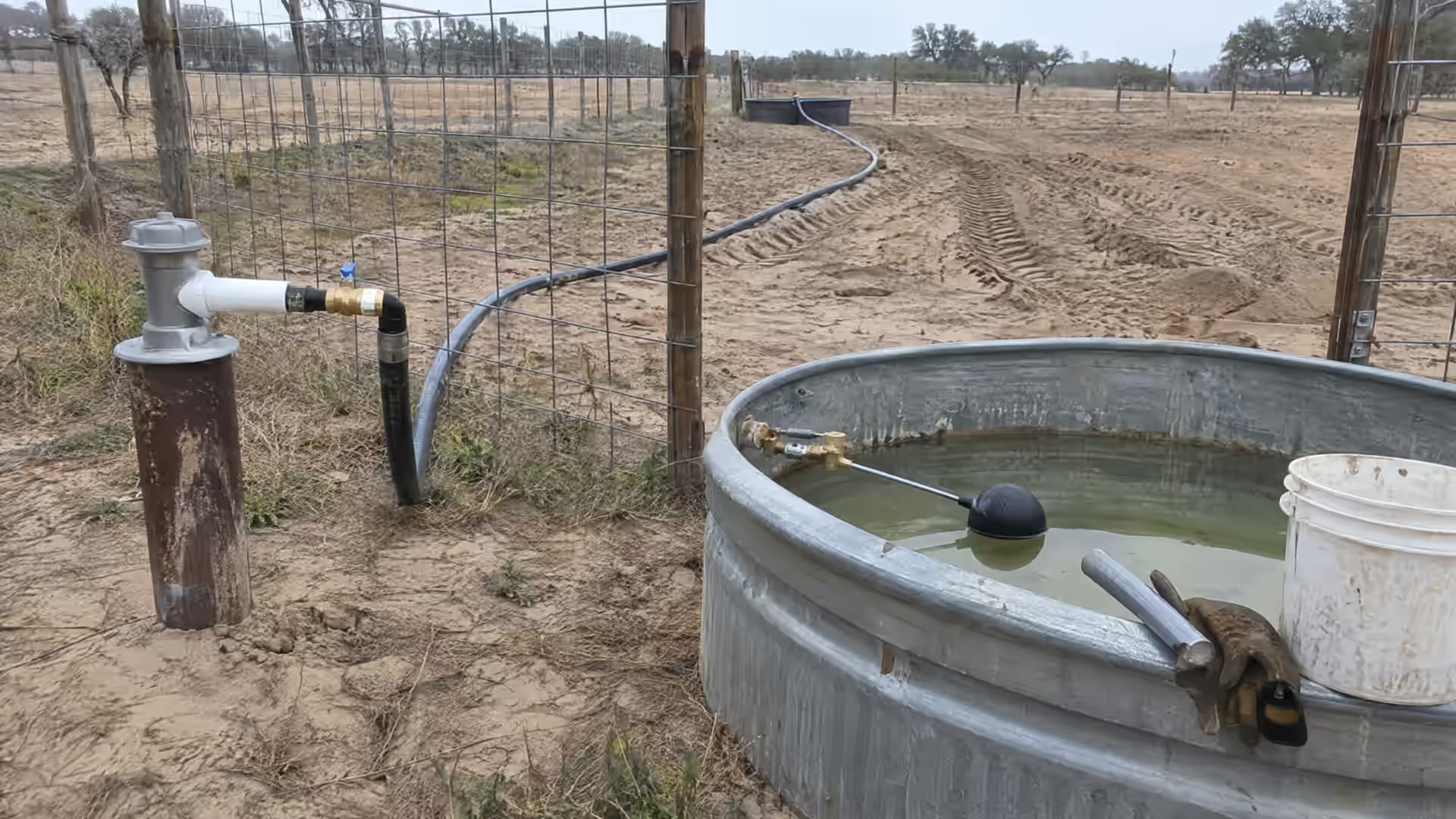
Well pump work in Fayetteville runs $150 to $3,500 for most homes. What decides the number is whether the fault sits outside the well or in it, and how deep the pump hangs.
| What the job is | Typical range | Unit |
|---|---|---|
| External component: pressure switch, control box, wiring, primingThe pump itself is fine. Cheapest outcome and the most common one. | $150 – $500 | installed |
| Pressure tank replacementTank, tank tee, gauge, switch and fittings, sized on drawdown. A waterlogged tank is what makes a pump short-cycle. | $1,000 – $2,300 | installed |
| Shallow well or jet pump, to about 25 ftCommon on Coastal Plain sand wells, where the water table sits high enough that a jet pump still works. | $600 – $1,400 | installed |
| Deep submersible pump, well 100 to 200 ftTypical Fayetteville well depth. Price covers pulling the old pump, drop pipe and wire. | $1,500 – $2,500 | installed |
| Deep submersible pump, well 300 to 400 ft or higher horsepowerDepth drives horsepower and hoist labor together. Every extra 100 ft adds roughly $500 to $1,000 in pipe, wire and time. | $2,800 – $5,500 | installed |
| Full system replacement: pump, tank, wiringWorth doing together when the pump is original and the tank is the same age. | $3,500 – $6,000 | installed |
What moves the number
- Every additional 100 ft of well depth+$500 to $1,000
- Emergency, weekend or after-hours call+25% to 50%
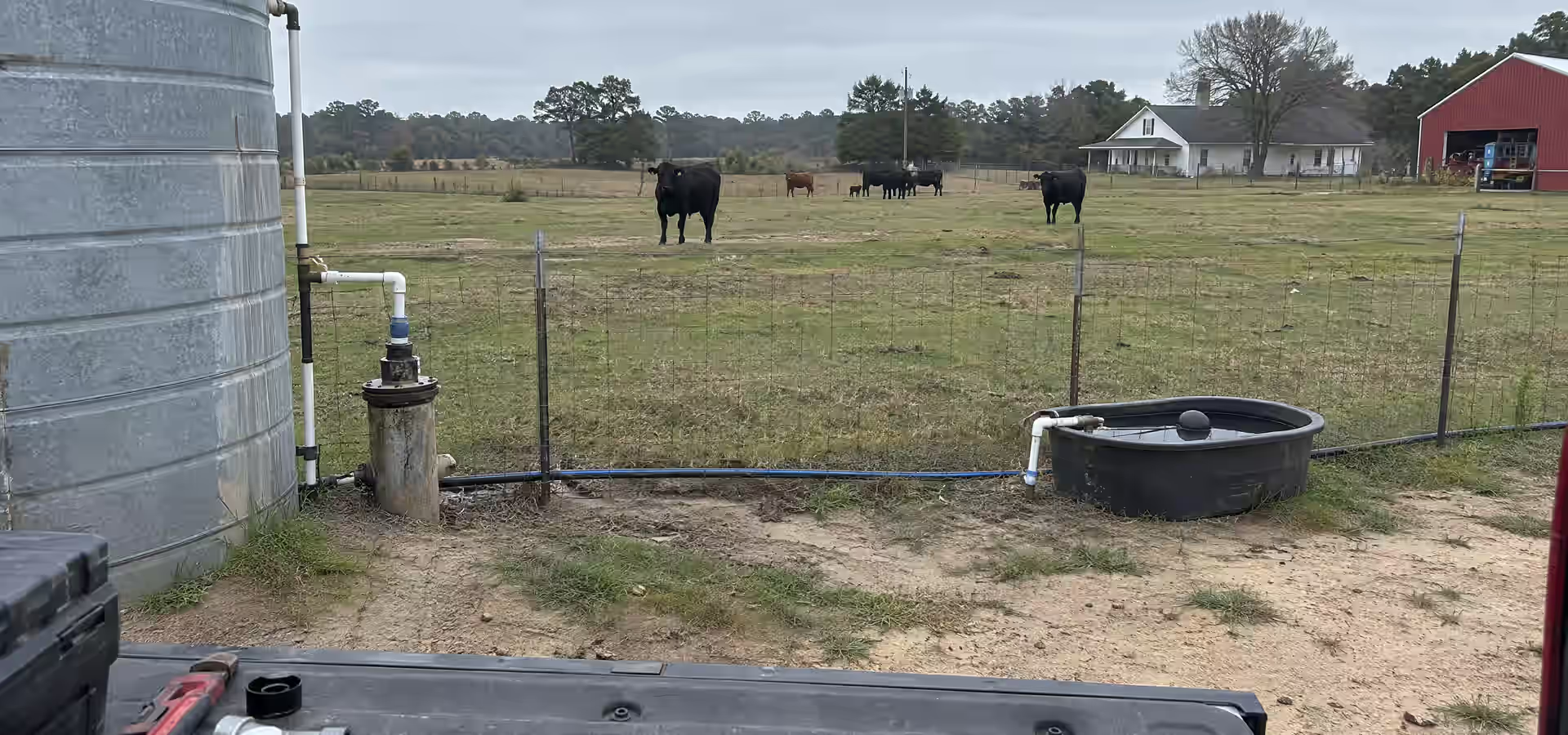
Nobody sizes a farm well for the day the irrigation, the troughs and the wash-down all run together. The well finds out anyway.Cumberland County, NC
Want it priced properly?
On-site estimates are free, itemized, and written down before any work starts.
Questions we get asked
How is a farm well sized differently from a house well?
1 number decides it: the largest sustained draw and how long it runs. A house peaks for minutes and recovers, while stock water and irrigation run for hours at the driest point of the year.
Should irrigation run off the farmhouse well?
Rarely. Sustained draw pulls the level toward the pump intake, the pump moves air, and the motor loses the cooling flow it depends on. A separate well keeps that load off the domestic supply.
When does a farm well become a public water system?
15 connections or 25 or more people served for 60 or more days a year is the line in North Carolina. Farm housing and seasonal accommodation can reach it without anyone planning to, and it changes testing and reporting.
Who services farm wells near me?
Fayetteville Well Pump Repair handles agricultural, livestock and irrigation supply across Fayetteville and Cumberland County, sizing from a measured drawdown test rather than from acreage.
Is a spare pump worth keeping on a farm?
$1,500 to $2,500 sitting on a shelf against livestock without water for two days is usually straightforward arithmetic. It turns a parts wait into an afternoon.
Farm water fails in August, on the hottest week, on the day it is least convenient. Almost all of that is predictable from a drawdown test and a load map, and both cost a single visit. Where the answer is a second bore, irrigation well drilling covers the construction, and a well that has run dry covers what to measure before deciding.