Air in your water lines means your system is pulling in something other than water. Where it gets in decides everything. It can be a $40 valve or a well that is running short. At Fayetteville Well Pump Repair, we find the entry point before replacing any part, and the ranges on our well pump cost page cover every outcome below.
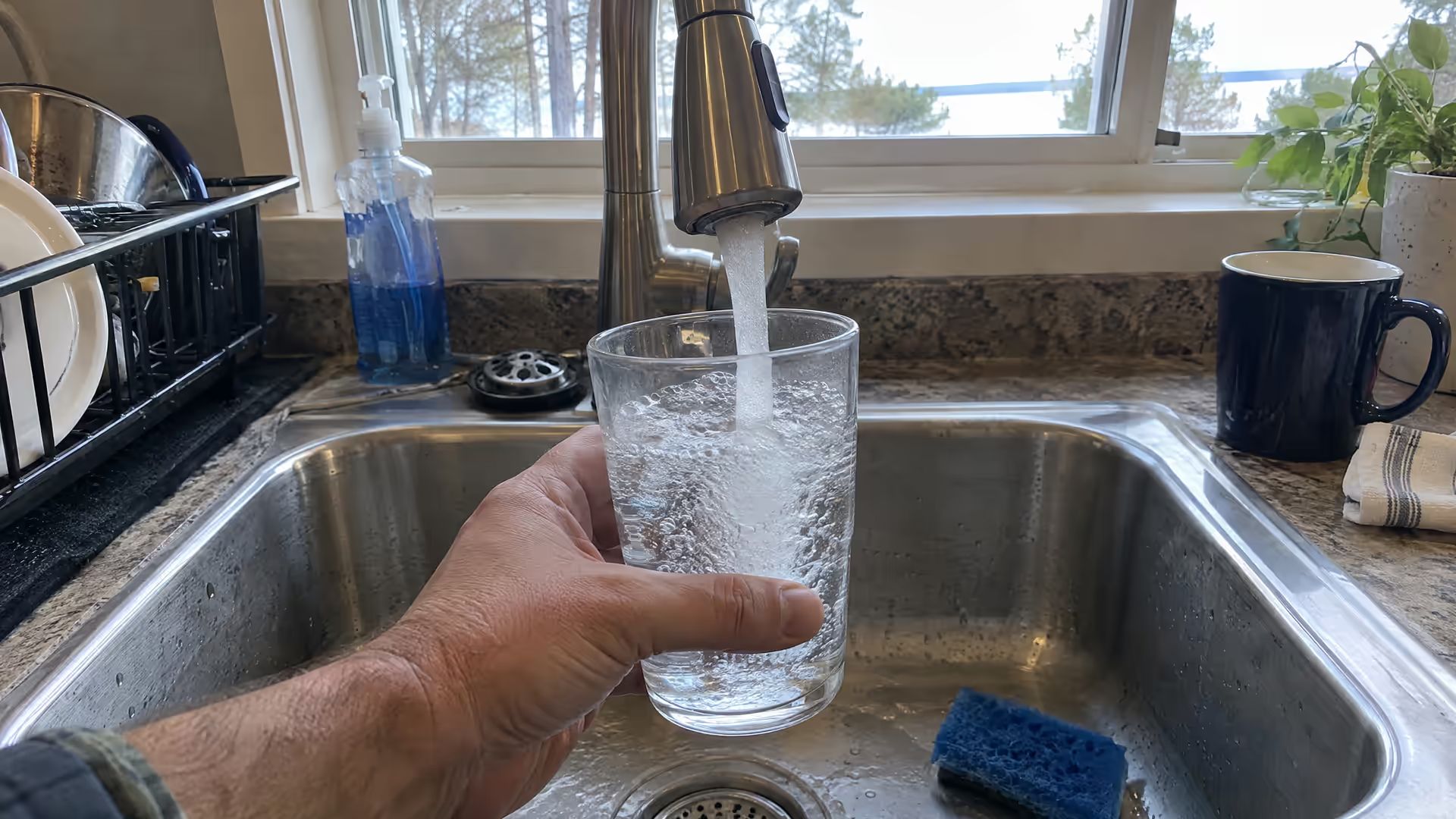
Two different problems get described the same way. Water that spits and bangs at your tap is carrying real pockets of air. Water that pours cloudy white and then clears from the bottom of the glass upward is carrying dissolved gas. The second one is a water chemistry finding, not a plumbing fault, and it needs no repair at all.
Real air has four likely sources. A leak on the suction side of a surface pump. A water level that has dropped to your pump intake. A pressure tank whose rubber diaphragm split and is now pushing its own air into your pipes. Or a check valve letting water drain back and refill with air between cycles. Each one leaves a different signature at the tap. So we test in the order the signature points to rather than working down a parts shelf.
What is actually wrong
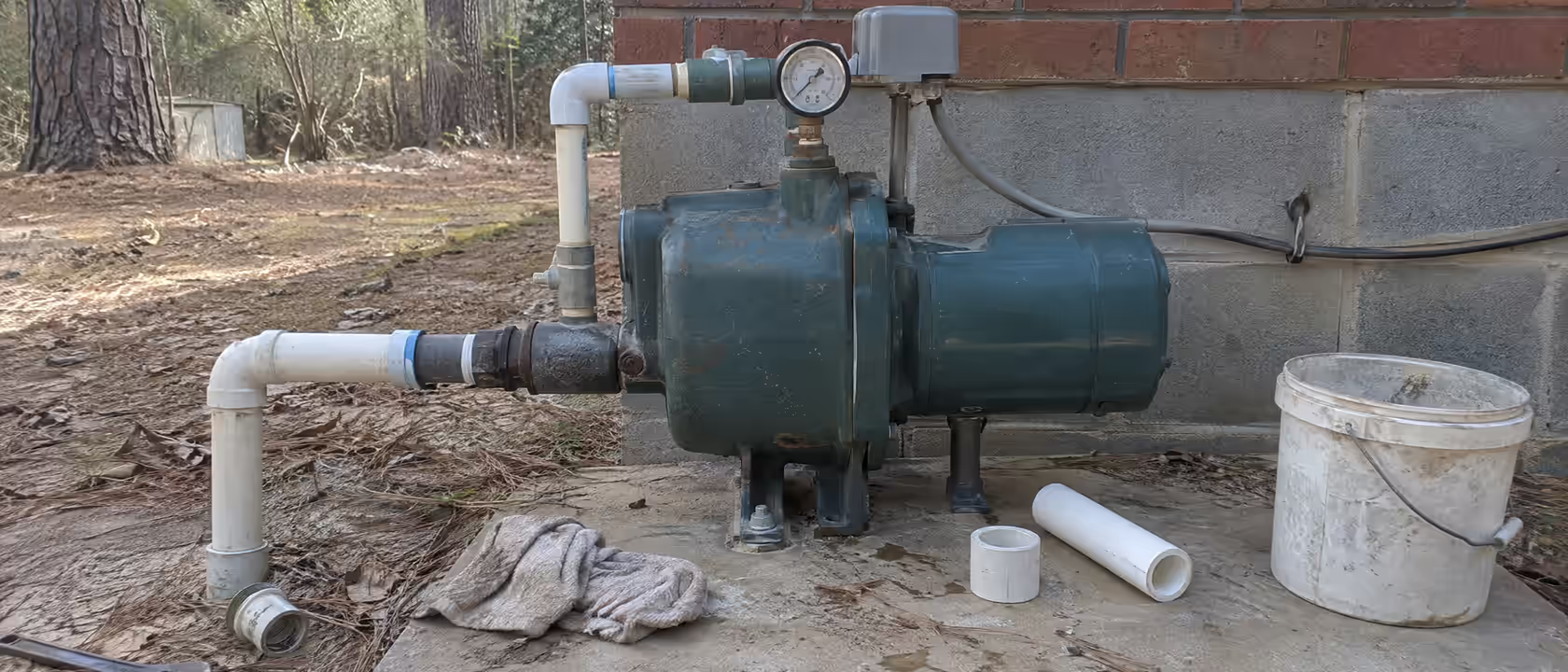
A suction leak on a surface pump
Jet and shallow well pumps pull water rather than push it. So a loose joint on the suction side draws air in instead of leaking water out. You see nothing at the fitting, because the pressure runs the wrong way. A vacuum-hold test on the line is the only reliable way to find it. A Simmons brass foot valve is the usual replacement once we confirm the seat is the source.
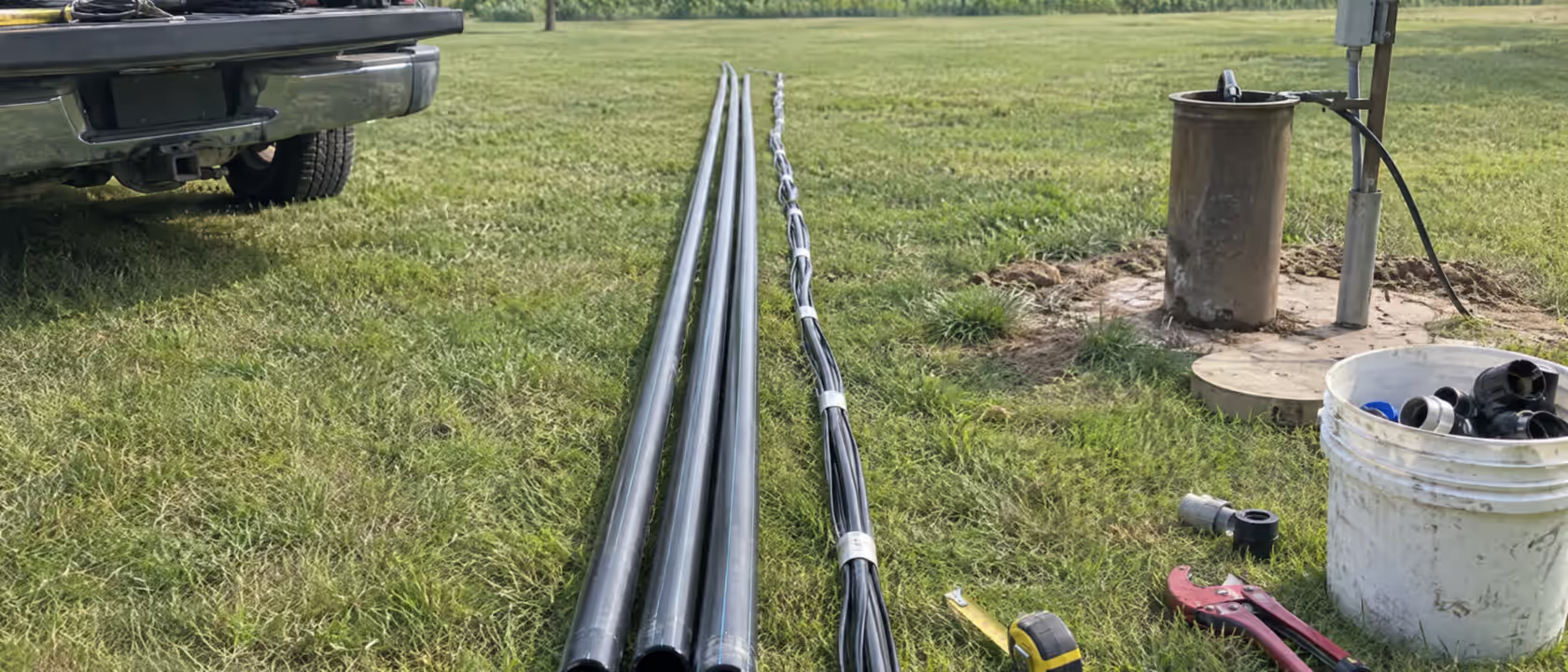
Your water level has reached the pump intake
A pump drawing at the surface of a falling water column takes in air with every stroke. We see this across Cumberland County every late summer. It arrives with weak flow rather than normal flow, and that is the tell that separates it from a plumbing leak. If a tape confirms it, the answer is depth and setting rather than parts. A well that has run dry is the same problem further along.
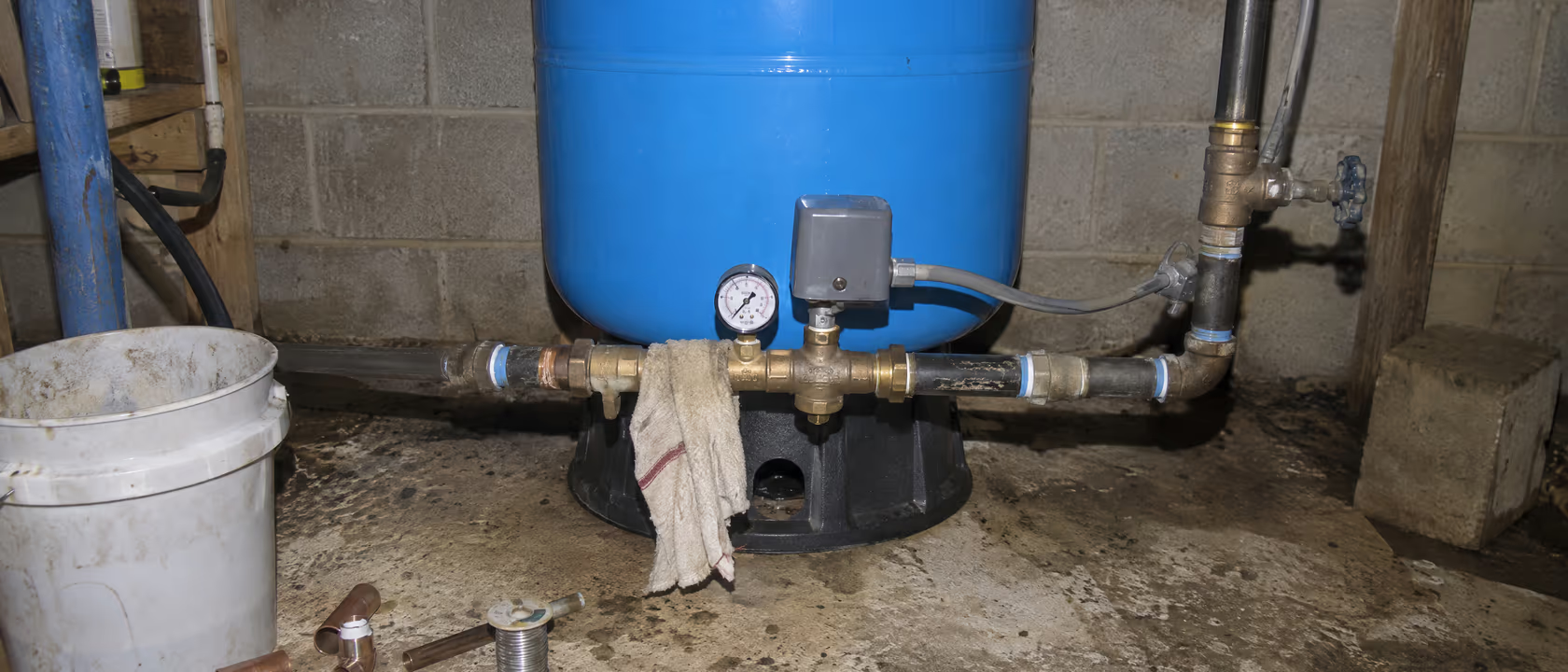
Your pressure tank is pushing air into the pipes
An Amtrol Well-X-Trol with a split diaphragm no longer keeps air and water apart. The air migrates into your plumbing and arrives at the fixtures in bursts. It usually shows up alongside rapid cycling rather than on its own. We confirm it with a gauge on the valve with the tank drained. The fix is a new tank at $1,000 to $2,300, and leaving it burns the pump.
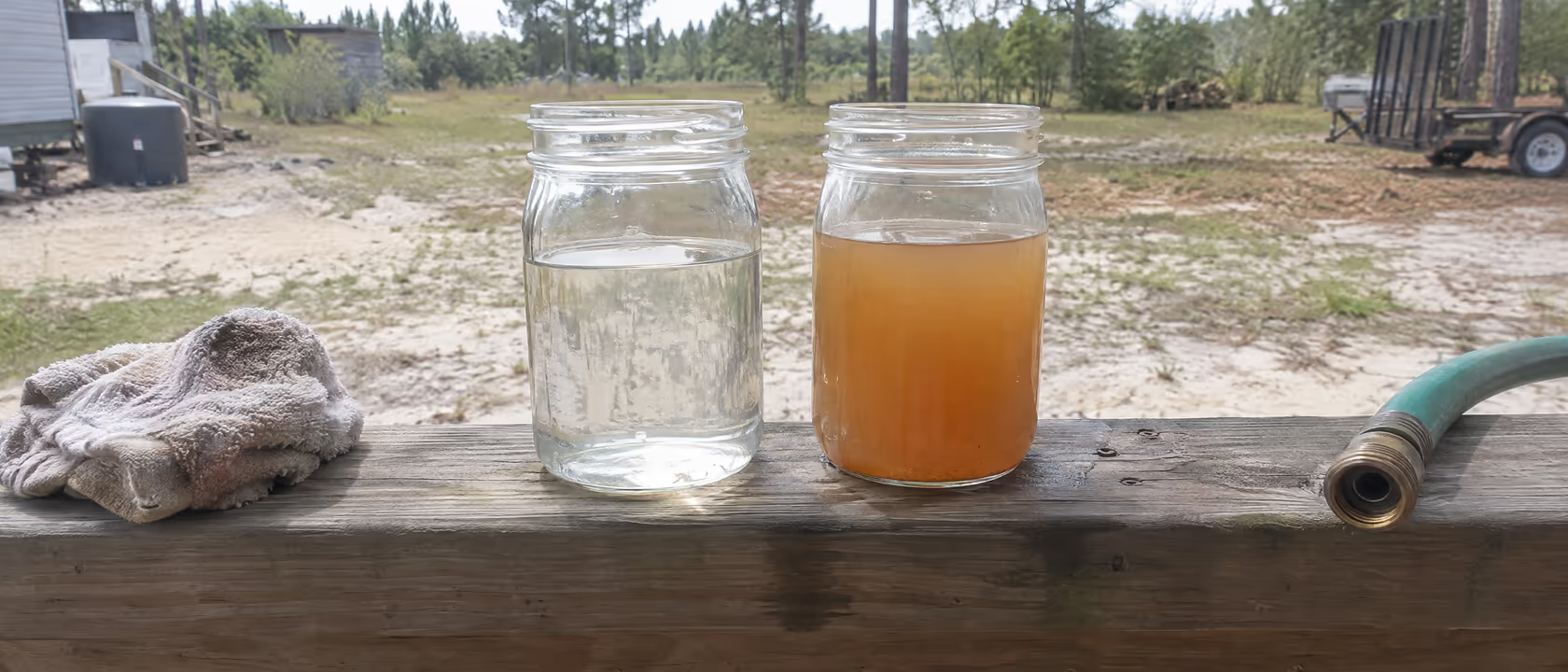
Gas from the ground, not a fault
Water that clouds and then clears from the bottom up is carrying dissolved gas that comes out as pressure drops at your tap. Nothing mechanical is wrong. It is a feature of the ground you draw from. NGWA guidance puts a full chemical panel at every three years on a private well, so we run one to establish what is dissolved before you spend a dollar on hardware.
How we work it out
-
Fill a glass and watch it
We fill a glass at your tap and watch it. Clearing from the bottom up is dissolved gas. Bubbles that rise and break are real air. That one observation removes half the fault tree before we take out a tool.
-
Check the flow alongside the air
We check your flow rate at the same time. Air with normal flow points at your tank or a valve. Air with weak flow points at the well itself. Those two lead to completely different work and completely different bills.
-
Vacuum test the suction side
We hold your suction line under vacuum and watch it, on a Sta-Rite or Goulds surface pump. A line that will not hold has the leak, and no amount of priming fixes that.
-
Inspect the cap and the casing
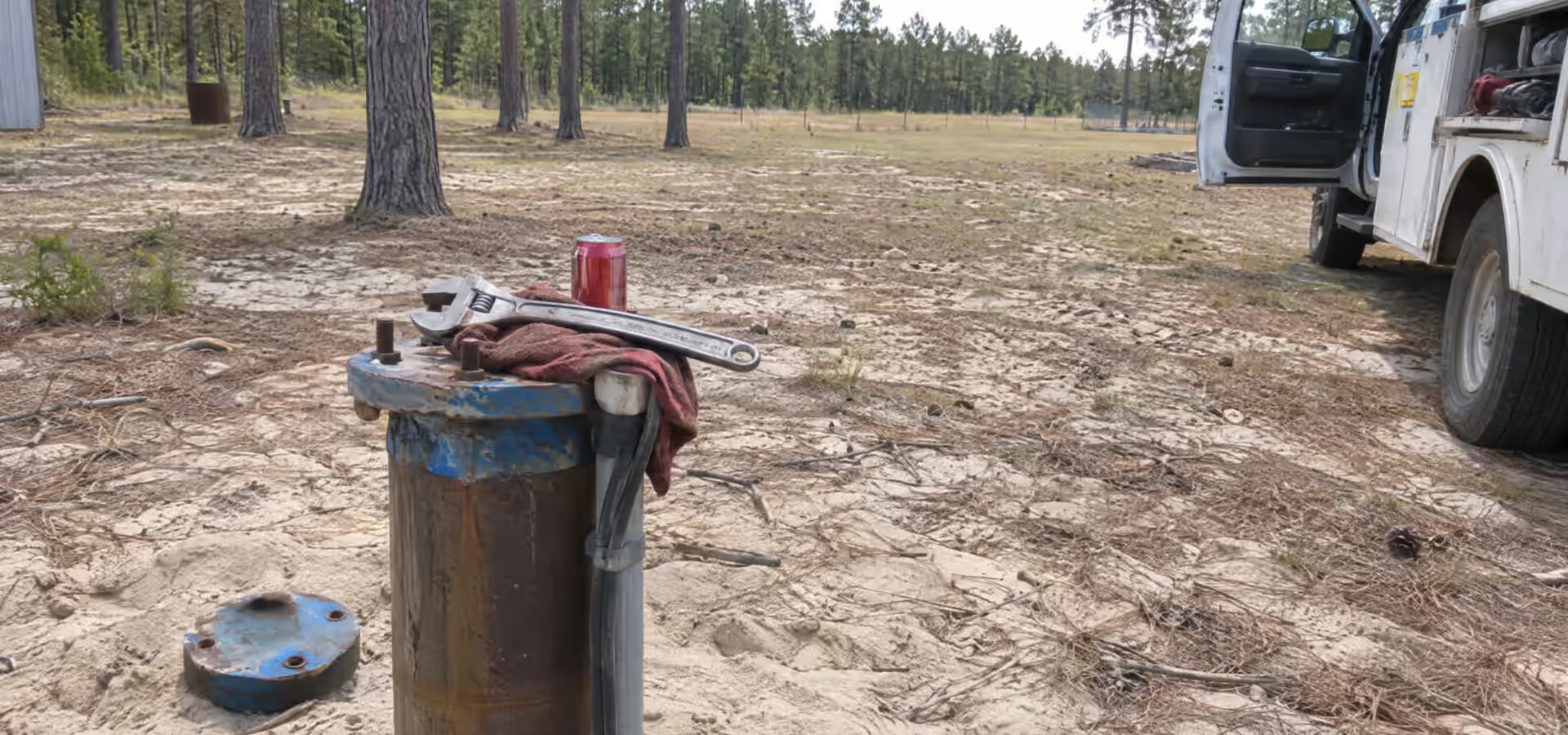
We inspect your cap and the ground around your casing. A cracked or unsealed cap lets air and surface water into the space around it. A sound Baker Water Systems cap and 12 in of casing above the ground are what keep both out.
When air is a sanitary problem rather than a nuisance
If air gets in, so can other things
Any route that lets air into your wellhead lets surface water in during a heavy rain. Where 15A NCAC 02C grouting was cut short, the space outside your casing is that route. It is the reason behind most positive coliform results after a storm, rather than anything happening inside your house.
Test before and after any wellhead work
The county health department is where your bacteria sample goes. A result taken before the repair gives you the comparison that makes the result afterwards mean something. Testing only after the work proves your water is clean now and nothing about what changed.
Casing height is not cosmetic
12 in of casing above finished ground keeps runoff out. We often find wellheads on this side of the county sitting at or below ground level after decades of yard fill. So raising the casing is frequently part of fixing an air complaint properly.
Numbers worth knowing
| Entrained air | Bubbles rise and break |
|---|---|
| Dissolved gas | Clears bottom upward |
| Minimum casing stick-up | 12 in |
| Jet suction ceiling | About 25 ft |
| Bacteria testing | Annually |
| Valve or seal repair | $150 to $500 |
Well pump work in Fayetteville runs $150 to $3,500 for most homes. What decides the number is whether the fault sits outside the well or in it, and how deep the pump hangs.
| What the job is | Typical range | Unit |
|---|---|---|
| External component: pressure switch, control box, wiring, primingThe pump itself is fine. Cheapest outcome and the most common one. | $150 – $500 | installed |
| Pressure tank replacementTank, tank tee, gauge, switch and fittings, sized on drawdown. A waterlogged tank is what makes a pump short-cycle. | $1,000 – $2,300 | installed |
| Shallow well or jet pump, to about 25 ftCommon on Coastal Plain sand wells, where the water table sits high enough that a jet pump still works. | $600 – $1,400 | installed |
| Deep submersible pump, well 100 to 200 ftTypical Fayetteville well depth. Price covers pulling the old pump, drop pipe and wire. | $1,500 – $2,500 | installed |
| Deep submersible pump, well 300 to 400 ft or higher horsepowerDepth drives horsepower and hoist labor together. Every extra 100 ft adds roughly $500 to $1,000 in pipe, wire and time. | $2,800 – $5,500 | installed |
| Full system replacement: pump, tank, wiringWorth doing together when the pump is original and the tank is the same age. | $3,500 – $6,000 | installed |
What moves the number
- Every additional 100 ft of well depth+$500 to $1,000
- Emergency, weekend or after-hours call+25% to 50%
Air is water telling you about a hole. The only useful question is which side of the pump the hole is on.Cumberland County, NC
Who we work for
- Well and Pump Service for Farms Stock water, wash-down, irrigation and a farmhouse on one well. Sized on sustained draw, not acreage.
- Well Service for Mobile Home Parks Shared supply with tenants attached. Past 15 connections it stops being a private well at all.
- Well Service for Churches and Camps Idle most of the week, then a full building. The hardest duty cycle in private water supply.
Want it priced properly?
On-site estimates are free, itemized, and written down before any work starts.
Questions we get asked
Why is there air in my well water lines?
4 sources cover nearly all of it: a suction leak on a surface pump, a water level fallen to the pump intake, a failed pressure tank diaphragm, or a check valve letting the column drain back between cycles.
Is milky water from a well dangerous?
12 in of casing above grade and a sound cap matter more to safety than the cloudiness does. Water that clears from the bottom upward is dissolved gas leaving solution, which is a formation trait rather than contamination.
How much does it cost to fix air in the lines?
$150 to $500 covers a foot valve, a check valve or a cap and seal, which is where most of these calls end. A failed pressure tank runs $1,000 to $2,300 installed.
Can air in the lines damage anything?
2 things take the damage. Air pockets hammer fixtures and appliances, and a pump drawing air loses the cooling flow it depends on, so the motor runs hotter than it was designed to.
Who fixes air in well water lines near me?
Fayetteville Well Pump Repair diagnoses air intrusion on private wells across Fayetteville and Cumberland County, starting with the glass test and the flow rate before any part is quoted.
Does air in the water mean my well is running out?
1 detail separates them. Air arriving with normal flow is a plumbing or tank fault. Air arriving with reduced flow points at the water level itself, and a tape in the casing settles it in minutes.
Spitting taps get lived with for months because the water still arrives. The reason to look properly is that a system drawing air is either short of water or open to the surface, and both of those get more expensive with time rather than less. Where the entry turns out to be a failed seat, pressure tank replacement and jet pump repair cover the two usual repairs.