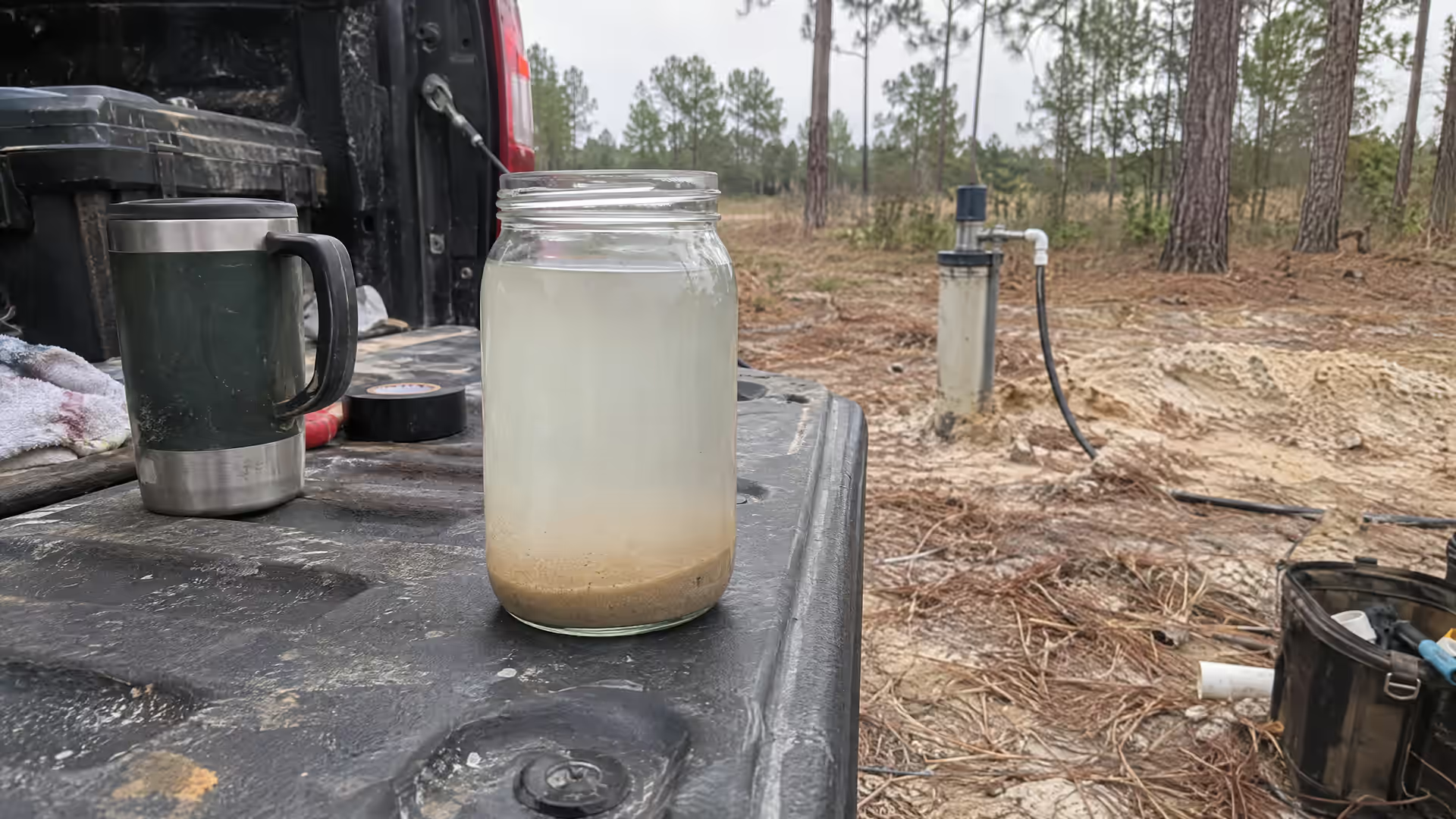
Sand in your water comes with the ground here. The county sits on sand rather than the fractured rock the Piedmont draws from. At Fayetteville Well Pump Repair, we separate wells that always carried a trace from wells that started passing sand recently. Only the second kind is telling you something is breaking. Filtration ranges sit on our well pump cost page.
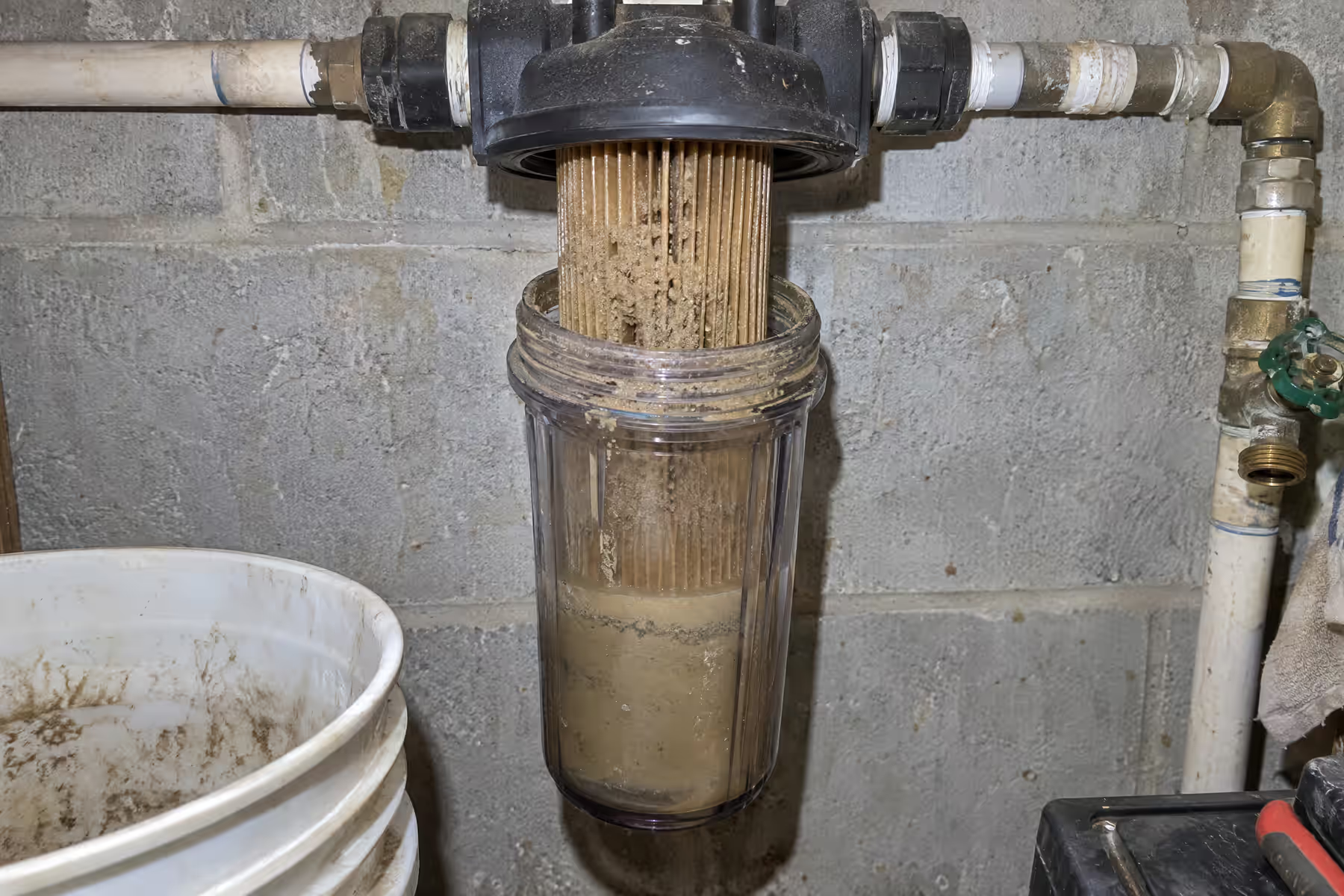
Grit in your faucet screens, scratches in the toilet tank and a filter that clogs every month all describe the same finding. What matters is whether the amount is steady or rising. A well that always passed a fine trace and still does is a filter question. A well that ran clean last year and now fills a cartridge in weeks is telling you about damage.
That damage costs you money in two directions at once. Sand scores the seat on your foot valve until it stops holding prime. It also wears down the impellers inside a Goulds pump on the way through. So a well passing sand is quietly shortening the life of the $1,500 to $2,500 pump passing it. That is why we trace the source instead of just fitting a bigger filter.
What is actually wrong
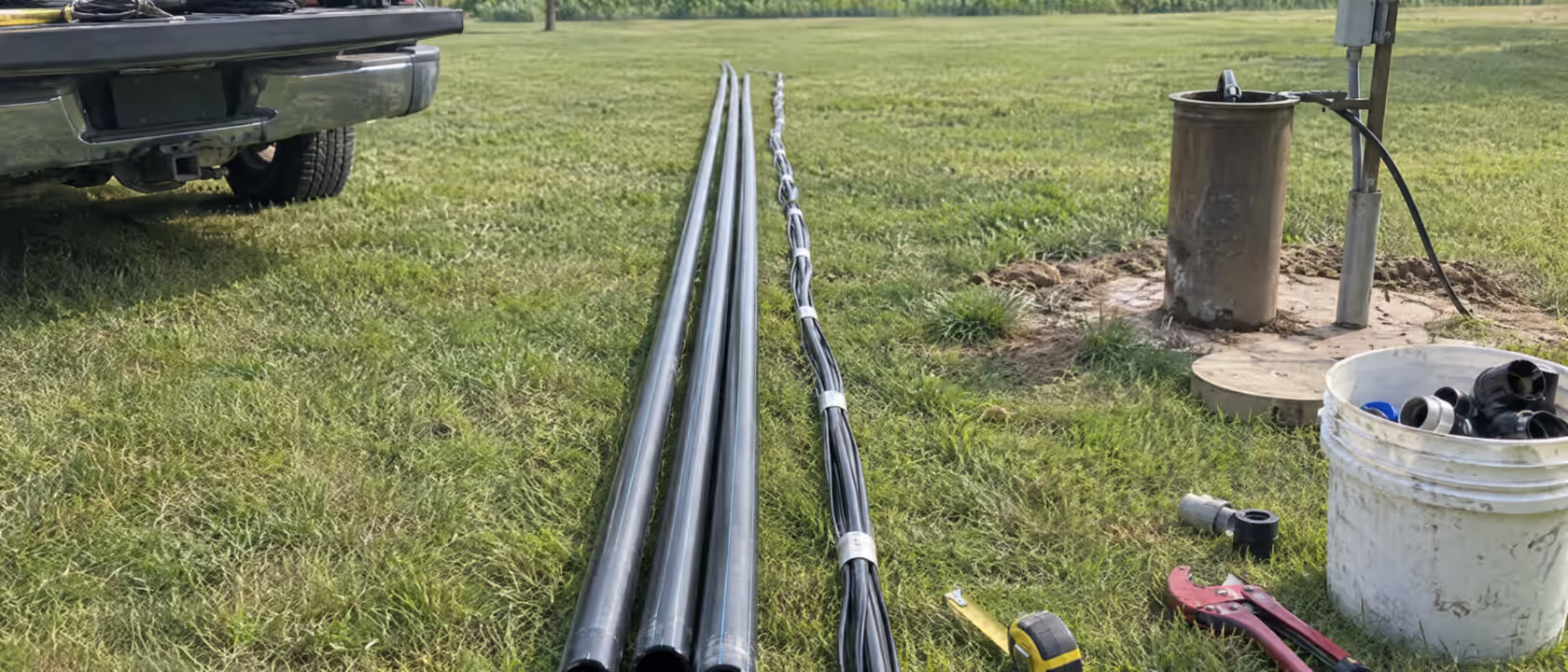
Your pump sits too close to the bottom
Fine grit settles in the bottom of your casing over decades. A pump set down in that layer stirs it up and lifts it with every start. Raising the pump 10 ft to 15 ft off the bottom often ends the problem completely. It costs a fraction of any other answer here, so setting depth is the first thing we check against your well record.
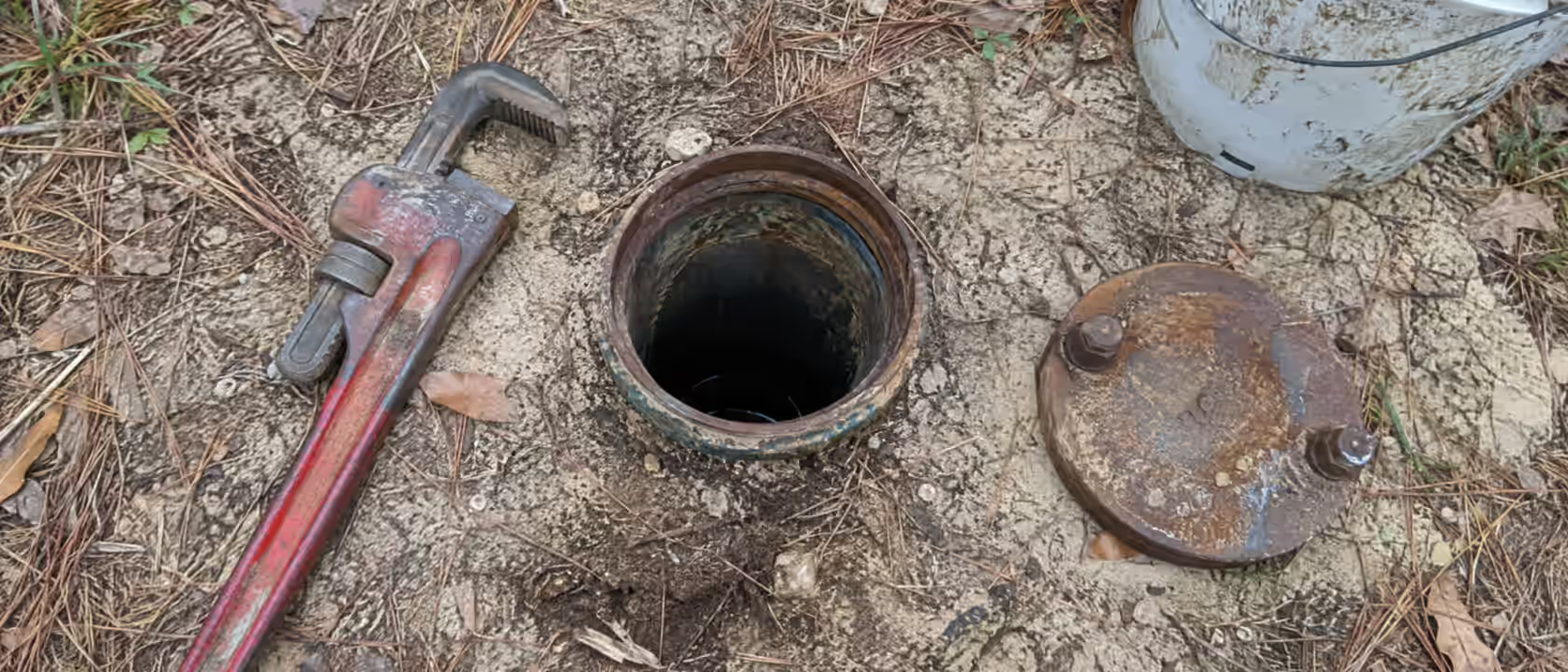
The screen or gravel pack has failed
A screened well uses a layer of graded gravel to hold sand back while letting water through. When that pack settles or the screen rusts, the barrier stops working and your well passes material nonstop. We run a camera down the well to see it directly. That is worth doing before you commit to a new well on a suspicion.
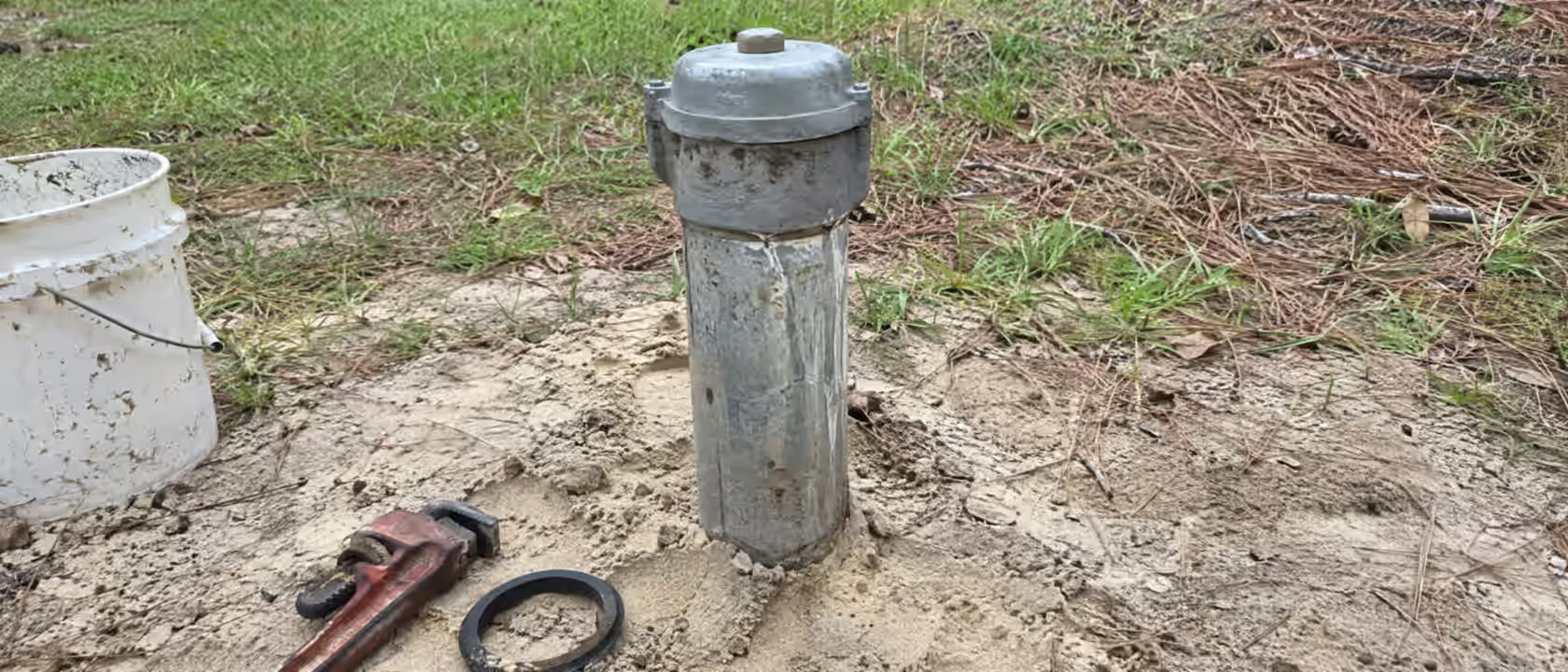
Your casing has a hole in it
Where the casing has rusted through, sand enters directly at that depth. This is the serious version. It also opens the space above the hole, and a Baker Water Systems cap at the top does nothing about a hole at 120 ft. So we pair a sand complaint on an older steel casing with a bacteria sample. Well casing repair covers what can be saved.
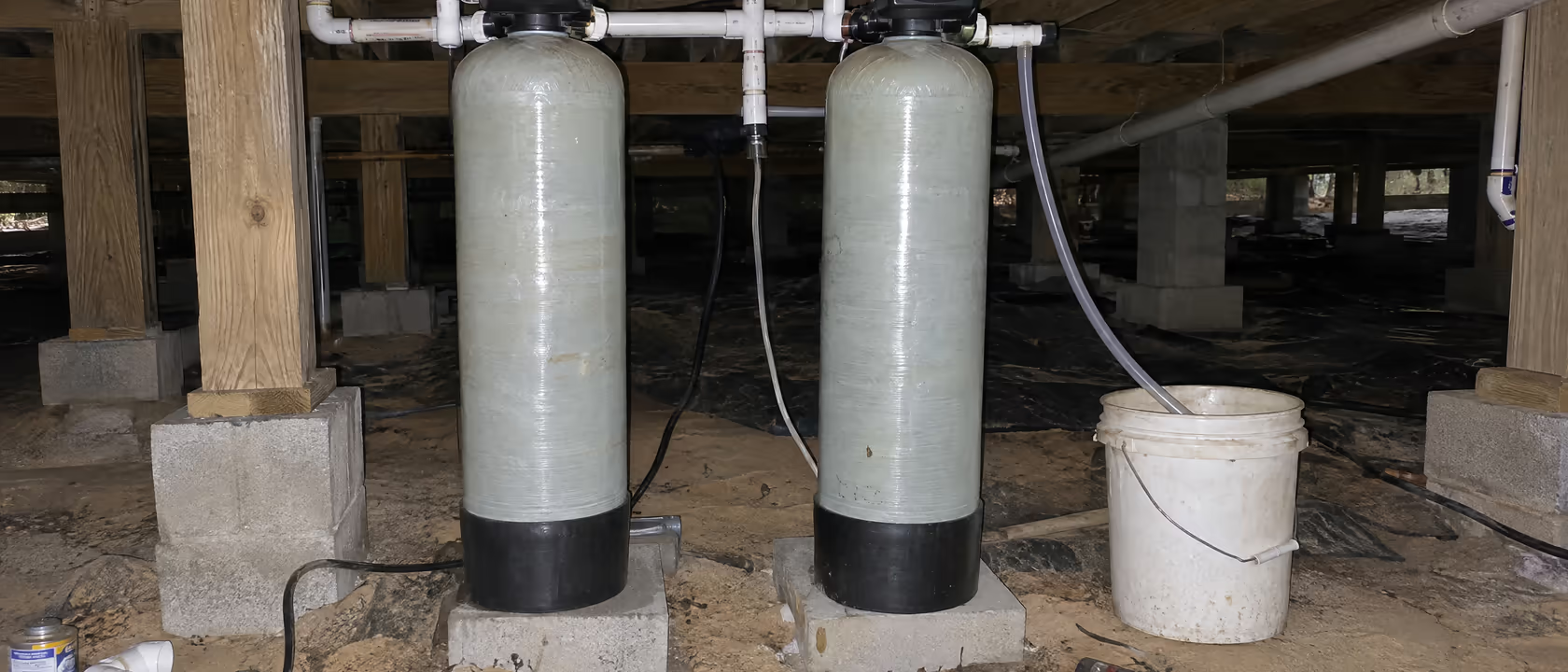
Your system needs a sediment filter anyway
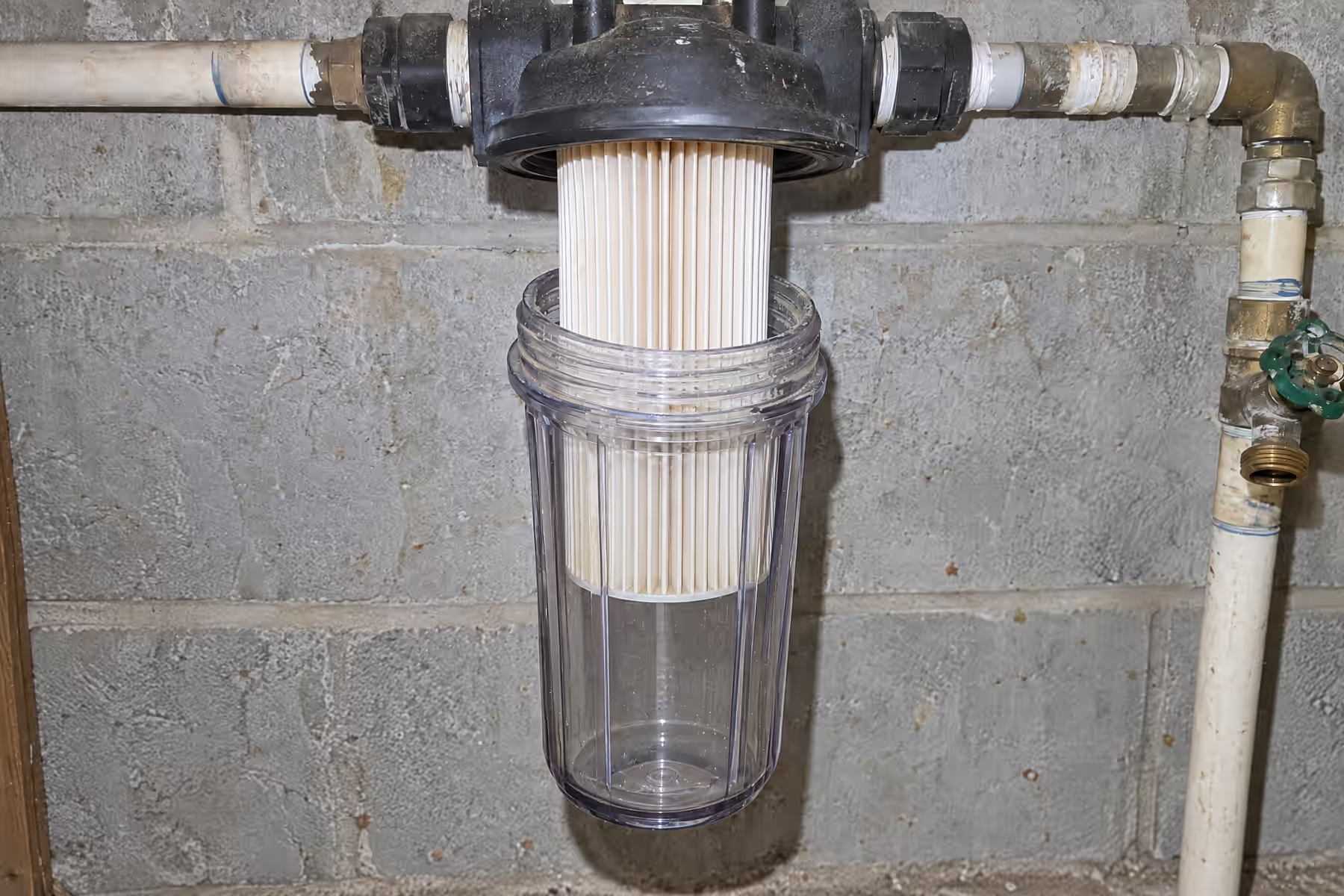
Even a healthy well on this ground carries a fine load. We fit a spin-down separator ahead of a Pentair cartridge housing to pull the coarse grit out mechanically. The cartridge then only handles what is left. That is the difference between changing filters every month and changing them twice a year.
How we work it out
-
Catch a sample and look at it
We catch a sample of the grit and look at it. Coarse sharp grains point at the ground. Fine silt that hangs in the water points at the settled layer in your casing. The two lead to different work.
-
Check the pump setting against the record
We compare the total depth on your well record against where the pump actually hangs. That shows whether the intake is sitting down in accumulated grit. It is the cheapest fix and the one most often missed.
-
Inspect the valve seats
We swap a scored plastic foot valve for a Simmons brass one, because brass holds its seat against sand for years where plastic gives up in months.
-
Size the filter to the real load
We fit a separator first, then a cartridge or a Fleck-controlled backwashing filter if the load justifies it. We size both against your measured sediment rather than a catalog default, because an undersized housing changes how often you service it, not the problem.
When sand is a construction defect rather than a nuisance
New sand on an old well is a warning
A rising sand load on a well that used to run clean means a barrier stopped working. Under 15A NCAC 02C your casing and grout are what keep the borehole sealed off from everything above it. So a hole letting sand in is letting in whatever else sits at that depth.
Sample the water, not just the filter
You can see sediment. You cannot see bacteria. NGWA guidance puts bacteria testing at annually on a private well. A well that has started passing material is exactly when that sample stops being routine and starts being diagnostic.
A filter does not repair a well
A separator protects the plumbing and appliances downstream of it. It does nothing for your casing, your screen or your pump above it. So treating a rising sand load with filtration alone protects the house while the well keeps getting worse.
Numbers worth knowing
| Local aquifer | Coastal Plain sand |
|---|---|
| Pump clearance off bottom | 10 to 15 ft |
| Foot valve material | Brass, not plastic |
| Sediment filter | $145 to $195 installed |
| Bacteria testing | Annually |
| Diagnostic tool | Downhole camera |
A complete well water treatment system runs $1,500 to $6,500 installed. What you need depends on what a lab test finds, which is why the test comes first and costs $50 to $200.
| What the job is | Typical range | Unit |
|---|---|---|
| Lab water testTells you what is actually in the water and what equipment is the right size. Buying treatment without it is guessing. | $50 – $200 | per test |
| Sediment filterFirst stage. Catches the sand that Coastal Plain wells produce. | $145 – $195 | installed |
| Point-of-use reverse osmosis, kitchen tapDrinking water only, not whole-house. | $595 | installed |
| UV disinfectionHandles bacteria without chemicals. Bulb replacement runs $145 to $160 a year. | $895 – $995 | installed |
| Acid neutralizer, pH correctionCoastal Plain groundwater runs acidic, and low pH eats copper pipe and stains fixtures. | $1,195 – $1,895 | installed |
| Carbon filterTaste and odor. Backwashing units sit at the top of the range. | $1,495 – $2,495 | installed |
| Water softenerSalt runs about $125 a year. | $1,695 – $1,895 | installed |
| Iron and sulfur filterOrange staining and rotten-egg smell. The two most common complaints on iron-rich sand aquifers. | $1,795 – $2,195 | installed |
| Acid neutralizer plus softener packageCheaper together than separately. | $2,695 – $2,995 | installed |
| Complete treatment systemDepends entirely on what the test finds. | $1,500 – $6,500 | installed |
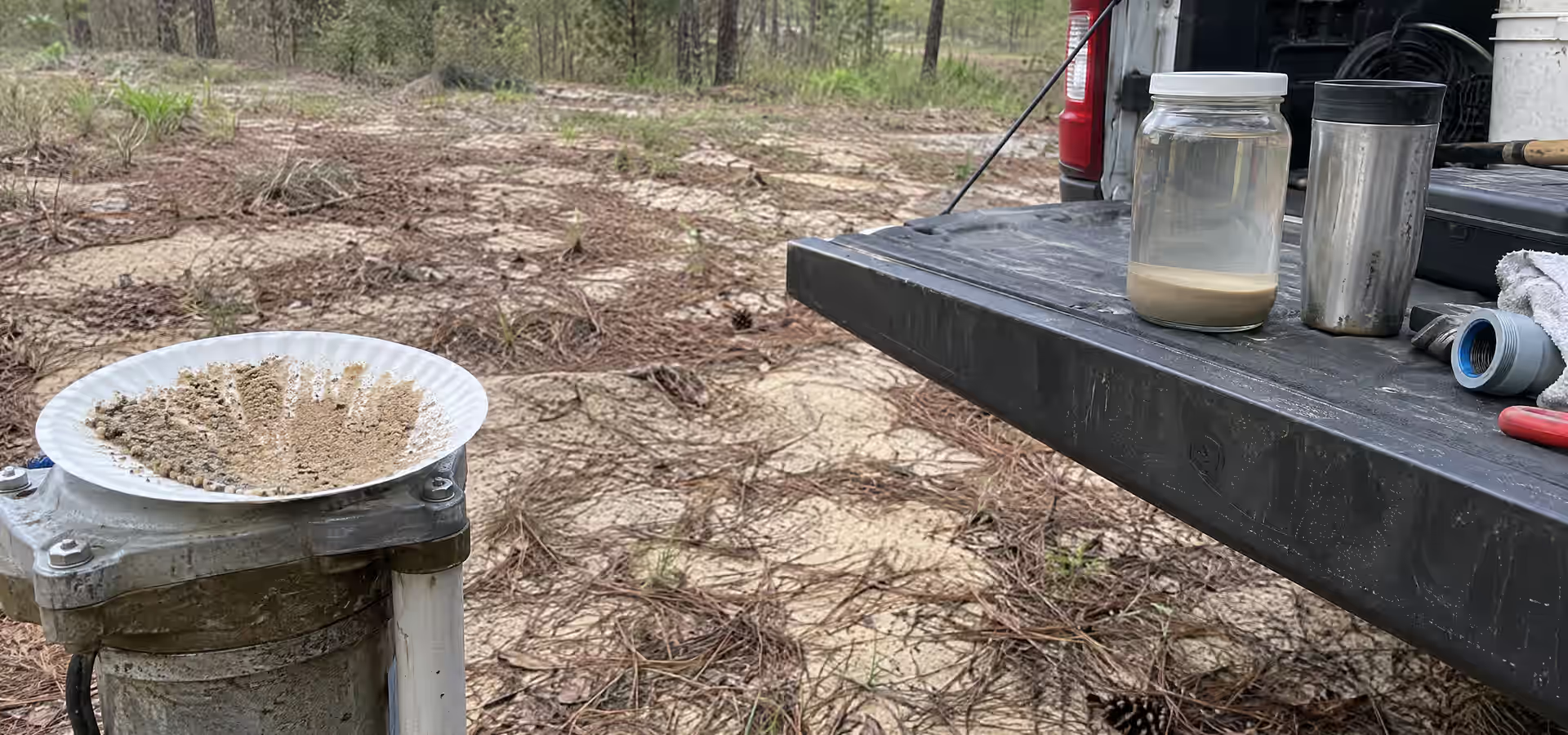
A filter that needs changing every three weeks is not a filter problem. It is the well writing you a letter.Cumberland County, NC
Who we work for
- Well and Pump Service for Farms Stock water, wash-down, irrigation and a farmhouse on one well. Sized on sustained draw, not acreage.
- Well Service for Mobile Home Parks Shared supply with tenants attached. Past 15 connections it stops being a private well at all.
- Well Service for Churches and Camps Idle most of the week, then a full building. The hardest duty cycle in private water supply.
Before and after
Want it priced properly?
On-site estimates are free, itemized, and written down before any work starts.
Questions we get asked
Why is there sand in my well water?
3 causes cover it: a pump set into the fines that settle at the bottom of the casing, a failed screen or gravel pack, or a breach in the casing itself. The first is common and cheap, the third is rare and serious.
Is sand in well water harmful to drink?
$50 to $200 for a lab panel answers this properly, because the grit itself is inert while the route it traveled may not be. A well that has started passing sand recently is worth sampling for bacteria at the same time.
Will a filter fix sand in the water?
$145 to $195 installed puts a sediment filter on the house, which protects fixtures and appliances. It does not repair whatever is releasing the sand, so it is a good second step and a poor first one.
Can sand damage my pump?
10 to 15 ft of clearance off the bottom exists precisely because suspended sand scores valve seats and wears impellers. A pump passing sand continuously loses years of service life doing it.
Who fixes sand in well water near me?
Fayetteville Well Pump Repair handles sediment problems on private wells across Fayetteville and Cumberland County, checking pump setting and valve condition before recommending filtration.
Does sand mean I need a new well?
1 downhole camera survey answers that rather than an estimate written on suspicion. Plenty of sand complaints resolve at the pump setting, and drilling belongs at the end of the list rather than the start of it.
Sand is the one well complaint that is genuinely normal in this county and genuinely serious in a minority of cases, and the distinction is quantity over time rather than presence. Keep a spent cartridge and compare it to the next one. Where the load is rising, well casing repair and well water testing are the two places that investigation goes.