Your casing is the part nobody thinks about until a water test comes back positive. At Fayetteville Well Pump Repair, we check the cap, the casing height and the pitless connection before assuming the fault is deep down. Most contamination routes we find sit in the top 20 ft, and those are the cheapest to close. Casing figures sit on our well pump cost page.
A well is a hole with a pipe in it and grout packed around the pipe. The pipe is your casing. The grout fills the ring of space outside it. Together they stop water from the surface and from shallow layers reaching the clean water your pump draws from. That is their only job.
When either one fails, your well starts sampling everything above it. Coliform hits that show up after heavy rain and vanish two weeks later are the classic sign, because the route only carries water when there is enough of it. That pattern points at your casing and cap far more often than at the water itself. It is also why chlorinating a well with a bad casing gives you a clean test and a repeat failure a month later.
What is actually wrong
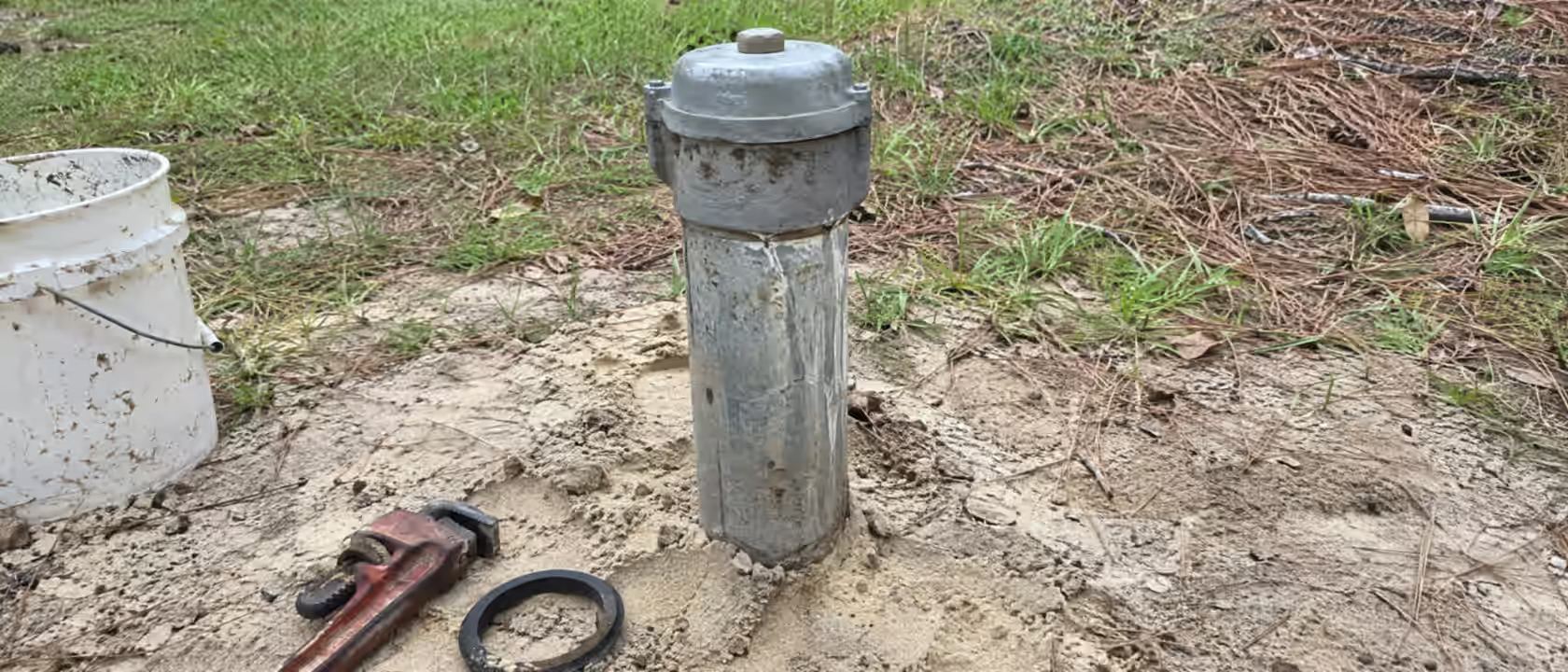
Your cap is cracked or missing its gasket
A sanitary well cap seals against the casing with a rubber gasket and vents through a screen. Cracked plastic, a perished gasket or a missing screen turns the top of your well into an open pipe. We fit a Baker Water Systems cap and seat it properly, and it is the cheapest single improvement available on an older wellhead.
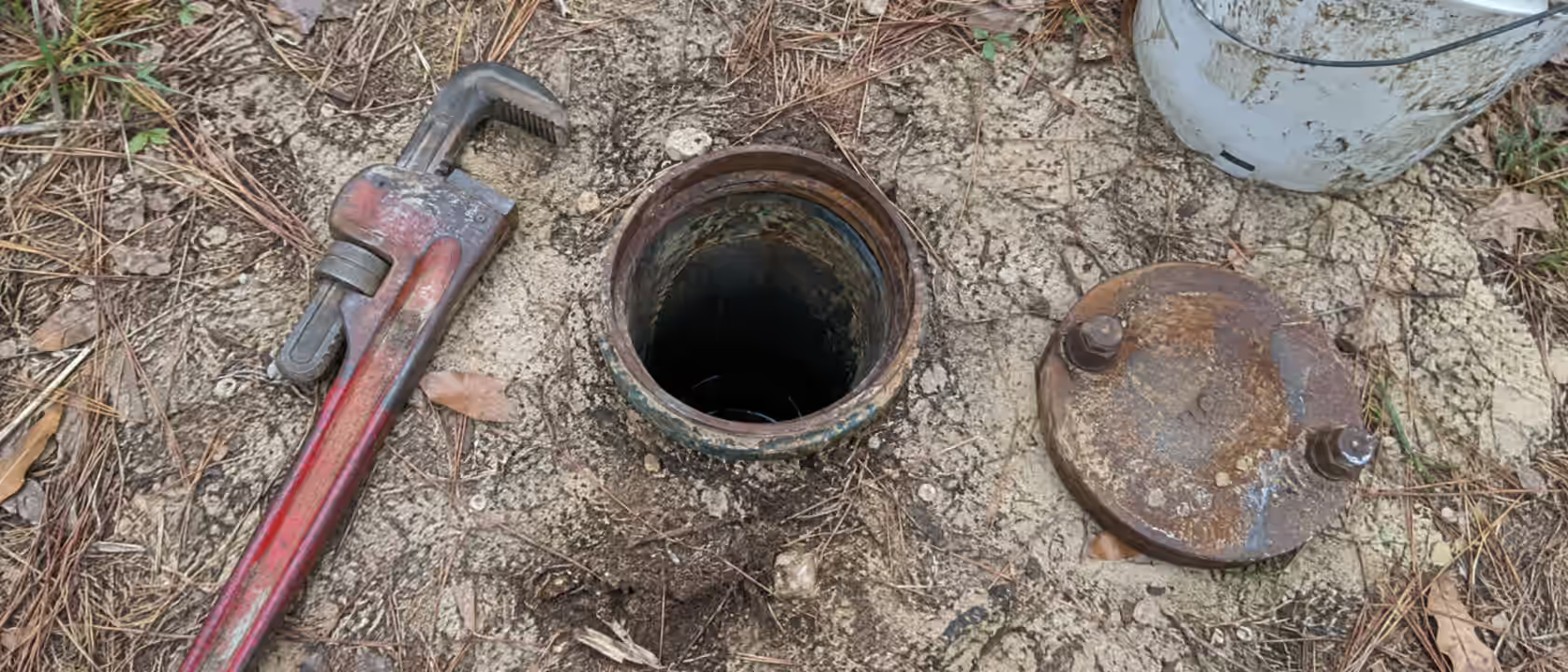
Your casing sits at or below ground level
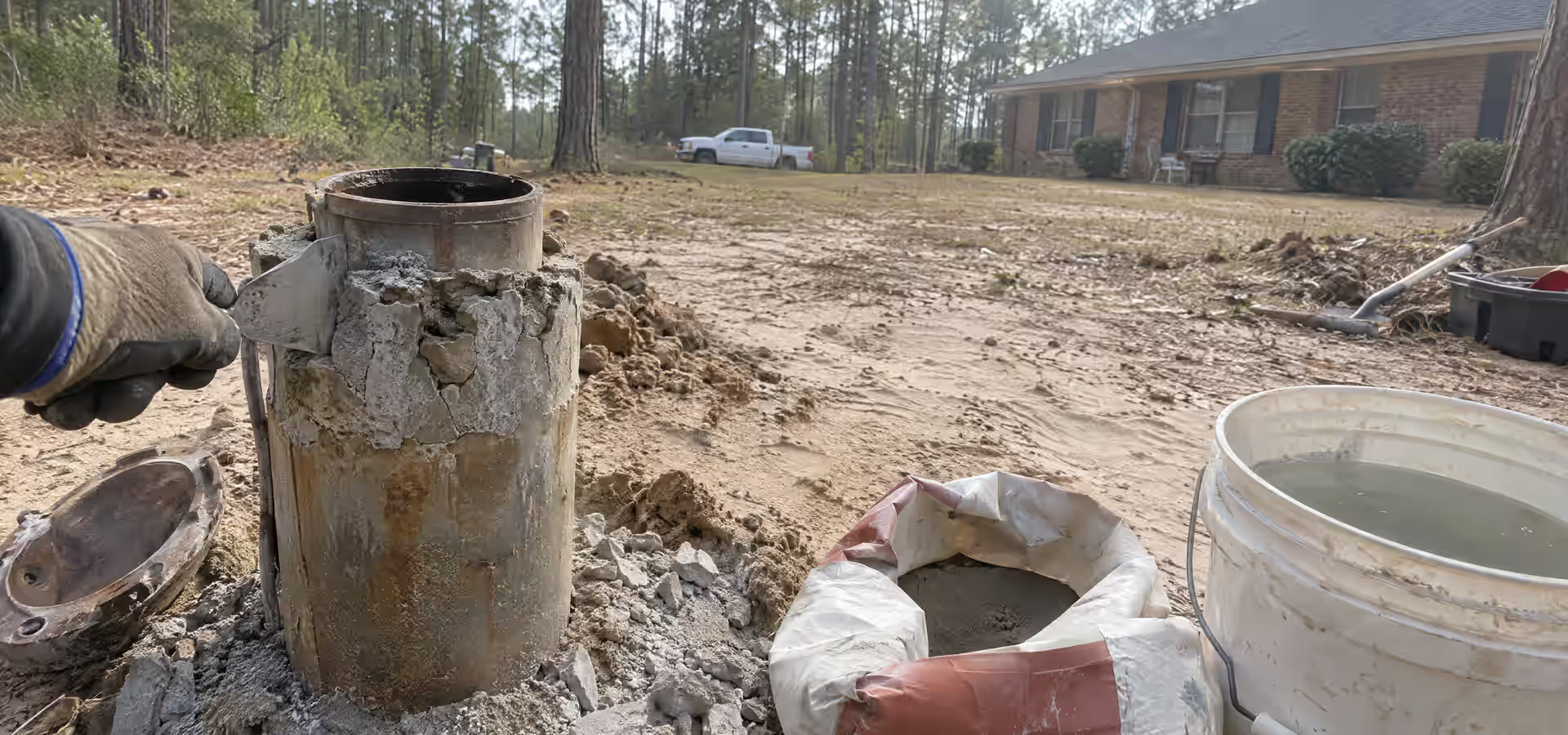
12 in above finished ground is the minimum. Decades of yard fill, landscaping and driveway work regularly bury a wellhead that started out correct. Below that line, runoff reaches the space around your casing directly. We extend the casing, which is straightforward work and closes the most common contamination route on rural property here.
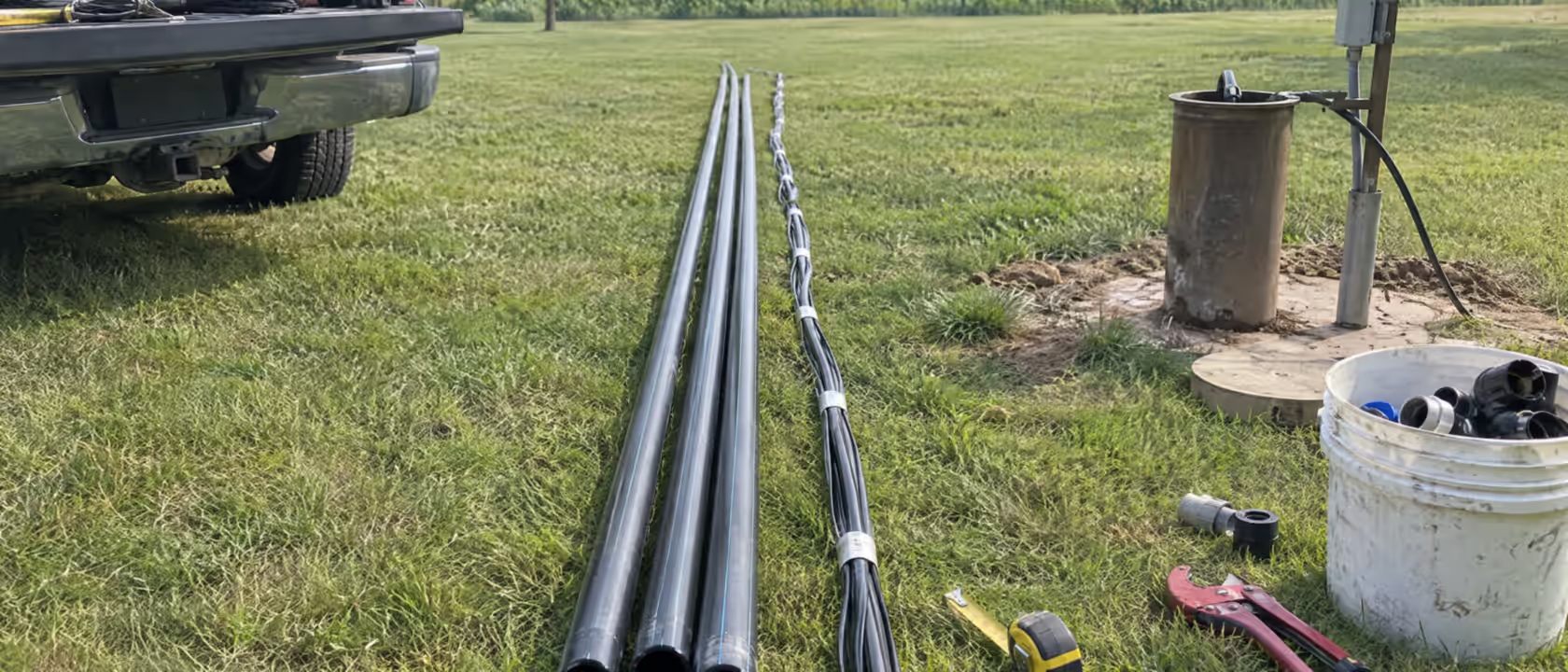
Your pitless adapter is leaking
The pitless adapter carries your water line out through the casing wall below frost depth. Its seal is a wear part. A leaking Merrill or Baker Water Systems adapter loses pressure and lets shallow groundwater in at the same time. Pulling the pump gives us access, so we usually pair this repair with pump work rather than doing it alone.
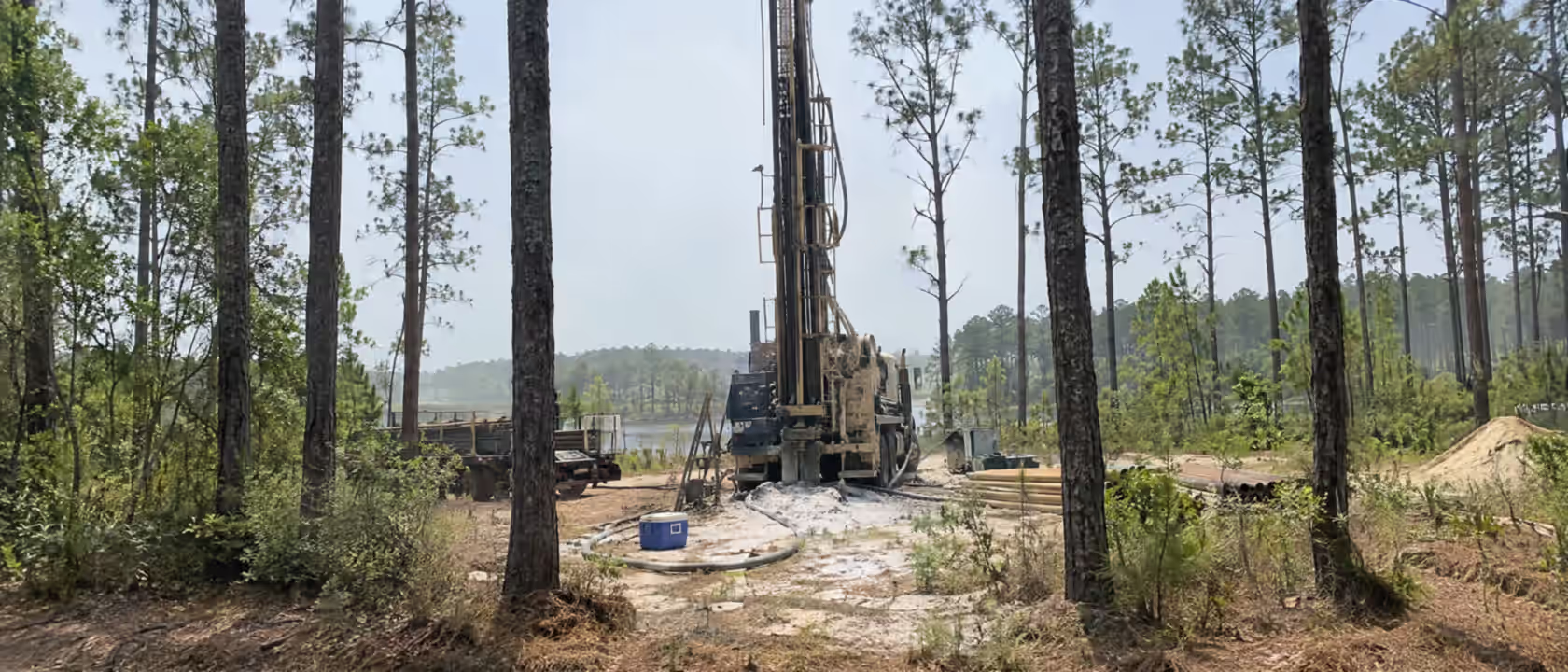
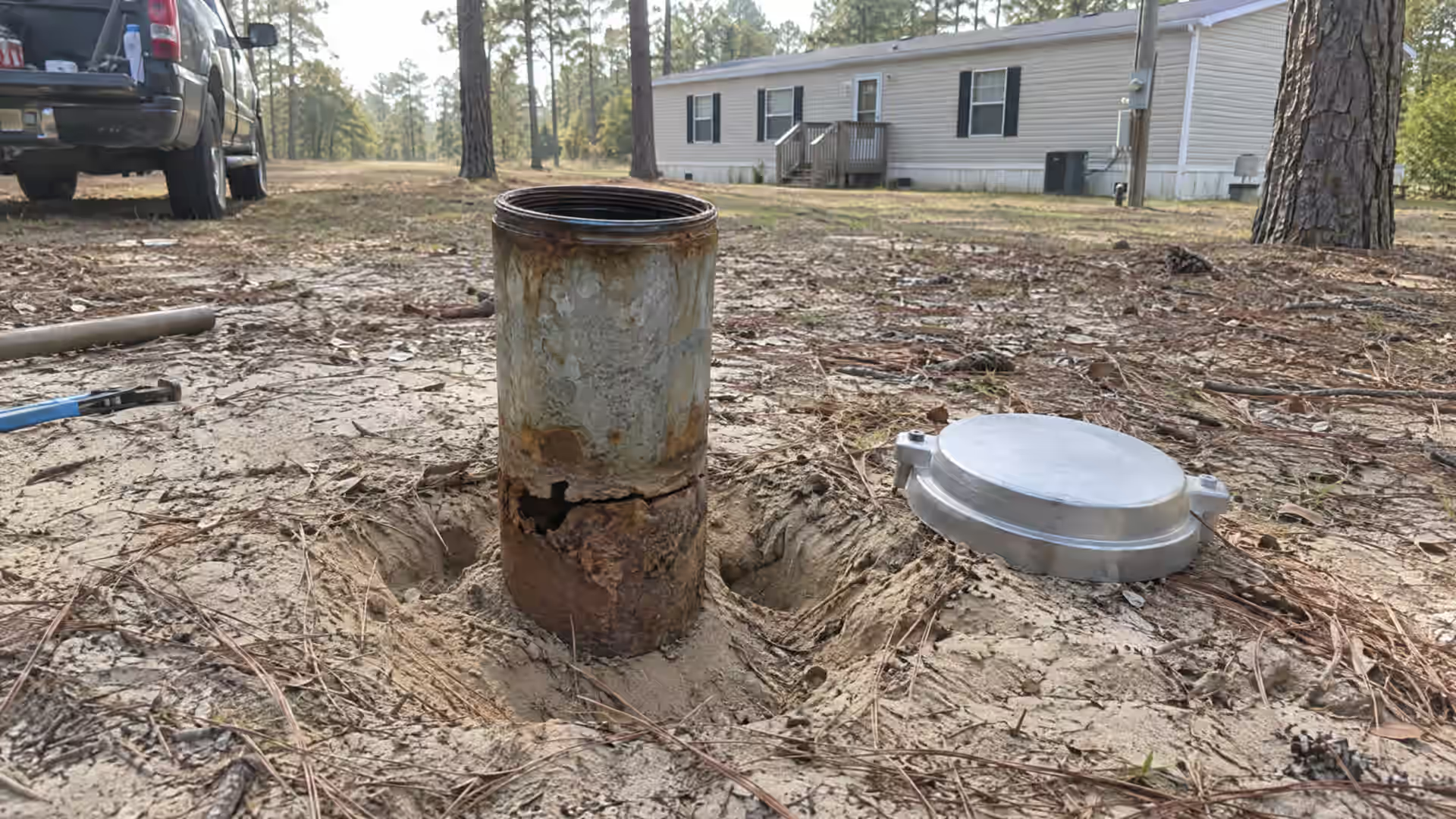
Your casing has rusted through
Steel casing rusts from both sides over forty or fifty years and eventually perforates. Sand in your water is often the first sign, and it wears out a Simmons foot valve seat and a Pentair filter cartridge on its way through the house. If the hole sits above the water layer, we can line it and restore the barrier. If it does not, well abandonment and a replacement well is the honest answer.
How we work it out
-
Inspect the top 20 ft first
We inspect the top 20 ft first: cap, gasket, vent screen, height above ground and the way the ground slopes around your casing. We find most routes into a well right here, and they cost the least to close.
-
Pull the well record
We pull your well record. Casing depth, casing material and the grouted section decide what can be repaired, so a well with its record on file is a known quantity before we open anything.
-
Run a camera
We run a camera down the well. It shows us holes, failed joints and the condition of the screen directly, which beats guessing at them from sand in a Goulds pump end.
-
Repair, disinfect, then test
We shock chlorinate after the repair and sample after the chlorination. Testing before the repair gives you the comparison that makes the second result mean something.
Casing is the part the rules are actually about
Grouting is the corner people cut
15A NCAC 02C sets casing depth and requires the space around it to be grouted. A bid that grouts partly instead of to full depth is not just cheaper, it is non-compliant. The gap it leaves is the exact path surface water takes into your water.
Setback decides what is worth repairing
A well too close to a septic drainfield cannot be made compliant by fixing its casing. Where the setback was never met, the right answer is a new well sited properly. So a casing repair quoted without checking your site plan may be money spent on a well that should be replaced.
The test result is the proof
A sample to the county health department before and after the work turns an opinion into evidence. Chlorination alone will clear a test for a while on a well with an open route. So one clean result after shock treatment proves very little on its own.
Numbers worth knowing
| Minimum stick-up | 12 in above grade |
|---|---|
| Casing on a new well | $400 to $1,200 |
| Usual fault zone | Top 20 ft |
| Grouting requirement | Full annular depth |
| Inspection method | Downhole camera |
| Post-repair step | Shock, then sample |
A complete residential well in the Fayetteville area runs $6,500 to $11,500. Coastal Plain sand drills faster and shallower than the Piedmont rock an hour west, which is why the same well costs less here than it does in Raleigh.
| What the job is | Typical range | Unit |
|---|---|---|
| Complete well, Coastal Plain (Fayetteville, Cumberland County)Typical depth 100 to 250 ft. Sand aquifers drill fast and predictably. | $6,500 – $11,500 | complete |
| Complete well, Sandhills transition zoneTypical depth 150 to 350 ft. West of the county line the geology starts changing. | $8,000 – $13,500 | complete |
| Complete well, Piedmont (for comparison)Fractured crystalline rock means slow drilling and real dry-hole risk. Not our geology. | $9,200 – $16,500 | complete |
| Drilling rate, North CarolinaExtra footage to reach a reliable aquifer bills at the same per-foot rate. | $28 – $60 | per foot |
| Casing, Coastal PlainCheaper here than the $1,200 to $3,000 a Piedmont well needs. | $400 – $1,200 | installed |
| Cumberland County well permitPaid to the county health department. A house well is $320 including the inspection and the bacteria, chemistry and nitrate samples; an irrigation or agricultural well with no sample is $275, from the county fee schedule posted in 2022. Well construction cannot legally start without it. | $275 – $320 | permit |
Chlorine clears a test. It does not close a hole. If the coliform comes back every time it rains, stop buying chlorine.Cumberland County, NC
Who we work for
- Well and Pump Service for Farms Stock water, wash-down, irrigation and a farmhouse on one well. Sized on sustained draw, not acreage.
- Well Service for Mobile Home Parks Shared supply with tenants attached. Past 15 connections it stops being a private well at all.
- Well Service for Churches and Camps Idle most of the week, then a full building. The hardest duty cycle in private water supply.
Want it priced properly?
On-site estimates are free, itemized, and written down before any work starts.
Questions we get asked
How do I know if my well casing is damaged?
3 signs point at the casing: sand appearing in water that used to run clean, coliform results that follow heavy rain, and a wellhead sitting at or below ground level. A downhole camera confirms it directly.
How high should a well casing stick up?
12 in above finished grade is the minimum. Below that, runoff reaches the annular space around the casing, and that is the route behind most positive bacteria results on rural properties.
Can a corroded well casing be repaired?
1 factor decides it: where the perforation sits relative to the water-bearing zone. A breach above it can often be sleeved with a liner, and a breach within it usually means the well is finished.
How much does well casing work cost?
$400 to $1,200 is the casing figure on a new Coastal Plain well, which is the benchmark any repair gets measured against. Cap and stick-up work sits far below that and is the first thing to do.
Who repairs well casing near me?
Fayetteville Well Pump Repair inspects and repairs wellheads, caps, casing height and pitless adapters across Fayetteville and Cumberland County, and runs a camera before recommending anything structural.
Will chlorinating the well fix a contamination problem?
1 clean test after shock treatment proves the chlorine worked, not that the well is sound. Where a route into the casing is still open, the result returns to positive after the next heavy rain.
Casing work is unglamorous and it is the only part of a well system that has anything to do with whether the water is safe. A cap, a gasket and 12 in of stick-up cost very little against a repeat contamination problem that never resolves. Where a test has already come back positive, well chlorination is the immediate step and well water testing is what confirms whether the repair held.