A softener is only worth buying if your water is actually hard. Plenty of wells here come back soft and acidic instead. At Fayetteville Well Pump Repair, we test before recommending, because a softener fitted to soft water adds salt, maintenance and a pressure drop while fixing nothing. A $50 to $200 panel settles it. Installed ranges sit on our well pump cost page.
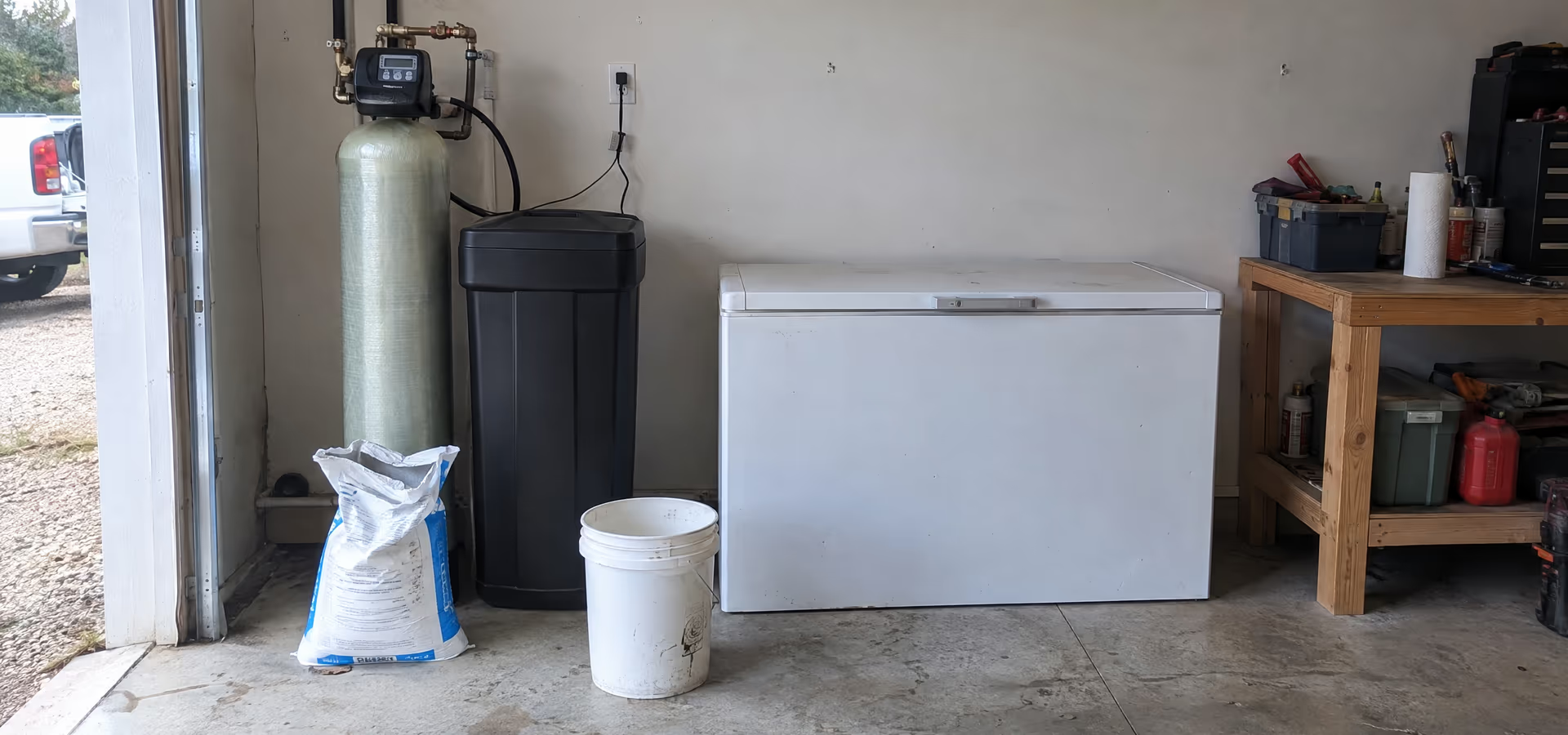
A softener is a swap, not a filter. Your water runs through a bed of resin beads that trade the calcium and magnesium making it hard for sodium. The bed cleans itself periodically by flushing with salt water. Nothing is really removed. Hardness is swapped for something that does not leave scale.
That explains both failures we get called out to. Resin that has been fouled with iron loses its capacity and never recovers, which is why an iron filter belongs ahead of your softener rather than behind it. And a bed that cannot backwash at the flow it needs never rinses properly. It channels, stops working, and keeps eating salt on schedule while it does nothing.
What is actually wrong
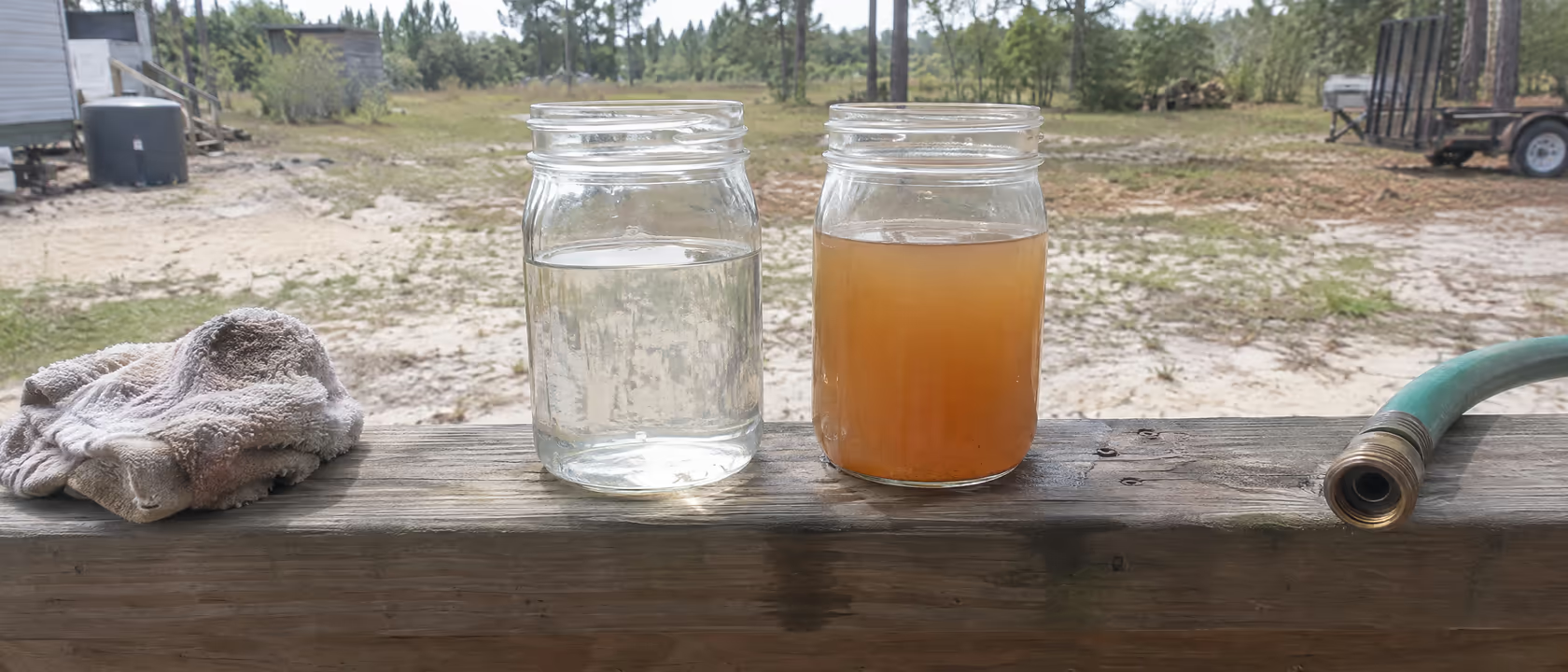
First, confirm you actually have hardness
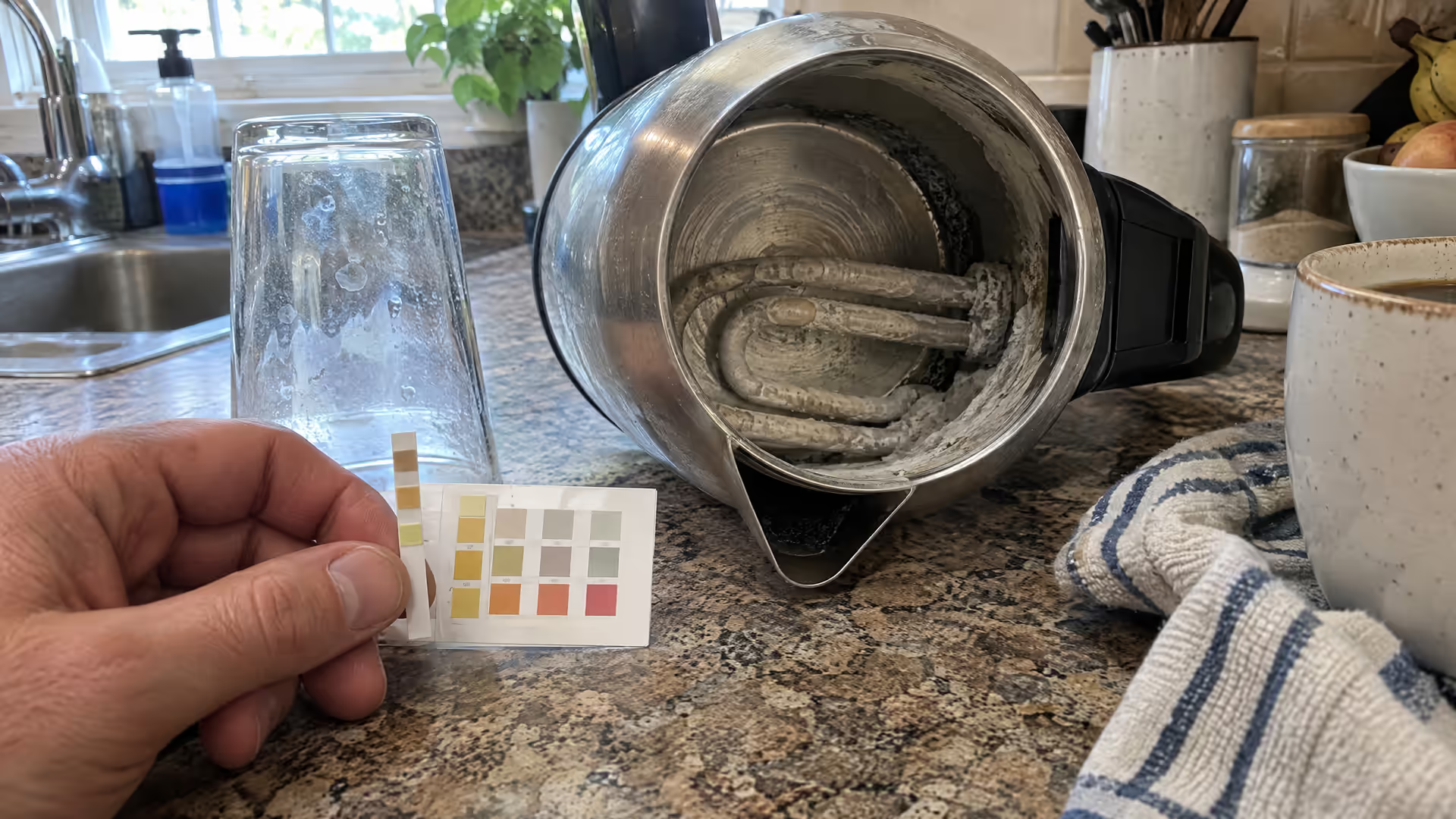
Scale on a kettle element, spots on glassware and soap that will not lather are the everyday signs. We run a lab panel to put a number on it. Plenty of wells here come back soft with a low pH instead, and that house needs pH correction rather than a softener.
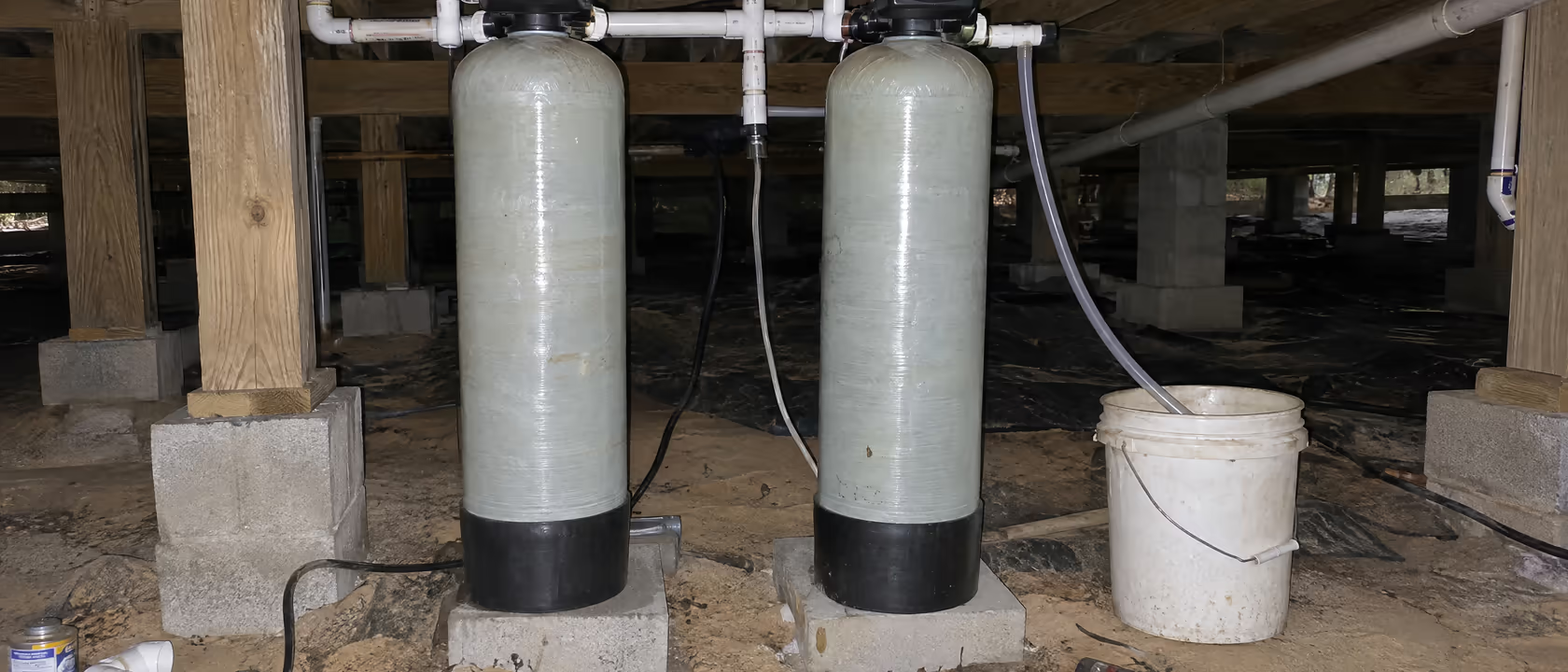
Iron has to come out first
Resin grabs iron and holds it. Salt does not release it. So every cleaning cycle leaves a little more behind until the capacity collapses. An oxidizing filter ahead of your softener protects the resin, which is why we usually fit the two together on wells carrying both.
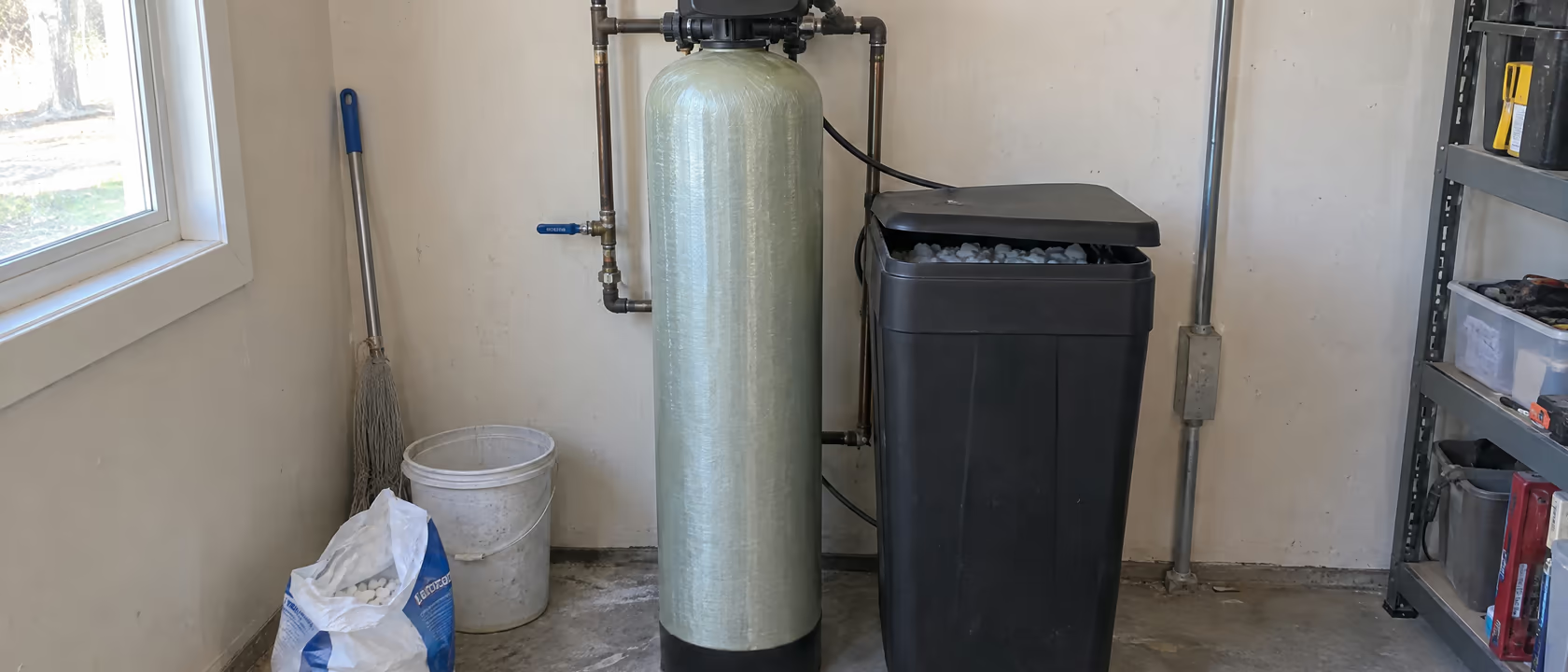
Sizing and the control head
We match capacity to your household demand and your measured hardness, then set the cleaning cycle from that. A Fleck 5600SXT metered head cleans based on water used rather than on a clock. That cuts your salt bill on a household whose usage changes week to week.
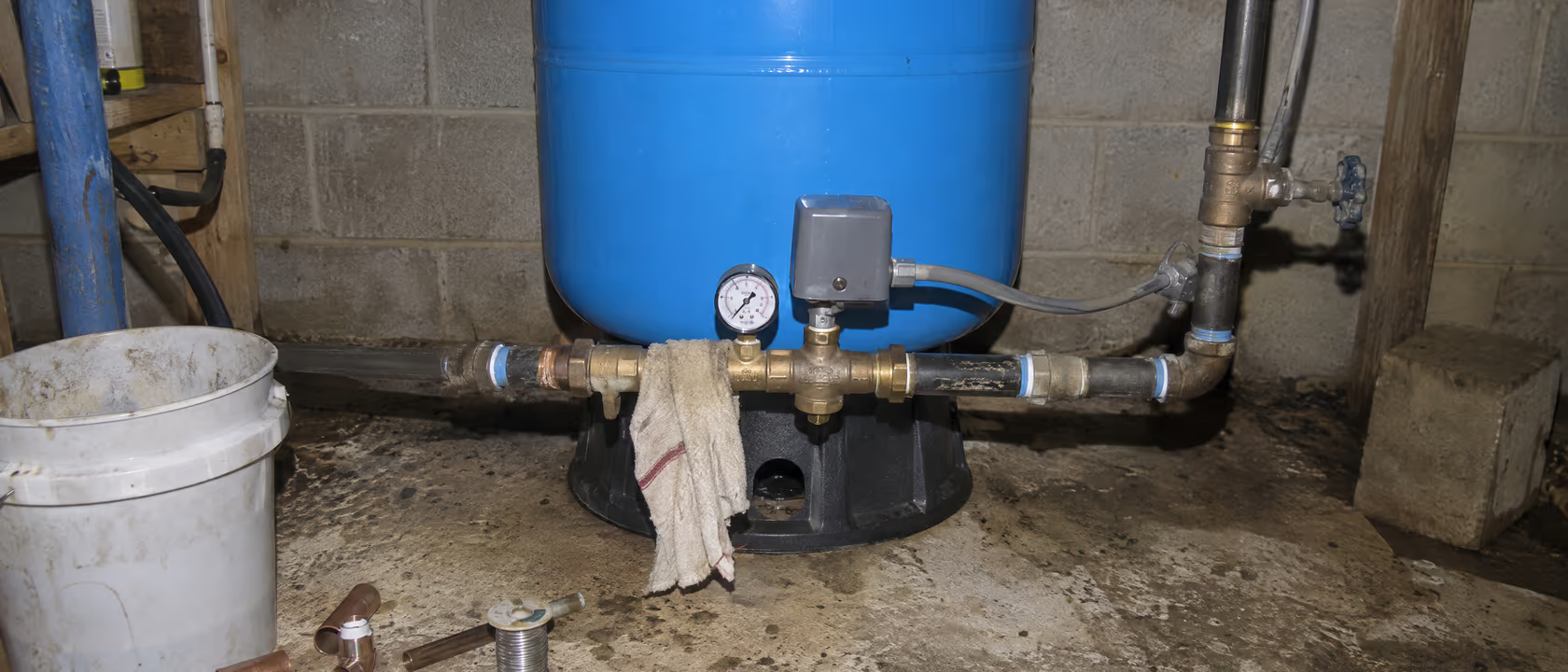
What a softener does to the rest of your system
Every tank in a treatment train adds resistance. A softener stacked behind a Pentair filter housing on a modest Goulds pump end takes pressure you will feel in the shower. We check your flow and pressure before adding a stage, because that is what stops a water quality improvement turning into a water pressure complaint.
How we work it out
-
Panel first
We run a $50 to $200 panel before recommending anything. It gives you hardness, iron, manganese and pH together. The hardness number is the only thing on that list that justifies a softener.
-
Put the stages in order
We put the stages in order: sediment, then pH, then iron, then softening. A softener placed ahead of an iron filter is a resin bed with a short future.
-
Size to demand and flow
We size the capacity to your household usage and cap the tank at your measured flow rate. A bed that cannot lift during backwash stops working no matter what it is rated for.
-
Set the cycle, then check your pressure
We program the cleaning cycle to your real usage. Then we recheck the Amtrol Well-X-Trol air charge and confirm pressure at a fixture, so the improvement does not arrive as a complaint.
The questions worth asking before buying one
What did the panel actually show
A softener recommendation with no hardness figure behind it is a product looking for a house. NGWA guidance already puts a full chemical panel at every three years on a private well. The number should exist before the equipment does.
Where does the salt water go
Cleaning the resin produces salty discharge that has to go somewhere sensible. On a rural property that is usually your septic system. We check the volume and frequency against your septic setup rather than assuming, because the two share the same small lot.
A softener is not a disinfectant
A softener does nothing about bacteria. The county health department is where a coliform sample goes. If your well has tested positive, the condition of your wellhead is the priority and the softener is a completely separate conversation.
Numbers worth knowing
| Softener installed | $1,695 to $1,895 |
|---|---|
| Neutralizer plus softener | $2,695 to $2,995 |
| Lab panel | $50 to $200 |
| Control head | Fleck 5600SXT metered |
| Required upstream | Iron removal |
| Common local finding | Soft, low pH water |
A complete well water treatment system runs $1,500 to $6,500 installed. What you need depends on what a lab test finds, which is why the test comes first and costs $50 to $200.
| What the job is | Typical range | Unit |
|---|---|---|
| Lab water testTells you what is actually in the water and what equipment is the right size. Buying treatment without it is guessing. | $50 – $200 | per test |
| Sediment filterFirst stage. Catches the sand that Coastal Plain wells produce. | $145 – $195 | installed |
| Point-of-use reverse osmosis, kitchen tapDrinking water only, not whole-house. | $595 | installed |
| UV disinfectionHandles bacteria without chemicals. Bulb replacement runs $145 to $160 a year. | $895 – $995 | installed |
| Acid neutralizer, pH correctionCoastal Plain groundwater runs acidic, and low pH eats copper pipe and stains fixtures. | $1,195 – $1,895 | installed |
| Carbon filterTaste and odor. Backwashing units sit at the top of the range. | $1,495 – $2,495 | installed |
| Water softenerSalt runs about $125 a year. | $1,695 – $1,895 | installed |
| Iron and sulfur filterOrange staining and rotten-egg smell. The two most common complaints on iron-rich sand aquifers. | $1,795 – $2,195 | installed |
| Acid neutralizer plus softener packageCheaper together than separately. | $2,695 – $2,995 | installed |
| Complete treatment systemDepends entirely on what the test finds. | $1,500 – $6,500 | installed |
We turn down softener work most weeks. The water is already soft. It is just acidic, and that is a different tank.Cumberland County, NC
Who we work for
- Well and Pump Service for Farms Stock water, wash-down, irrigation and a farmhouse on one well. Sized on sustained draw, not acreage.
- Well Service for Mobile Home Parks Shared supply with tenants attached. Past 15 connections it stops being a private well at all.
- Well Service for Churches and Camps Idle most of the week, then a full building. The hardest duty cycle in private water supply.
Want it priced properly?
On-site estimates are free, itemized, and written down before any work starts.
Questions we get asked
Do I need a water softener on well water in Fayetteville?
1 number decides it, and plenty of Coastal Plain wells here come back soft already. Acidic water with low pH is the more common local finding, and that needs a neutralizer rather than a softener.
How much does a water softener cost installed?
$1,695 to $1,895 installed covers a residential softener. A combined acid neutralizer and softener package runs $2,695 to $2,995, which is the pairing most often justified on this aquifer.
Will a softener remove iron from my well water?
1 regeneration at a time, resin fouled with iron loses capacity permanently. A softener is not an iron filter, and putting one ahead of an iron stage shortens the life of the resin considerably.
Does a softener reduce water pressure?
1 tank of resistance is added to the line, and on a modest pump that shows at the shower. Available flow and pressure get measured before the stage goes in so the fix does not create a new complaint.
Who installs water softeners for well water near me?
Fayetteville Well Pump Repair specifies and installs softeners across Fayetteville and Cumberland County, and says plainly when the panel shows the water is already soft enough not to need one.
How often does a softener regenerate?
1 metered head regenerates on volume used rather than on a timer, which suits a household whose usage varies. Salt consumption drops noticeably against a clock-based unit doing the same job.
Softening is the most frequently sold and least frequently justified stage on a private well in this county. The hardness number decides it and takes two weeks to obtain. Where the panel does show hardness alongside iron, the two stages get specified together in the right order, and well water filtration systems covers how that train is assembled. Well water testing covers the panel itself.