Shock chlorination is the standard answer to a positive bacteria test. On its own it is a temporary one. At Fayetteville Well Pump Repair, we chlorinate and then look for the way in, because a well with an open route gives you a clean sample a week later and a positive one after the next storm. You end up paying for the same treatment twice. Testing costs sit on our well pump cost page.
Chlorination works by holding disinfectant through your whole system long enough to kill what is living in it. That means the well, the pressure tank and every branch of your house plumbing. Contact time matters as much as strength. A quick pour down the casing and a rinse the same afternoon is not the procedure and does not last.
What decides whether it lasts happens afterwards. Bacteria in a private well come from somewhere, and usually that somewhere is the top of your well rather than the water below. A cracked cap, a casing at or below ground level, or grout that never went to full depth all give surface water a path down the outside of the pipe. The next heavy rain then undoes the treatment you just paid for.
What is actually wrong
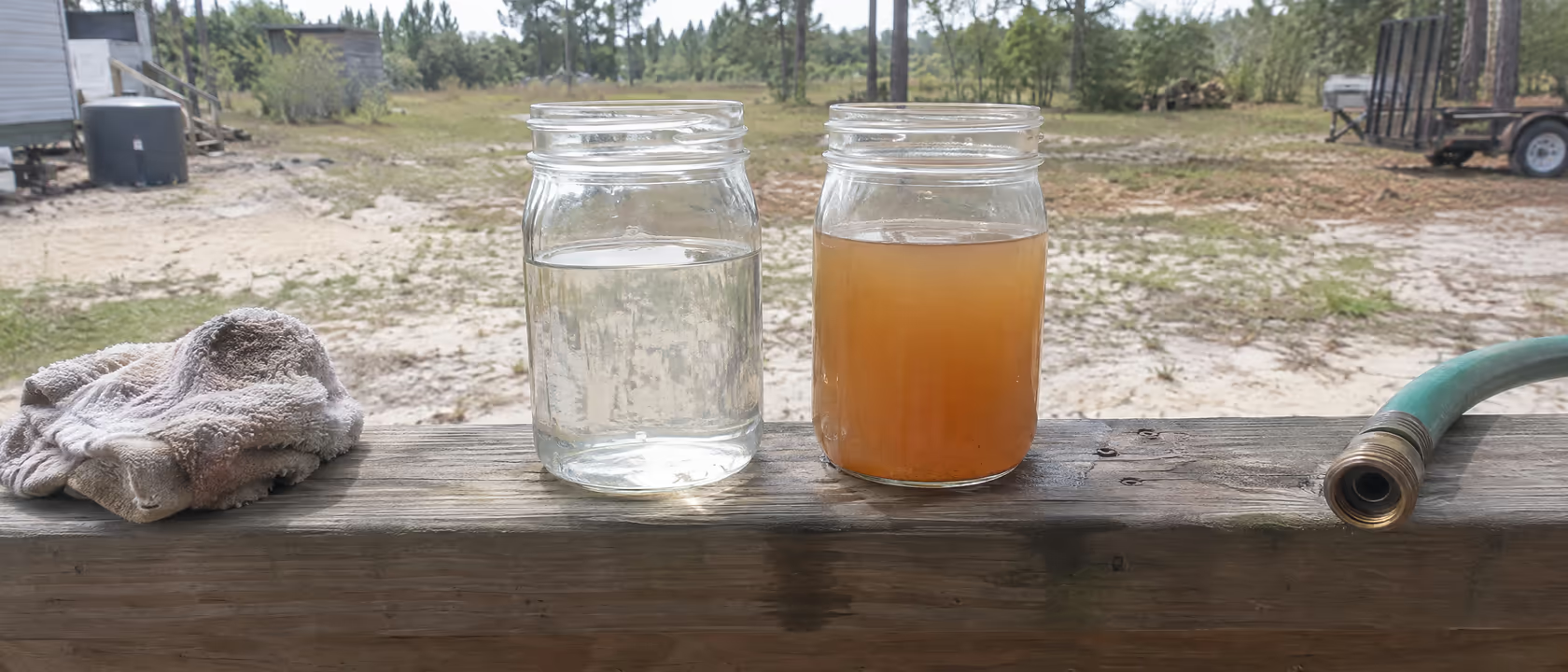
After a positive coliform result
This is the most common reason you would call us. Total coliform means surface water is getting in. E. coli means something worse. We chlorinate and retest for both, and we inspect the wellhead on the same visit rather than a later one.
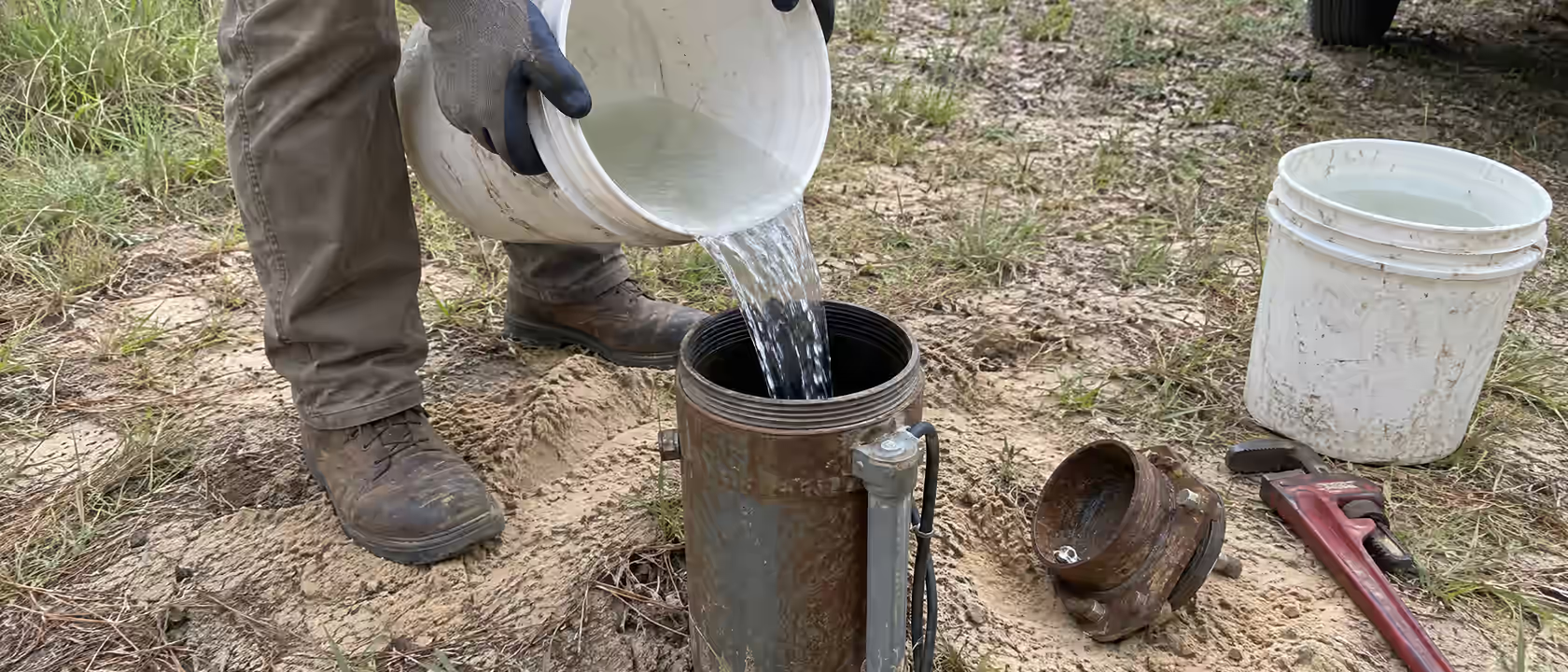
After any work that opened the well
Pulling a Goulds pump end, replacing a pitless adapter or fitting a new Baker Water Systems cap all expose the inside of your well to whatever is on the surface that day. We treat disinfection as the last step of that work rather than an optional extra. A sample afterwards is what proves it was done.
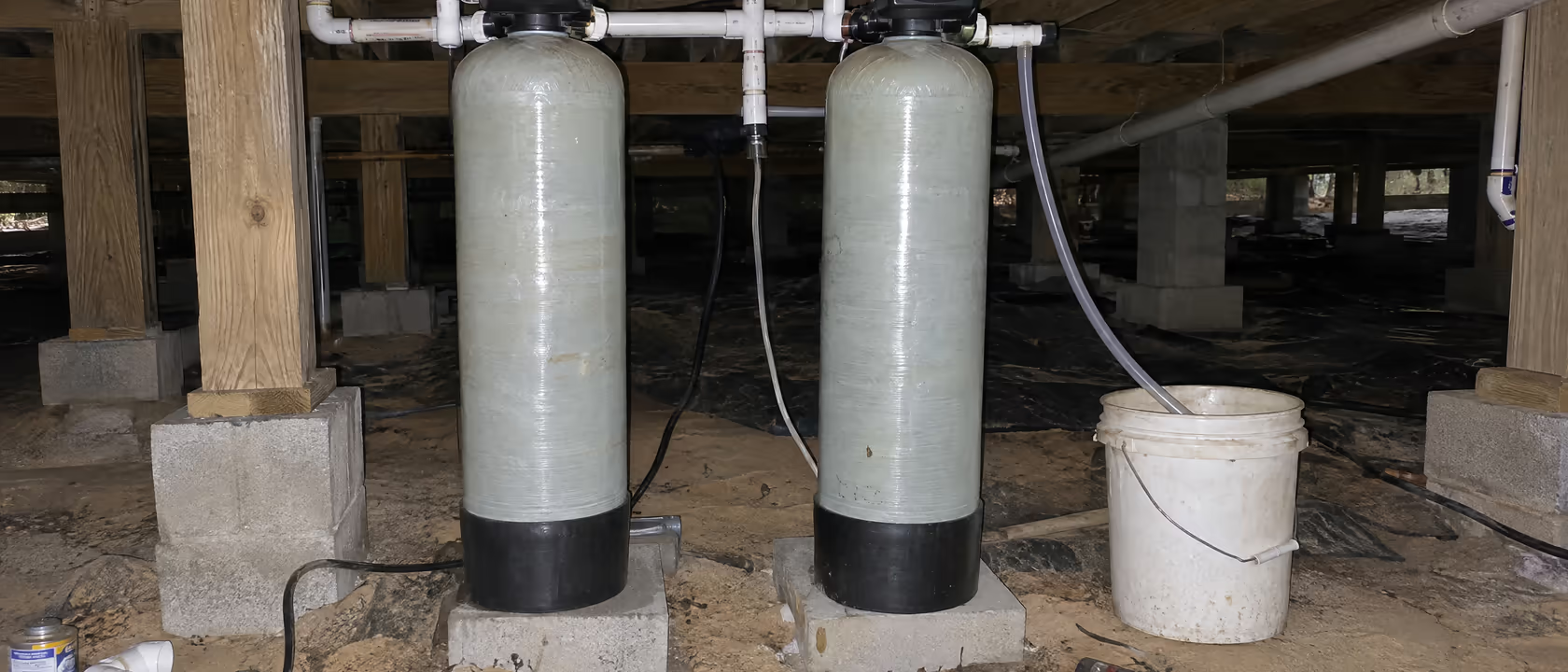
Against iron and sulfur bacteria
Slime in your toilet tank and a rotten egg smell that comes and goes are biological rather than chemical. We chlorinate to clear the colony. How fast it comes back tells us whether your well is being reinfected from outside. That timing is the diagnosis, and it costs you nothing but patience.
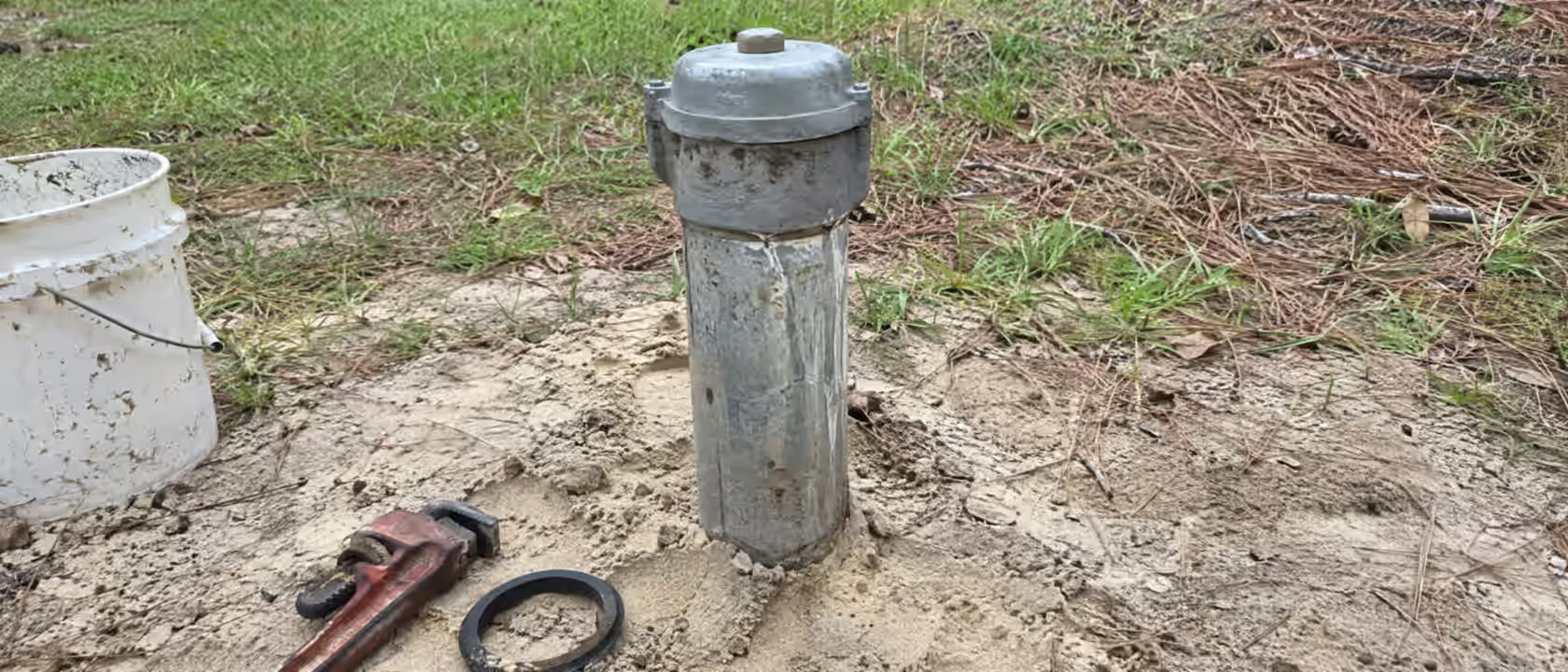
After flooding on the property
Standing water around a wellhead is a direct route in, and low-lying rural lots in this county get it. Where floodwater has reached the top of your casing, we treat the well as contaminated until a sample says otherwise. How the water looks or tastes tells you nothing.
How we work it out
-
Sample first, if there is time
We take a sample before we treat, if there is time. That result is what makes the one afterwards mean anything. Without it, a clean sample proves the chlorine worked and tells you nothing about your well.
-
Inspect the wellhead before dosing
We check the cap, gasket, vent screen and 12 in of casing above ground while your well is open. Finding the route now saves you repeating the whole exercise in a month.
-
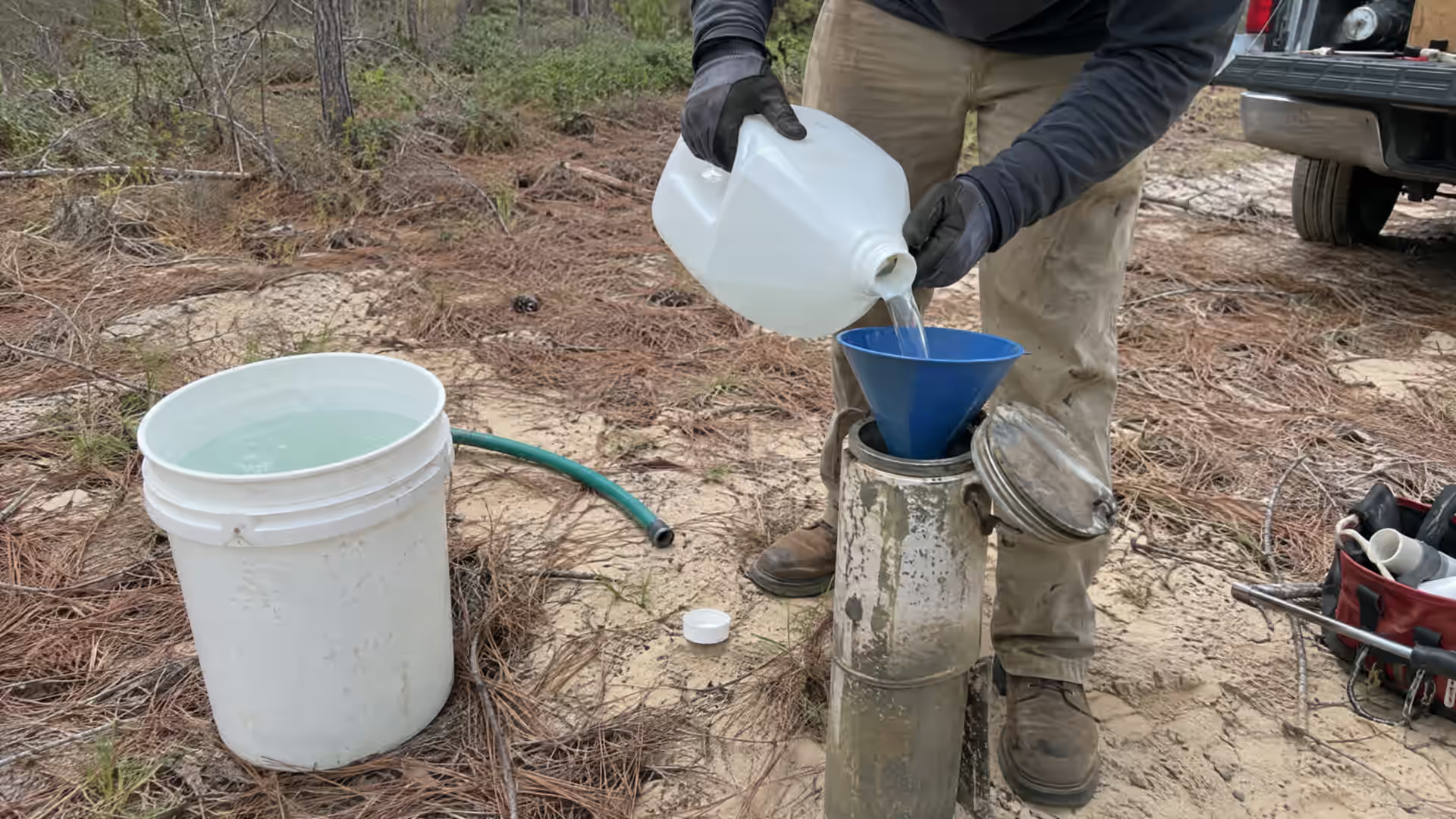
Dose, circulate and hold
We add solution and circulate it back down the casing. Then we draw it through your Amtrol Well-X-Trol tank and every fixture until chlorine shows at each one, and hold it there for the full contact period.
-
Flush, wait and retest
We flush the system to waste and replace any Pentair cartridge afterwards rather than before, because a filter run through the treatment holds what the chlorine knocked loose. Your well goes back to normal use before a sample goes to the lab. Testing while chlorine is still in there gives you a clean result that means nothing.
What chlorination proves and what it does not
Nobody monitors a private well
NGWA guidance puts bacteria testing at annually and a chemical panel at every three years. Your well sits outside the monitoring that covers city water. It only gets checked when you arrange it.
The route in is the real repair
15A NCAC 02C requires the space around your casing grouted to full depth, because that is what stops surface water running down the outside. Where that grout was cut short, chlorination becomes a chore you repeat rather than a fix, and it will keep being one.
Where the sample goes
The county health department handles bacteria samples for private wells. Using the same lab before and after keeps your two results comparable. That matters more than most homeowners get told when the first positive arrives.
Numbers worth knowing
| Lab test | $50 to $200 |
|---|---|
| Bacteria testing interval | Annually |
| Chemical panel interval | Every three years |
| Minimum casing stick-up | 12 in |
| Retest timing | After chlorine has cleared |
| Recurring positives | Inspect casing and grout |
A complete well water treatment system runs $1,500 to $6,500 installed. What you need depends on what a lab test finds, which is why the test comes first and costs $50 to $200.
| What the job is | Typical range | Unit |
|---|---|---|
| Lab water testTells you what is actually in the water and what equipment is the right size. Buying treatment without it is guessing. | $50 – $200 | per test |
| Sediment filterFirst stage. Catches the sand that Coastal Plain wells produce. | $145 – $195 | installed |
| Point-of-use reverse osmosis, kitchen tapDrinking water only, not whole-house. | $595 | installed |
| UV disinfectionHandles bacteria without chemicals. Bulb replacement runs $145 to $160 a year. | $895 – $995 | installed |
| Acid neutralizer, pH correctionCoastal Plain groundwater runs acidic, and low pH eats copper pipe and stains fixtures. | $1,195 – $1,895 | installed |
| Carbon filterTaste and odor. Backwashing units sit at the top of the range. | $1,495 – $2,495 | installed |
| Water softenerSalt runs about $125 a year. | $1,695 – $1,895 | installed |
| Iron and sulfur filterOrange staining and rotten-egg smell. The two most common complaints on iron-rich sand aquifers. | $1,795 – $2,195 | installed |
| Acid neutralizer plus softener packageCheaper together than separately. | $2,695 – $2,995 | installed |
| Complete treatment systemDepends entirely on what the test finds. | $1,500 – $6,500 | installed |
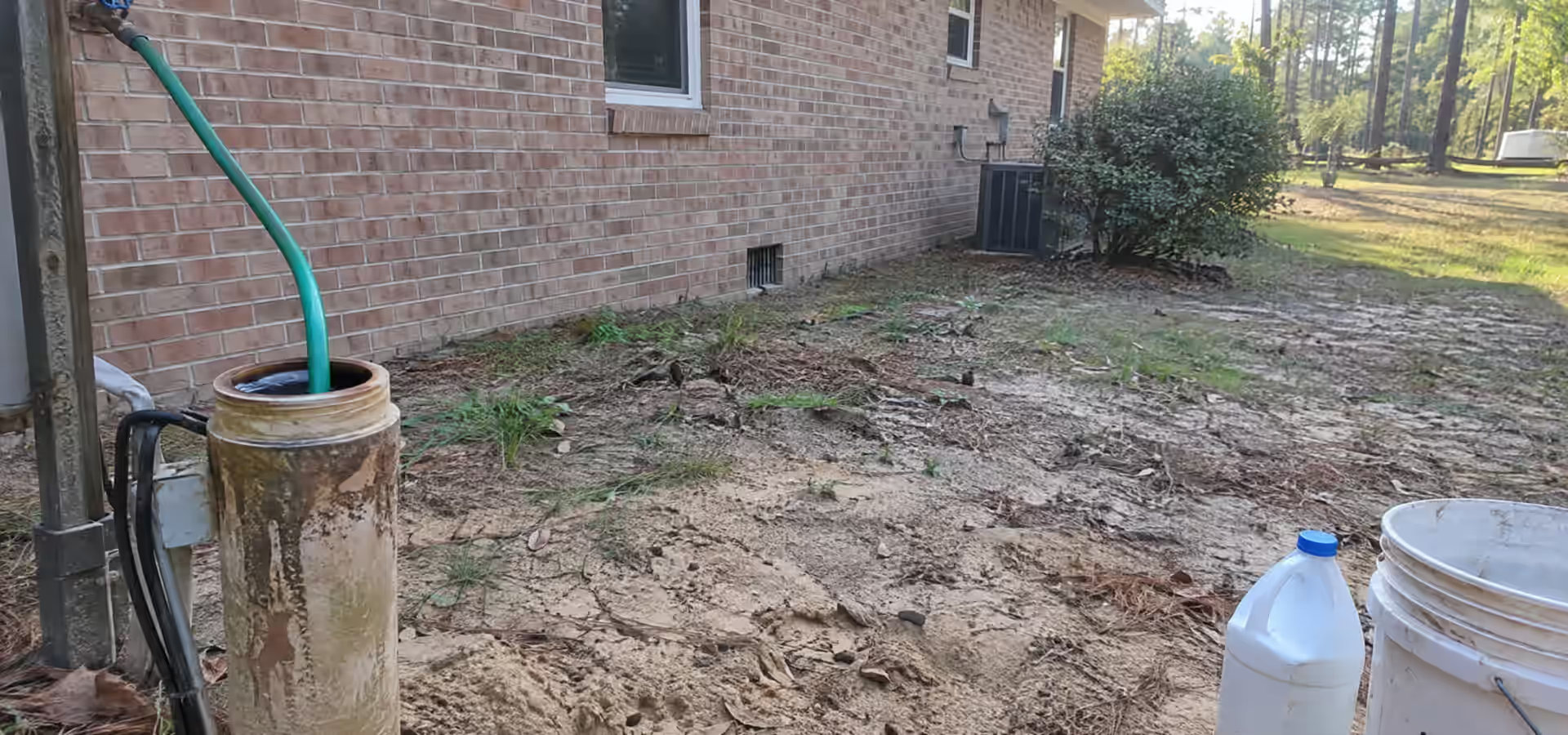
If you have shocked the well twice this year, the well is not dirty. It is open.Cumberland County, NC
Who we work for
- Well and Pump Service for Farms Stock water, wash-down, irrigation and a farmhouse on one well. Sized on sustained draw, not acreage.
- Well Service for Mobile Home Parks Shared supply with tenants attached. Past 15 connections it stops being a private well at all.
- Well Service for Churches and Camps Idle most of the week, then a full building. The hardest duty cycle in private water supply.
No water this morning?
Tell us what the pump is doing and we will tell you what it costs to put right.
Questions we get asked
How often should a well be shock chlorinated?
1 positive test, or any work that opened the well, is the trigger. Routine chlorination on a schedule is a sign something is wrong, because a properly sealed well should not need repeated treatment.
How long after chlorination can I drink the water?
1 full flush plus a period of normal use, then a lab sample. Testing while chlorine is still detectable returns a clean result that proves the disinfectant worked rather than that the well is safe.
Why does my well keep testing positive after chlorination?
12 in of casing above grade, an intact cap and full-depth grouting are what keep surface water out. Where one of those is missing, bacteria return with the next heavy rain and the treatment resets nothing.
How much does well water testing cost?
$50 to $200 covers a lab panel depending on how many parameters are included. A basic bacteria sample sits at the bottom of that range and is the one worth running annually.
Who shock chlorinates wells near me?
Fayetteville Well Pump Repair chlorinates private wells across Fayetteville and Cumberland County, and inspects the cap, casing height and seal during the same visit so the result has a chance of holding.
Can I shock chlorinate my own well?
1 detail catches most attempts: contact time. Dosing the casing without circulating the solution back down and holding it through every fixture leaves the branches of the plumbing untreated and the colony intact.
Shock chlorination is genuinely useful and genuinely temporary, and the difference between those two depends entirely on what happens at the wellhead during the same visit. A cap, a gasket and casing height are cheap. Repeating the treatment every spring is not. Where the positives keep returning, well casing repair is where the investigation goes, and well water testing covers what the results actually mean.