An iron filter only works if it matches the kind of iron your well is producing. There are three kinds. They all stain the same and none of them respond to the same media. At Fayetteville Well Pump Repair, we run the $50 to $200 lab panel first and buy from the numbers, because fitting a $1,795 to $2,195 tank against the wrong kind is the expensive way to find out. Ranges sit on our well pump cost page.
Orange stains in the bath, rust rings in the toilet tank and laundry that comes out worse than it went in are the everyday complaints. Underneath them sit three different problems. Ferrous iron is dissolved and invisible until it meets air. Ferric iron has already rusted and arrives as visible specks. Iron bacteria make a slime that fouls everything it touches, including the filter you fitted to catch it.
A lab panel separates them, and that decides your equipment. An oxidizing media bed handles dissolved iron well and does almost nothing about bacteria. A sediment stage catches the visible specks and does nothing for what is still dissolved. Buy the wrong one and you have paid full price for a tank that cannot fix your problem.
What is actually wrong
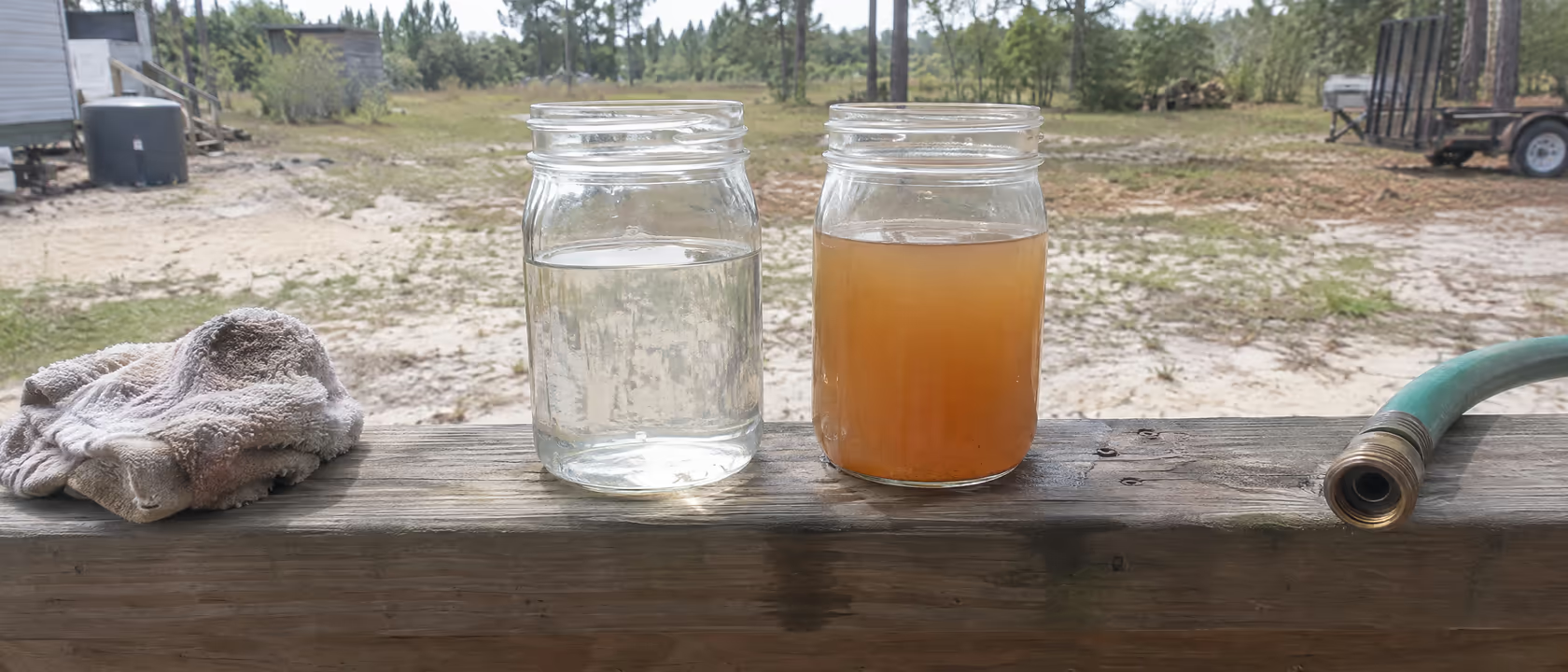
Dissolved iron, the common case
Water that runs clear from the tap and turns orange in a bucket twenty minutes later is dissolved iron rusting on contact with air. We fit a backwashing oxidizing bed on a Fleck 5600SXT head, which converts it and traps it inside the tank instead of inside your fixtures. This is our standard install on this ground.
Iron bacteria and slime
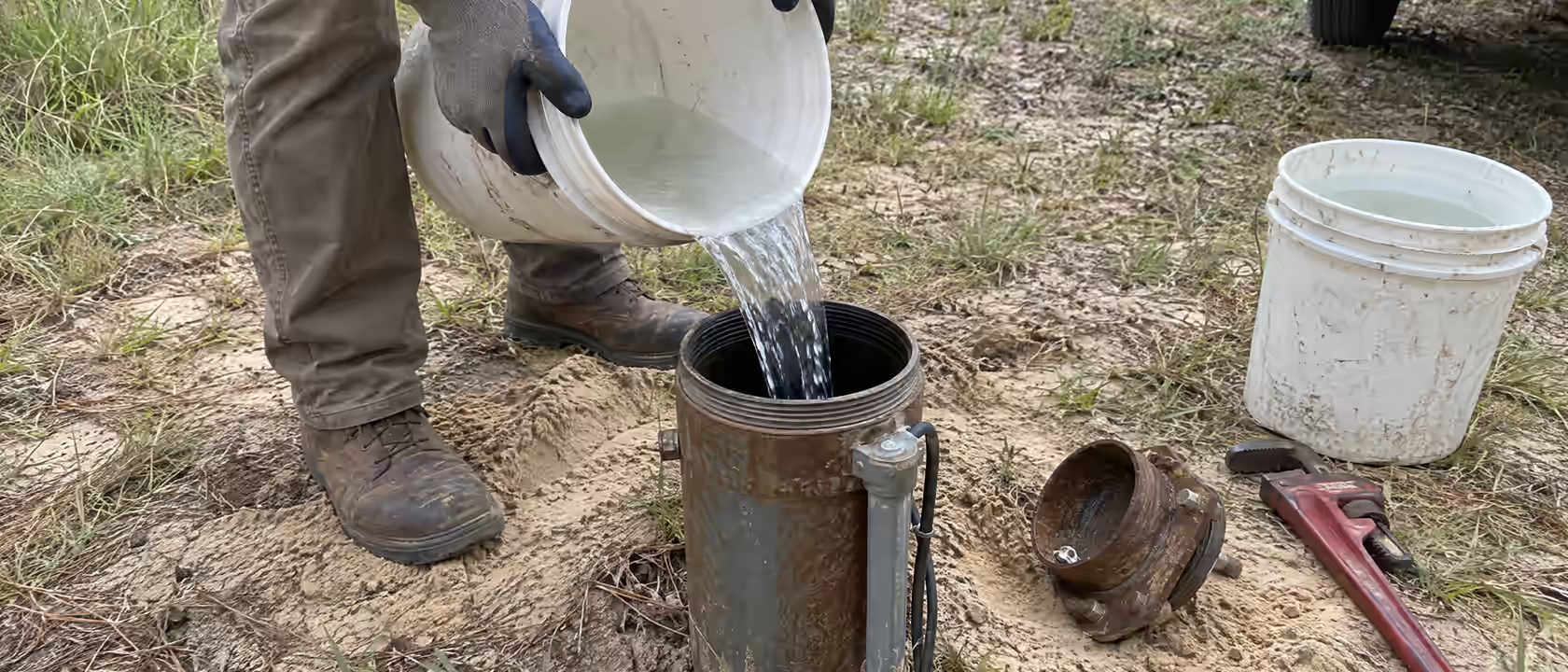
An orange jelly-like slime in your toilet tank or at the wellhead is bacteria, not chemistry. Media alone will not clear it, and a filter fitted against it becomes a breeding bed. We shock chlorinate first and fit equipment afterwards. Well chlorination covers that step.
pH decides whether the media works at all
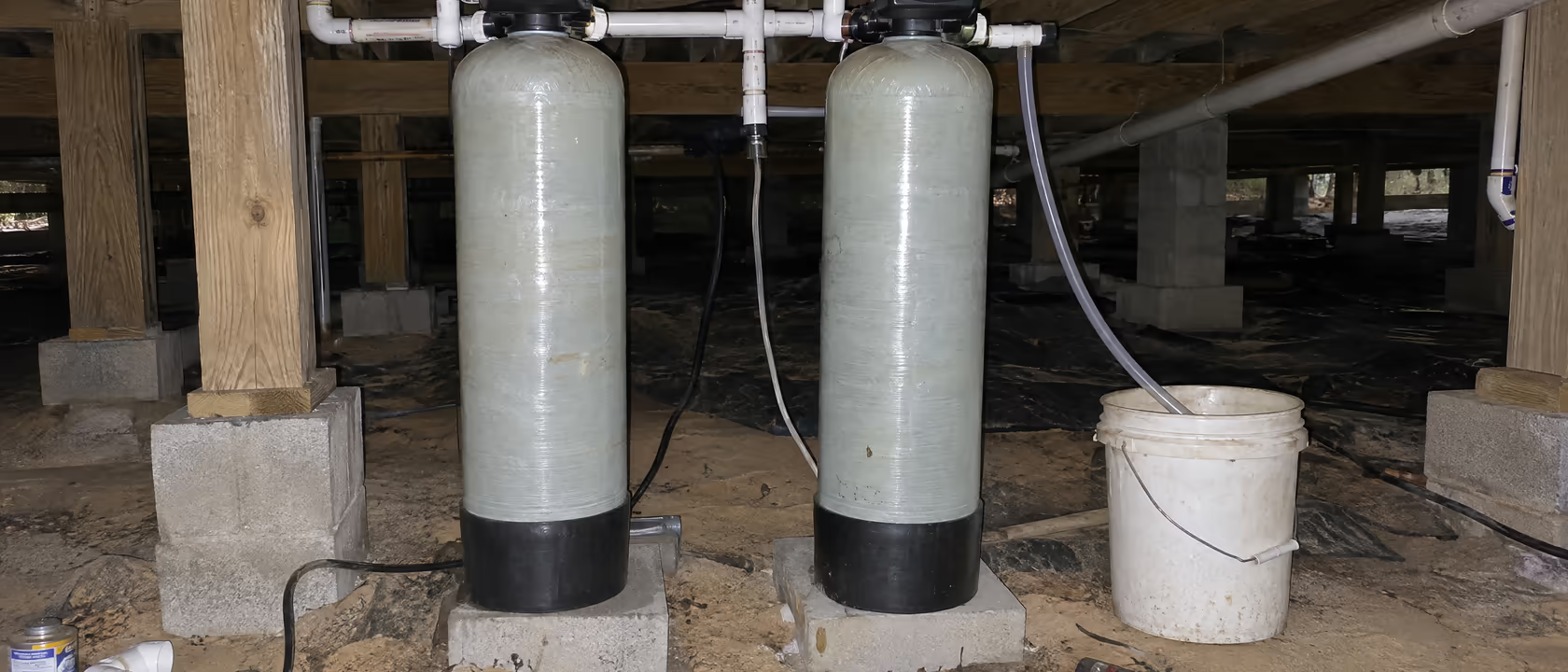
Oxidizing media only works inside a set pH range, and groundwater here often sits below it. Fitted to acidic water, the bed underperforms from day one and gets blamed for a fault it never had. We fit a calcite neutralizer ahead of it to fix that. So pH correction is part of an iron install here, not an upsell beside it.
Backwash flow sets your tank size
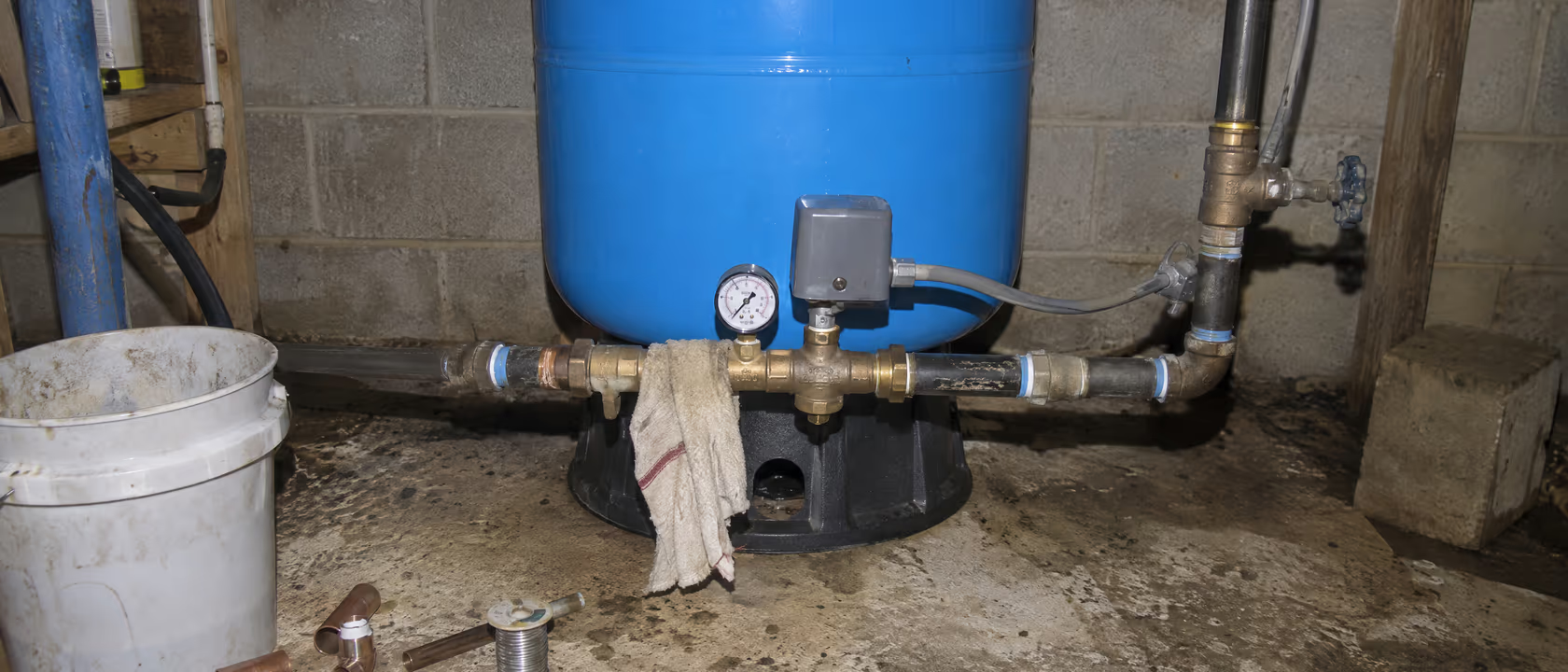
A media bed cleans itself by lifting and rinsing. That needs a minimum flow your pump has to supply. We fit a Pentair sediment housing ahead of the bed to keep grit out, but no amount of pre-filtering replaces backwash flow. Put a large tank behind a modest Goulds pump end and the bed never fully lifts. It channels and stops treating within a year of a perfectly good installation.
How we work it out
-
Panel the water
We pull a sample and send it for a full panel. $50 to $200 gives you iron, manganese, pH and bacteria together. Manganese travels with iron here and stains black rather than orange, so we design for it at the same time.
-
Identify which kind of iron you have
We run a settling test alongside the lab numbers. That separates dissolved from rusted from bacterial. Each of the three leads to different equipment.
-
Check your flow before sizing anything
We measure gallons per minute at the tap, downstream of your Amtrol Well-X-Trol tank. That decides the largest bed your system can actually clean. This step gets skipped most often and it is the most common reason a good filter underperforms.
-
Install, commission, retest
We set the bed depth and time the backwash to the drain. Then we run a second panel after two weeks in service to confirm the iron is actually gone.
Why iron is worth treating beyond the staining
Iron shortens the life of everything downstream
Scale narrows old galvanized pipe over years and permanently fouls softener resin. Treating iron early protects your plumbing and appliances. So the cost of the tank is offset against work that never has to happen.
Rising iron can mean a failing casing
Iron that has climbed sharply on a well that used to test low is worth investigating rather than just filtering. A hole in your casing changes which layer the well draws from, and 15A NCAC 02C exists precisely to keep those layers apart.
The retest is your receipt
A treatment install with no follow-up panel has no evidence behind it. NGWA guidance already puts a chemical panel at every three years. Bringing one forward to two weeks after commissioning costs little and proves the equipment did what we sold it to do.
Numbers worth knowing
| Iron and sulfur filter | $1,795 to $2,195 installed |
|---|---|
| Lab panel | $50 to $200 |
| Control head | Fleck 5600SXT or 2510SXT |
| Sizing constraint | Backwash flow in gpm |
| Required upstream | pH in the media range |
| Bacterial iron | Chlorinate before filtering |
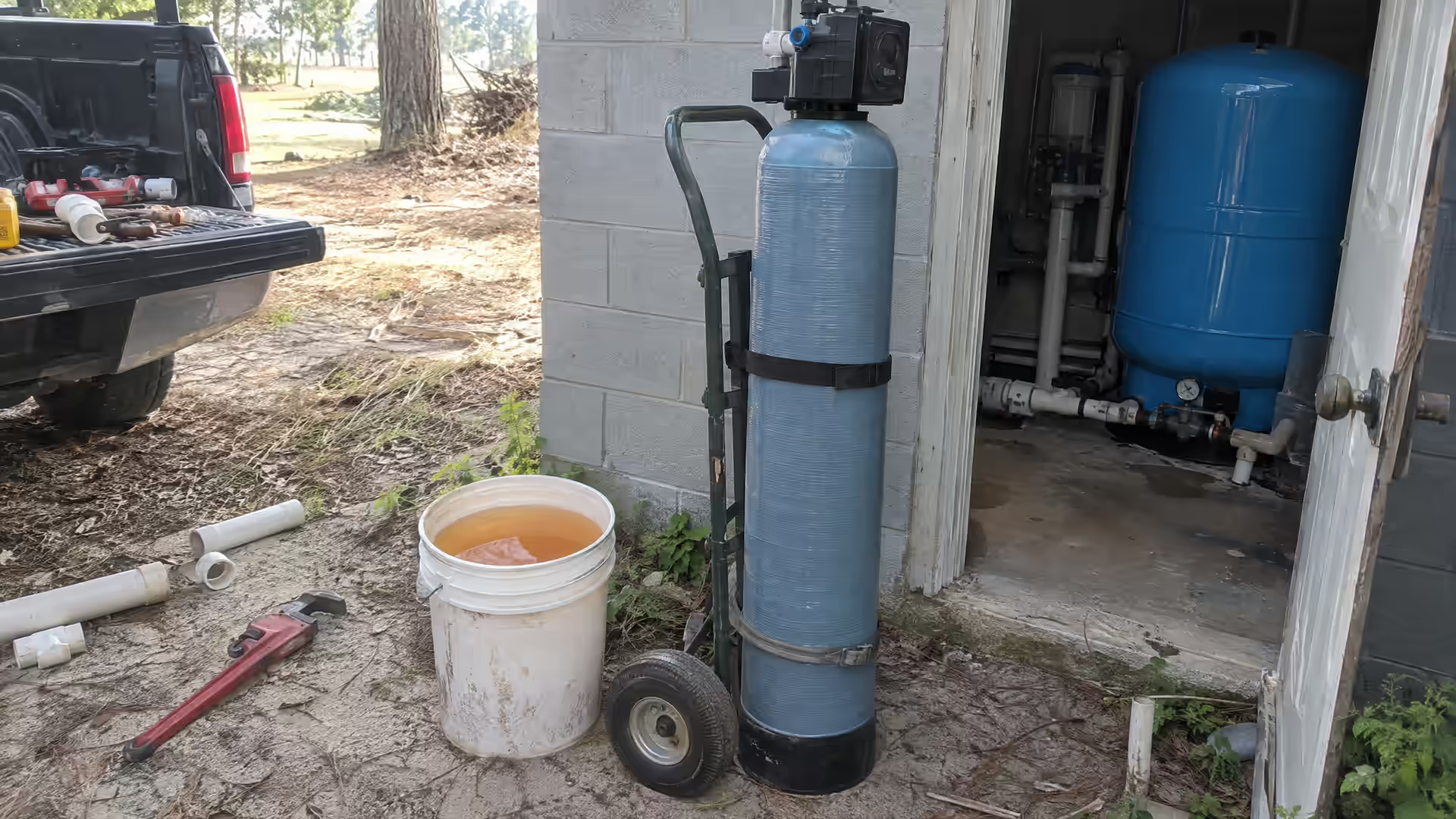
A complete well water treatment system runs $1,500 to $6,500 installed. What you need depends on what a lab test finds, which is why the test comes first and costs $50 to $200.
| What the job is | Typical range | Unit |
|---|---|---|
| Lab water testTells you what is actually in the water and what equipment is the right size. Buying treatment without it is guessing. | $50 – $200 | per test |
| Sediment filterFirst stage. Catches the sand that Coastal Plain wells produce. | $145 – $195 | installed |
| Point-of-use reverse osmosis, kitchen tapDrinking water only, not whole-house. | $595 | installed |
| UV disinfectionHandles bacteria without chemicals. Bulb replacement runs $145 to $160 a year. | $895 – $995 | installed |
| Acid neutralizer, pH correctionCoastal Plain groundwater runs acidic, and low pH eats copper pipe and stains fixtures. | $1,195 – $1,895 | installed |
| Carbon filterTaste and odor. Backwashing units sit at the top of the range. | $1,495 – $2,495 | installed |
| Water softenerSalt runs about $125 a year. | $1,695 – $1,895 | installed |
| Iron and sulfur filterOrange staining and rotten-egg smell. The two most common complaints on iron-rich sand aquifers. | $1,795 – $2,195 | installed |
| Acid neutralizer plus softener packageCheaper together than separately. | $2,695 – $2,995 | installed |
| Complete treatment systemDepends entirely on what the test finds. | $1,500 – $6,500 | installed |
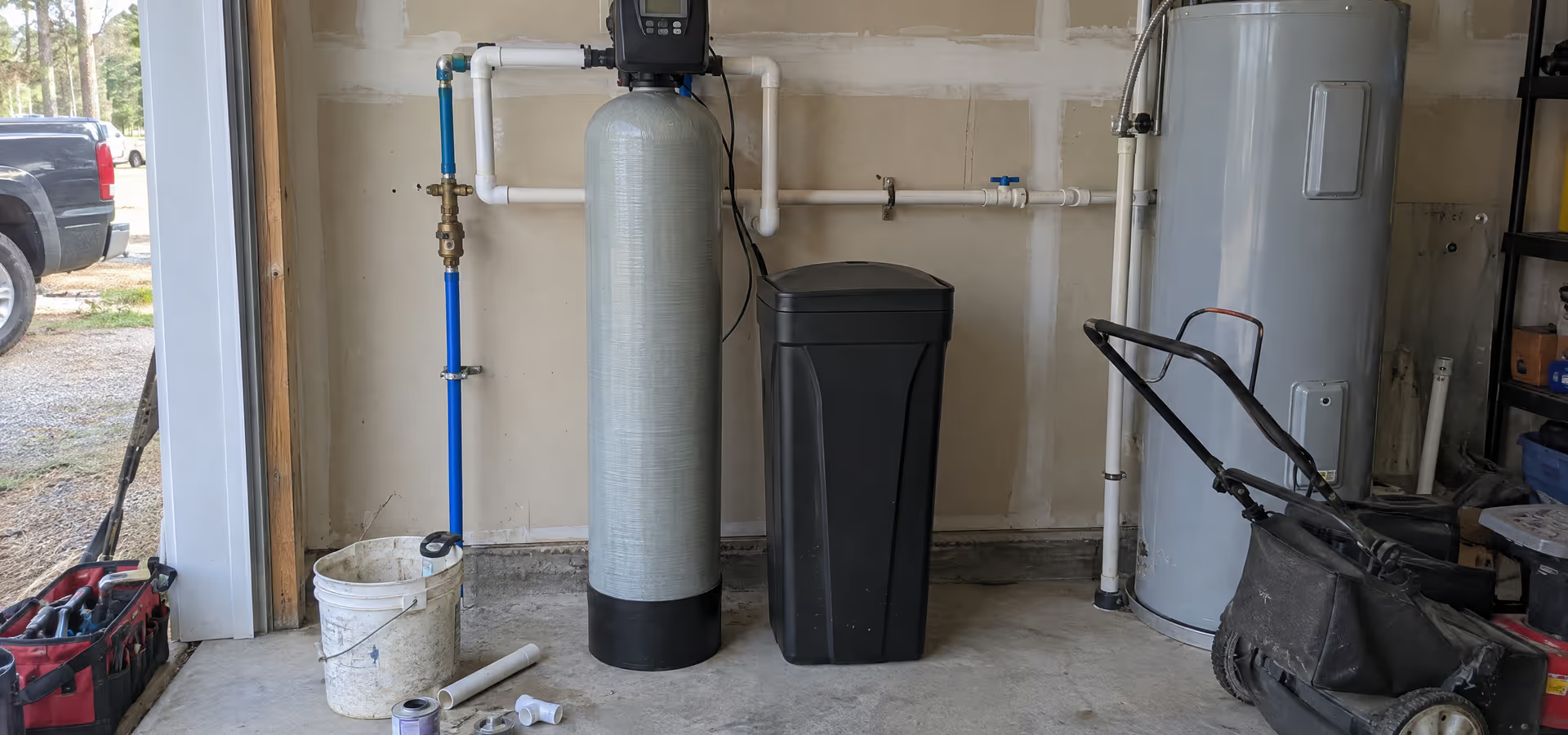
Three kinds of iron, one color of stain. That is why the panel costs less than the mistake.Cumberland County, NC
Who we work for
- Well and Pump Service for Farms Stock water, wash-down, irrigation and a farmhouse on one well. Sized on sustained draw, not acreage.
- Well Service for Mobile Home Parks Shared supply with tenants attached. Past 15 connections it stops being a private well at all.
- Well Service for Churches and Camps Idle most of the week, then a full building. The hardest duty cycle in private water supply.
Before and after
Want it priced properly?
On-site estimates are free, itemized, and written down before any work starts.
Questions we get asked
How much does an iron filter cost installed?
$1,795 to $2,195 installed covers an iron and sulfur filter on a typical residential well. A complete multi-stage system runs $1,500 to $6,500 depending on how many stages the water panel justifies.
Why is my well water orange?
3 forms of iron produce the same stain: dissolved ferrous iron that colors after contact with air, ferric particles that arrive already oxidized, and iron bacteria. Each needs different equipment.
Will an iron filter fix the smell too?
1 oxidizing bed frequently handles both iron and hydrogen sulfide, which is why these are usually sold as one tank. Where the smell is bacterial in origin, chlorination has to come first.
Does pH affect how well an iron filter works?
1 factor sinks more iron filters here than any other: oxidizing media has a design pH range, and Coastal Plain groundwater often sits below it. Correcting pH upstream is part of the install rather than an extra.
Who installs iron filters near me?
Fayetteville Well Pump Repair installs iron and manganese filtration across Fayetteville and Cumberland County, sizing the tank against measured flow so the bed can actually regenerate.
How long does iron filter media last?
5 to 10 years is typical for the bed where the filter is correctly sized and pH is in range. A bed that cannot fully backwash channels within about a year regardless of how new the media is.
Iron staining is the most visible water complaint on this aquifer and the one where equipment gets bought fastest. The panel and a settling test cost a fraction of the tank and determine whether a tank is even the right answer. Where the iron arrives with a smell, sulfur odor removal covers the same tank doing two jobs, and well water filtration systems covers where the iron stage sits in the wider train.