A rotten egg smell in your water has three possible causes. One of them is fixed by a $30 part inside your water heater, not by treatment equipment. At Fayetteville Well Pump Repair, we find the source before quoting anything, because a whole-house system fitted against a water heater problem removes nothing at all. Treatment ranges sit on our well pump cost page.
The first test takes two minutes and costs you nothing. Run the cold tap and smell it. Then run the hot tap and smell that. If only the hot smells, your well is fine. The magnesium rod inside your water heater is reacting with bacteria in the tank. Swapping it for an aluminum or powered rod ends the problem for about $30.
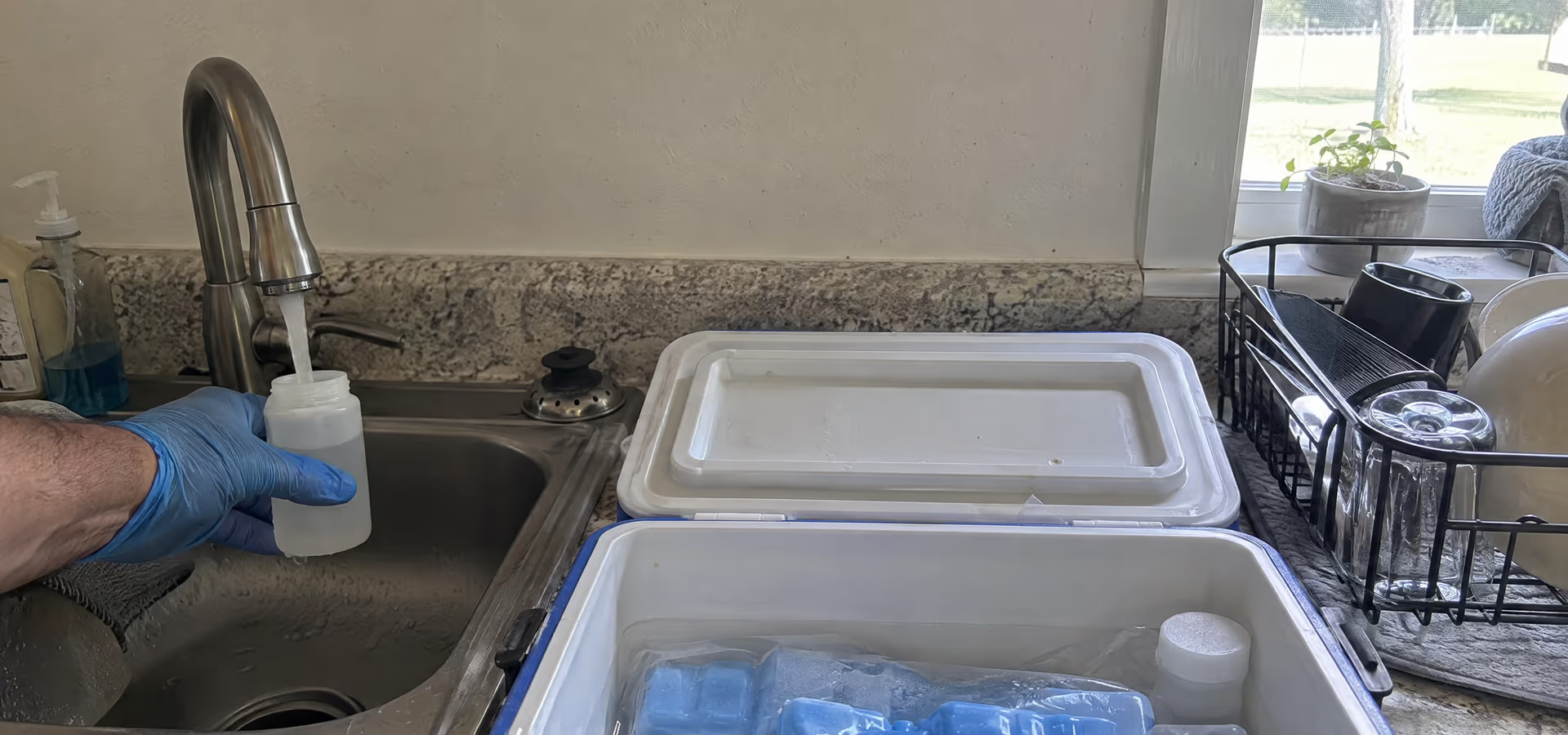
If the cold smells too, the source is your well or the pipes between the well and the tap. Usually it is hydrogen sulfide gas dissolved in the groundwater. Sometimes it is bacteria living in your well or pressure tank. Those two need different treatment, so we run a lab panel and a bacteria sample before specifying any equipment.
What is actually wrong
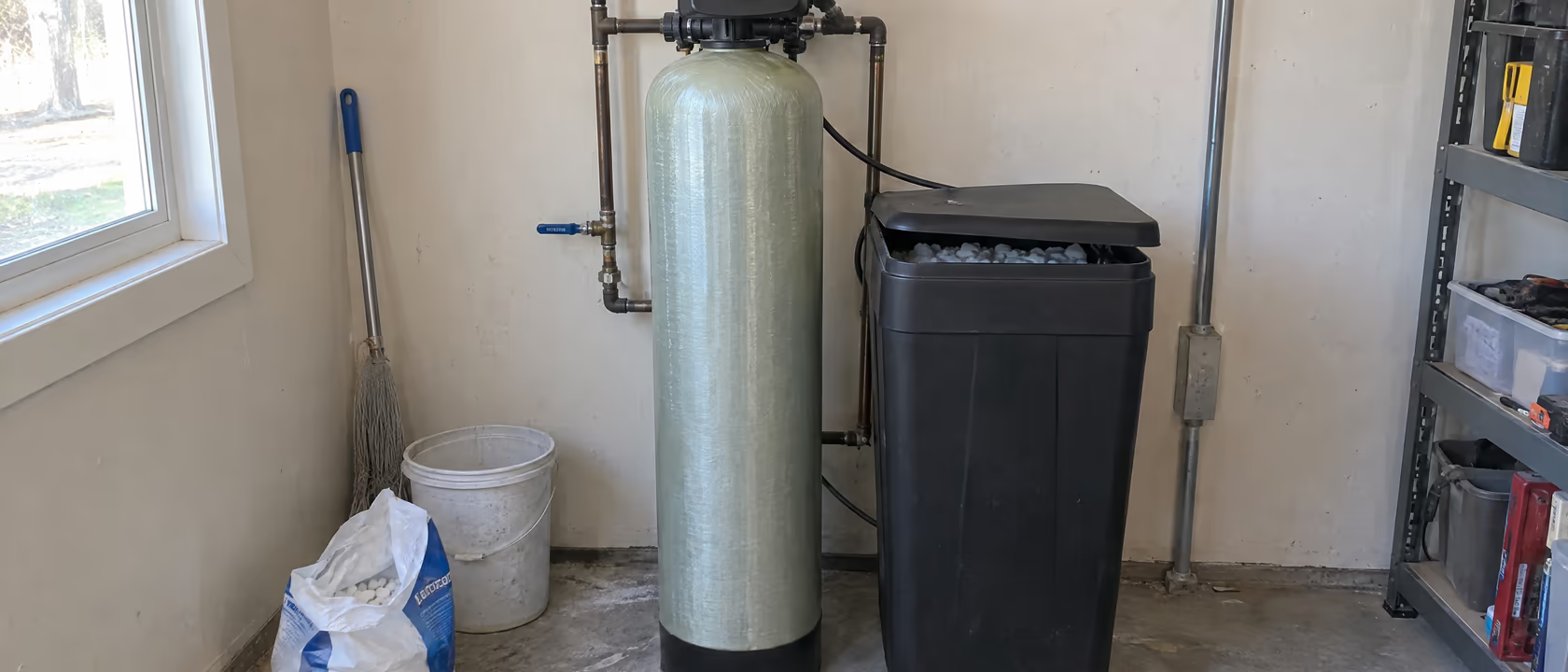
Hot water only, the anode rod
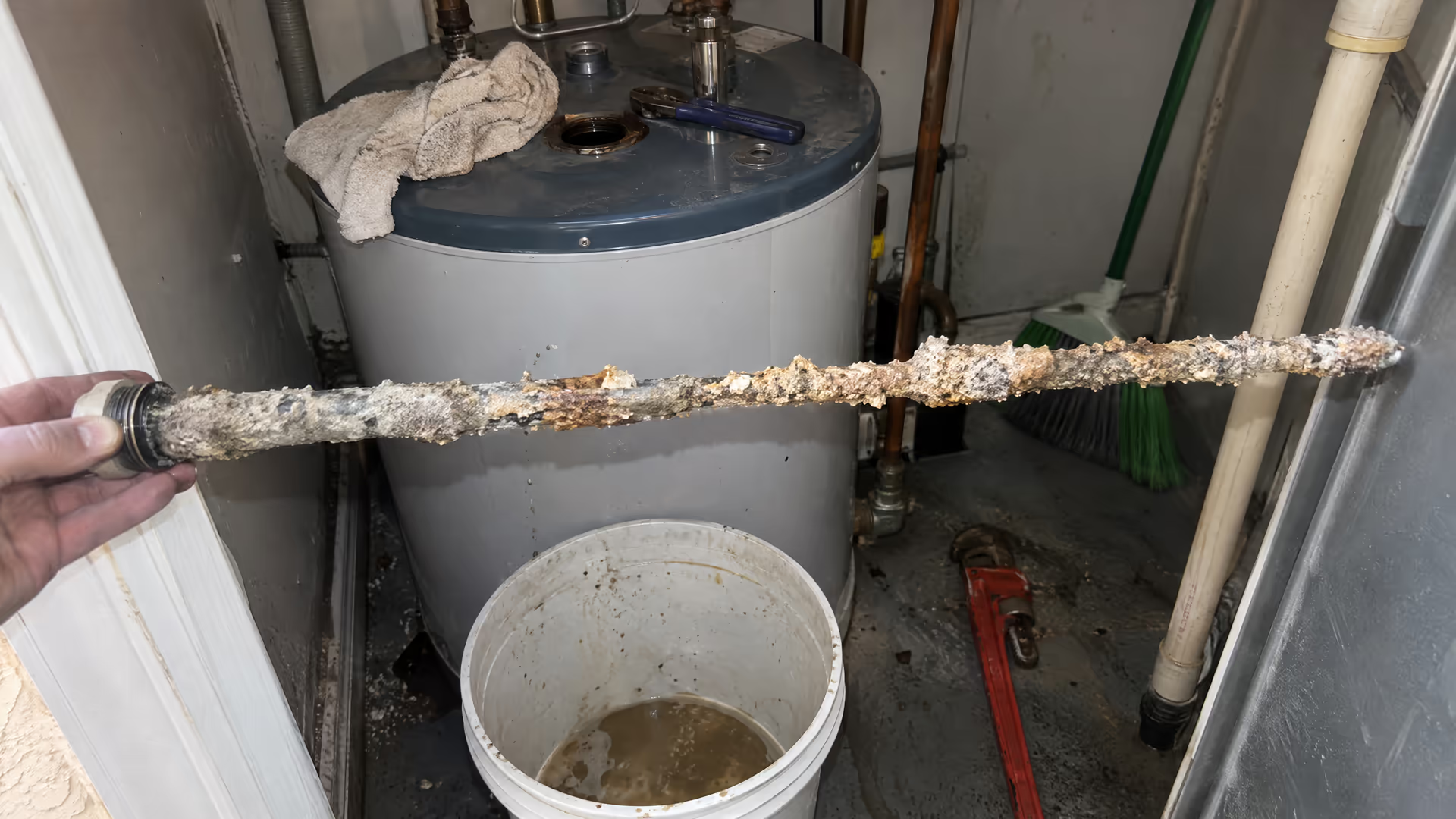
A magnesium rod protects your water heater tank from rusting. Where the right bacteria are present, it makes hydrogen sulfide as a side effect. Replacing it is cheap and immediate. This is the single most misdiagnosed smell complaint we see, and it usually arrives after somebody has already paid for whole-house treatment.
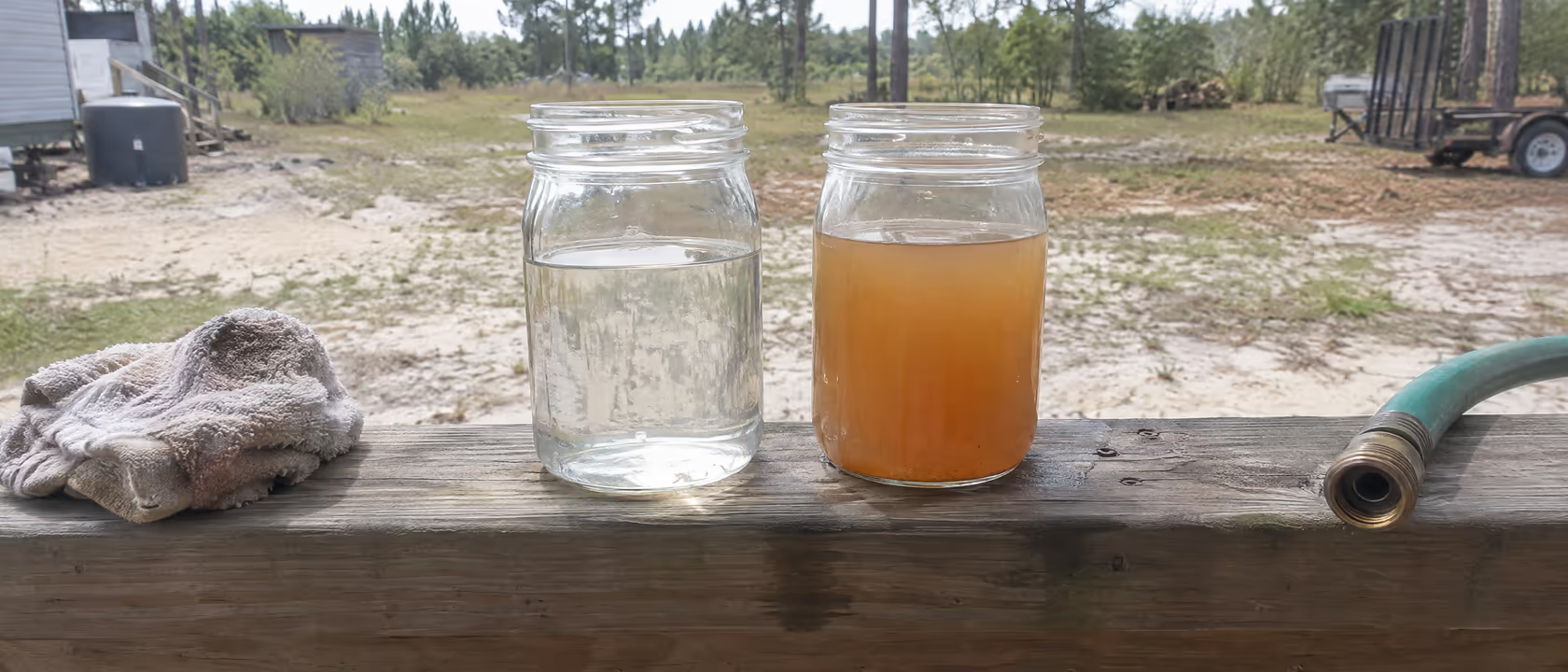
Dissolved gas in the water itself
Cold water that smells at every tap points at the groundwater. We fit an oxidizing media bed on a Fleck head, which converts the gas and traps it. It is usually the same tank that handles your iron, because the two turn up together across this county. We add a Pentair carbon housing downstream to clean up anything the bed leaves behind.
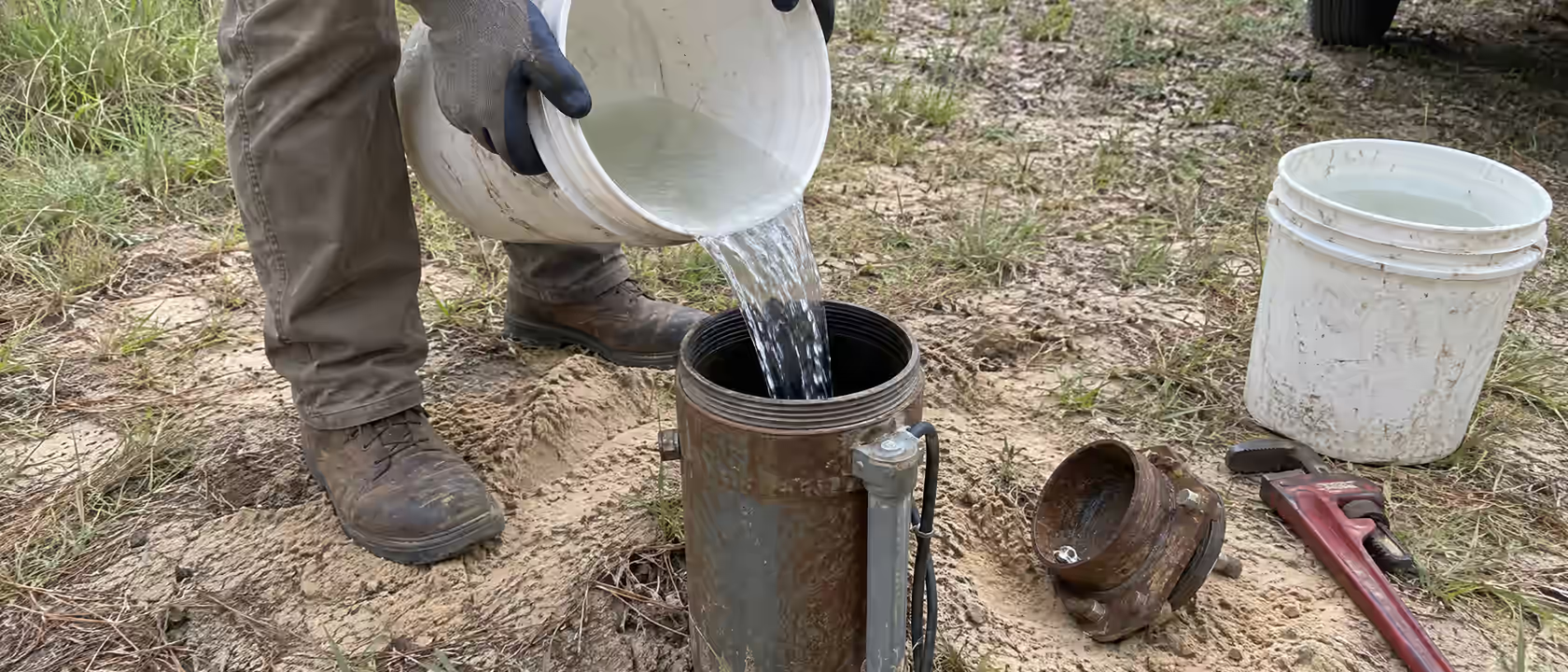
Bacteria living in your well or tank
Sulfur bacteria set up in a wellbore, a pressure tank or a pipe branch nobody uses, and they make the smell nonstop. We shock chlorinate to clear the colony. If the smell comes back within weeks, your well has an open route in. That points at the wellhead rather than the water.
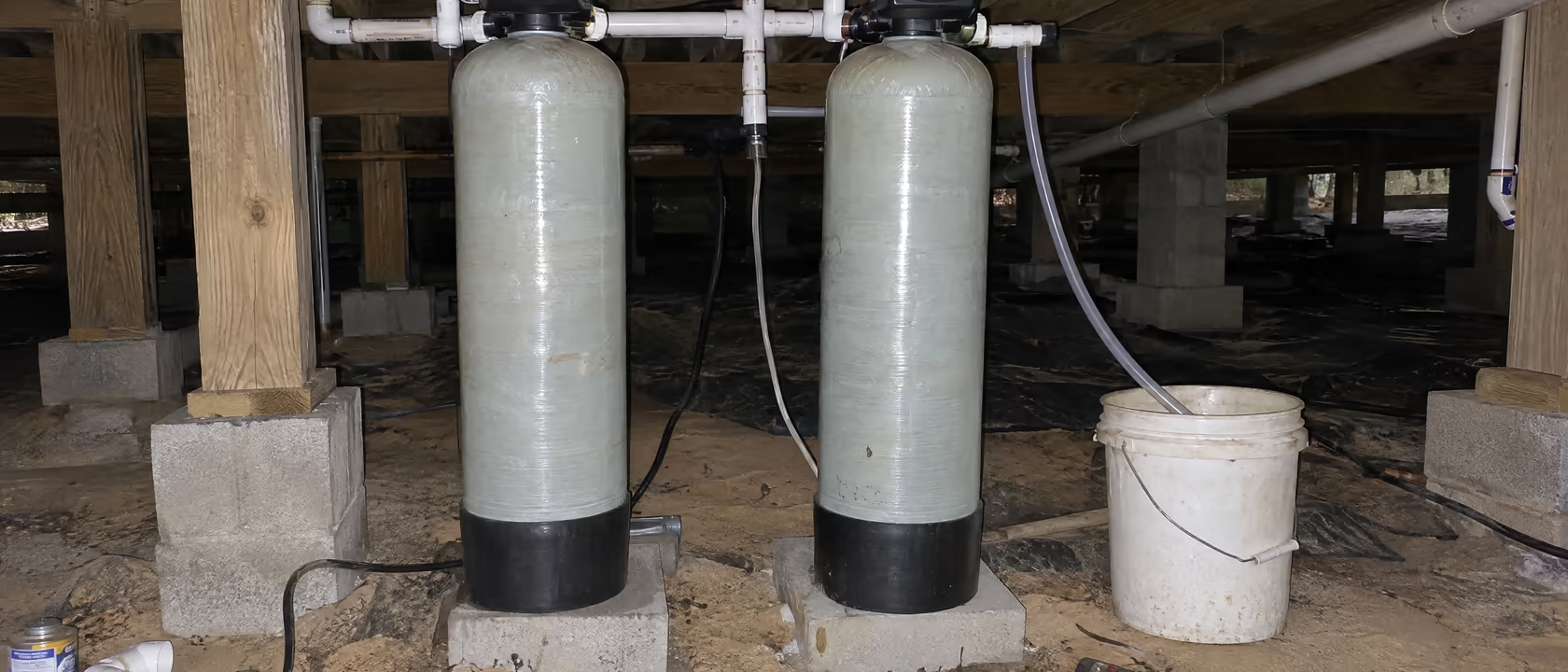
A smell that comes and goes
An irrigation line, a guest bathroom or an outside tap nobody uses holds water for weeks and grows the colony the rest of your house then tastes. A waterlogged Amtrol Well-X-Trol tank does the same thing. We fix the stagnant line, which is far cheaper than treating your whole house for it.
How we work it out
-
Hot tap and cold tap
We run the hot tap and the cold tap and smell both. Two smells mean two different jobs. Hot only means your water heater, and that takes a rod rather than a treatment tank.
-
Sample at the wellhead
We take one sample at your well and another at the kitchen tap. That separates a problem in the well from something growing in your house plumbing.
-
Shock it and watch
We shock chlorinate and then wait. Chlorination clears bacteria, and whether the smell comes back, and how fast, tells us the answer by itself. It costs you nothing but the wait.
-
Treat whatever is left
We treat whatever the shock left behind. If the smell is dissolved gas from the ground, an oxidizing bed handles it for good. If it came back after shocking, we inspect your wellhead before fitting any more equipment.
What a returning smell is actually telling you
A well that keeps getting reinfected is an open well
Bacteria that return within weeks of a shock treatment are getting back in. Under 15A NCAC 02C your casing and full-depth grout are what keep the borehole sealed. So a well that keeps getting reinfected is usually reporting a broken barrier rather than a failed treatment.
Sample where the county can act on it
The county health department handles bacteria samples for private wells. A sulfur complaint on top of a positive coliform result is a very different situation from one on clean water. Taking both at once stops you treating a nuisance while missing a hazard.
Equipment sized to your real flow
An oxidizing tank has to backwash itself to keep working, and that flow comes from your pump. If a Franklin Electric motor and a modest pump end cannot lift the bed, the tank stops treating inside a year. So we check the design against a measured flow rate rather than a rating on a box.
Numbers worth knowing
| Hot water only | Anode rod, not treatment |
|---|---|
| UV disinfection | $895 to $995 installed |
| Iron and sulfur filter | $1,795 to $2,195 |
| Lab panel | $50 to $200 |
| First diagnostic | Smell hot and cold separately |
| Returning smell | Inspect the wellhead |
A complete well water treatment system runs $1,500 to $6,500 installed. What you need depends on what a lab test finds, which is why the test comes first and costs $50 to $200.
| What the job is | Typical range | Unit |
|---|---|---|
| Lab water testTells you what is actually in the water and what equipment is the right size. Buying treatment without it is guessing. | $50 – $200 | per test |
| Sediment filterFirst stage. Catches the sand that Coastal Plain wells produce. | $145 – $195 | installed |
| Point-of-use reverse osmosis, kitchen tapDrinking water only, not whole-house. | $595 | installed |
| UV disinfectionHandles bacteria without chemicals. Bulb replacement runs $145 to $160 a year. | $895 – $995 | installed |
| Acid neutralizer, pH correctionCoastal Plain groundwater runs acidic, and low pH eats copper pipe and stains fixtures. | $1,195 – $1,895 | installed |
| Carbon filterTaste and odor. Backwashing units sit at the top of the range. | $1,495 – $2,495 | installed |
| Water softenerSalt runs about $125 a year. | $1,695 – $1,895 | installed |
| Iron and sulfur filterOrange staining and rotten-egg smell. The two most common complaints on iron-rich sand aquifers. | $1,795 – $2,195 | installed |
| Acid neutralizer plus softener packageCheaper together than separately. | $2,695 – $2,995 | installed |
| Complete treatment systemDepends entirely on what the test finds. | $1,500 – $6,500 | installed |
The most expensive rotten egg smell we ever fixed cost thirty dollars. The customer had already spent two thousand on it.Cumberland County, NC
Who we work for
- Well and Pump Service for Farms Stock water, wash-down, irrigation and a farmhouse on one well. Sized on sustained draw, not acreage.
- Well Service for Mobile Home Parks Shared supply with tenants attached. Past 15 connections it stops being a private well at all.
- Well Service for Churches and Camps Idle most of the week, then a full building. The hardest duty cycle in private water supply.
Want it priced properly?
On-site estimates are free, itemized, and written down before any work starts.
Questions we get asked
Why does my well water smell like rotten eggs?
3 sources produce it: hydrogen sulfide dissolved in the groundwater, sulfate-reducing bacteria in the well or plumbing, and a magnesium anode rod in the water heater. Only the first two involve the well.
Why does only my hot water smell?
1 component causes this: the anode rod in the water heater. It reacts with bacteria inside the tank to produce hydrogen sulfide, and replacing it with an aluminum or powered rod ends the smell.
How much does sulfur removal cost?
$1,795 to $2,195 installed covers an oxidizing filter handling sulfide and iron together. UV disinfection runs $895 to $995, and an anode rod costs a fraction of either where the heater is the source.
Is sulfur in well water dangerous?
$50 to $200 for a panel is how you find out what else is present, because the smell itself is a nuisance at household concentrations while the bacteria producing it may travel with others that are not.
Who fixes sulfur smell in well water near me?
Fayetteville Well Pump Repair investigates odor complaints across Fayetteville and Cumberland County, starting with the hot and cold comparison so nobody buys treatment for a water heater problem.
Will chlorinating the well get rid of the smell?
1 shock treatment clears a bacterial colony and does nothing for sulfide dissolved in the source water. If the smell returns within weeks, the well is being recolonized and the wellhead needs inspecting.
Sulfur odor is the well complaint most likely to be solved by something that is not a filter, which is why the two-tap test comes before any quote. Where the source really is the groundwater, one oxidizing tank usually handles the smell and the iron together. Iron filter installation covers that tank, and well chlorination covers the bacterial route.