An irrigation well handles a demand that behaves nothing like household use. Size one from a house rule of thumb and you get a well that quits in July, right when you need it. At Fayetteville Well Pump Repair, we size irrigation wells from zone flow and run time rather than bedroom count. Drilling runs $28 to $60 per ft, published on our well pump cost page.
A house draws water in short bursts with long gaps between them. Irrigation draws steadily for hours, usually at the driest point of the year, when your water level is already at its seasonal low. Put those two facts together and you see why a well that comfortably supplies your house will struggle the day you add sprinklers to it.
A separate irrigation well fixes that by keeping the two demands apart. It also keeps softened and treated water off your lawn, which is money you were spending on salt and media and spraying across the grass. On acreage with livestock or a market garden, the same logic applies at a bigger scale.
What is actually wrong
Sizing from your zone demand
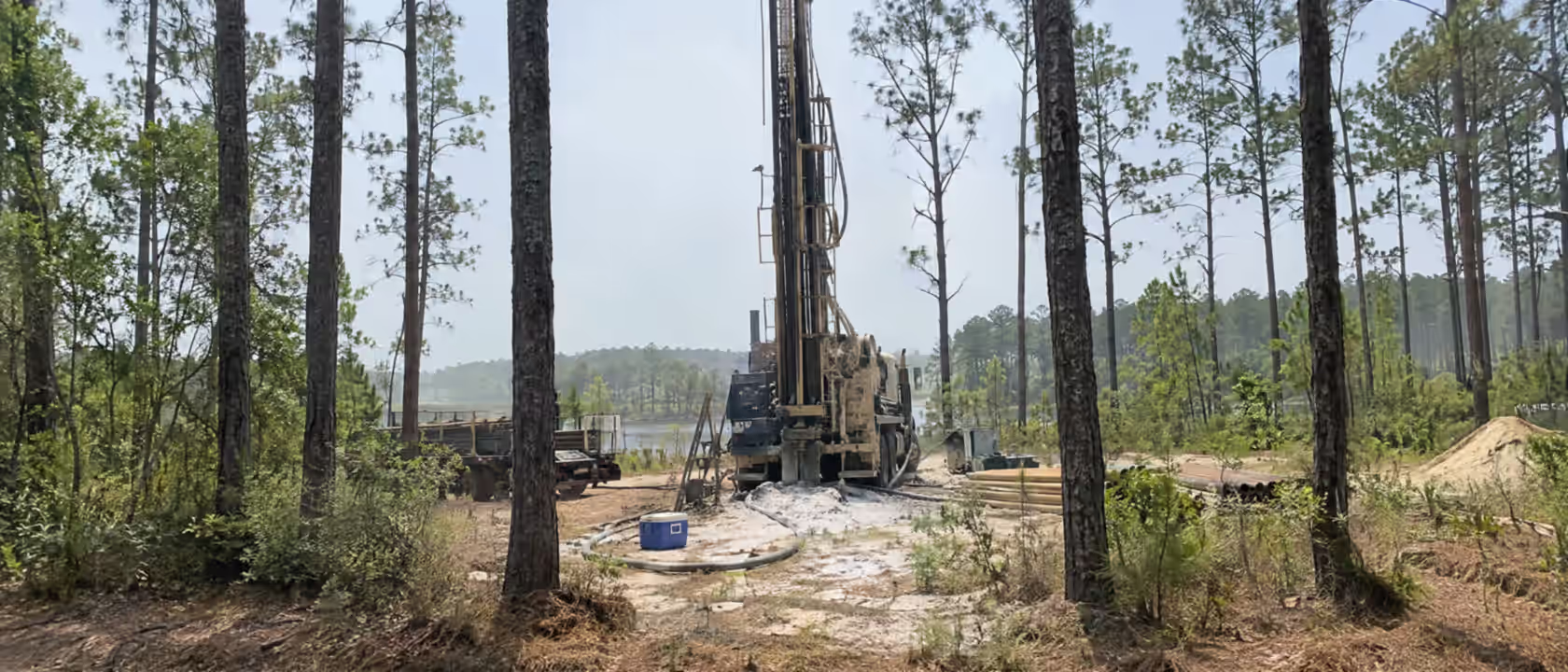
Add up the gallons per minute across your largest zone running at once, then multiply by run time. That is the number your well has to sustain. It comes from the irrigation design rather than the size of your property, which is why we read the design before estimating any depth.
Pump choice for long runs
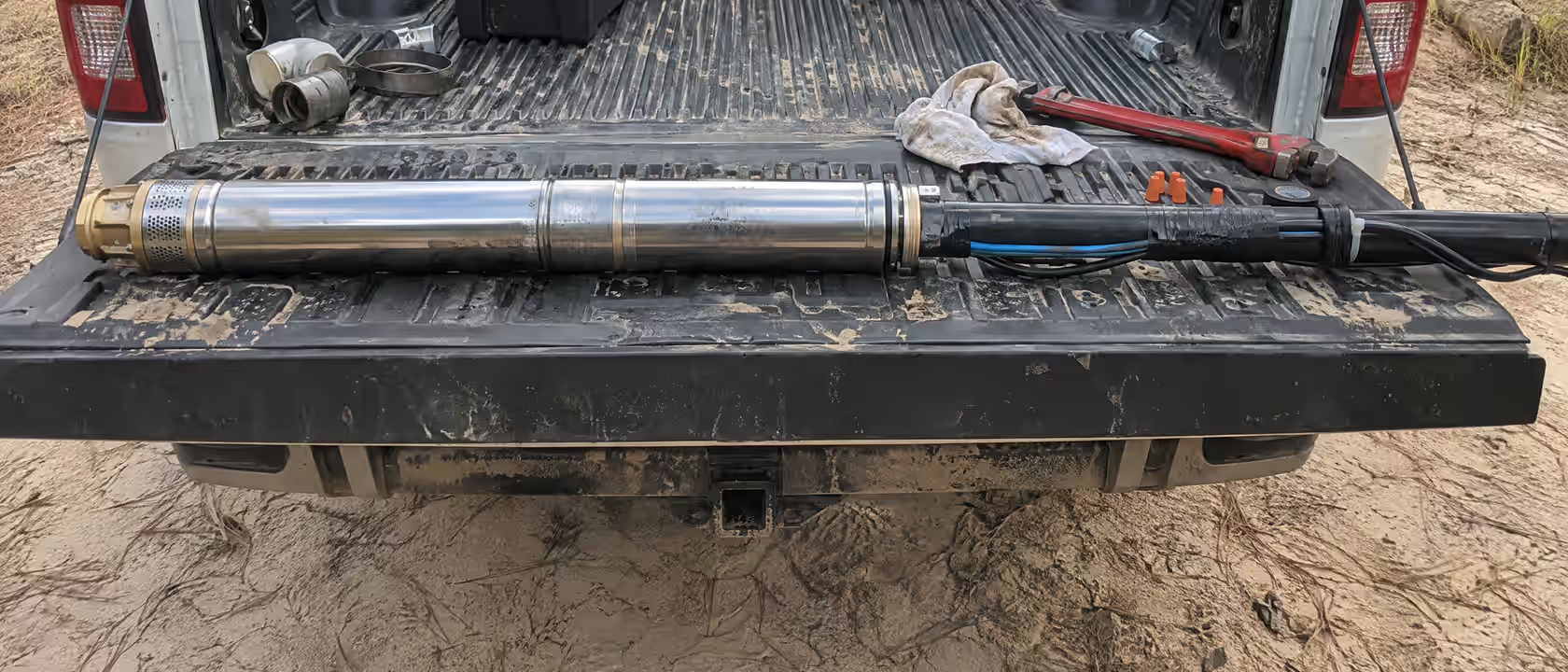
Irrigation means long continuous running rather than frequent starts. A Franklin Electric motor with a matched Goulds pump end suits that pattern. We size it differently from a house pump, because run hours rather than start count is what limits its life here. Where your zones vary a lot, a Grundfos SQE holds output steady across them.
Keeping it separate from the house
We plumb an irrigation well to the sprinklers alone, with no connection to your household supply. That separation protects your drinking water. It also means the irrigation well does not need the treatment equipment your house has, which saves you real money.
Iron and the staining problem
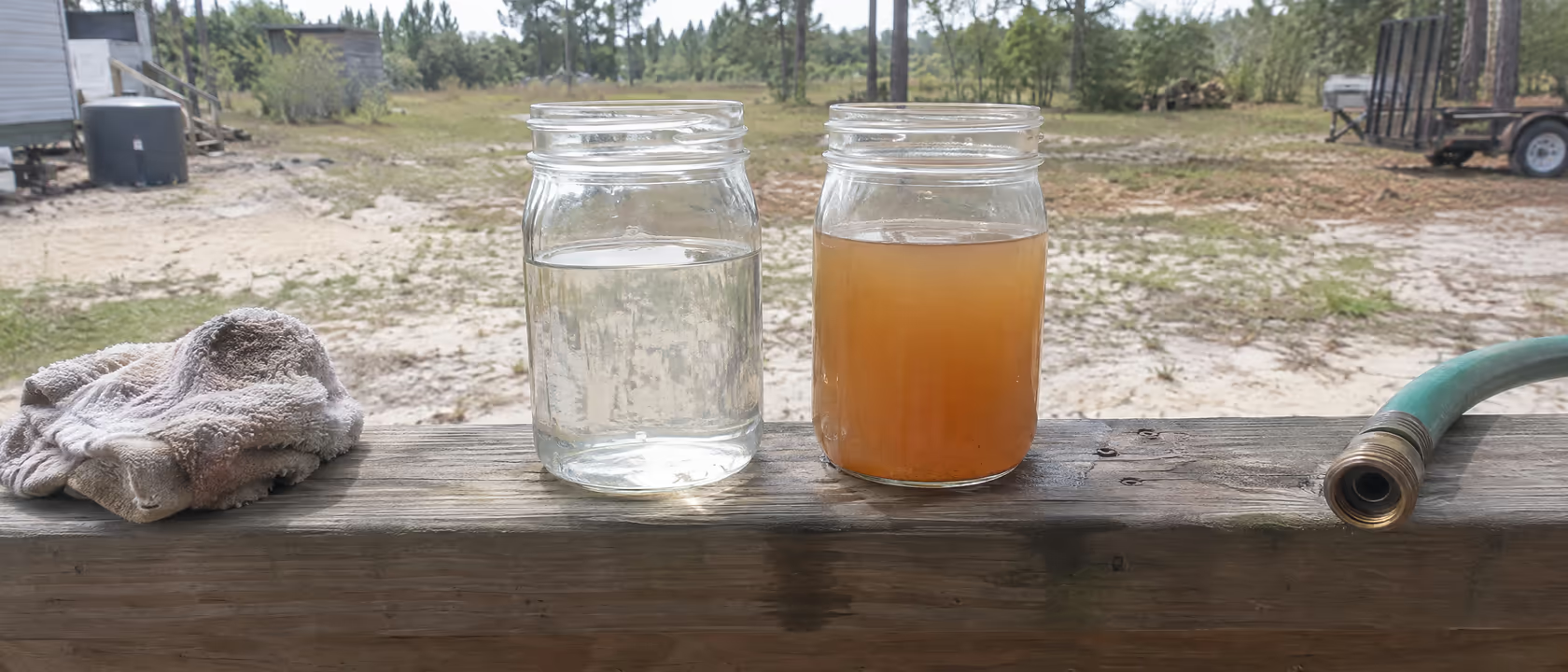
Untreated water with iron in it stains your driveway, fences and pale brickwork orange wherever the spray lands. We fit a simple inline treatment on the irrigation line to handle it, and it costs far less than the iron filtration a household supply needs.
How we work it out
-
Read the irrigation design
We read your irrigation design before anything else. Your zone flow rates and scheduled run times give us the sustained demand, and everything about the well follows from that number rather than from the size of your lot.
-
Permit and site the well
We pull the county health department permit and site the well. It applies to irrigation wells just as it does to house wells, and distance from your septic drainfield still governs where the hole can go.
-
Drill, case and grout
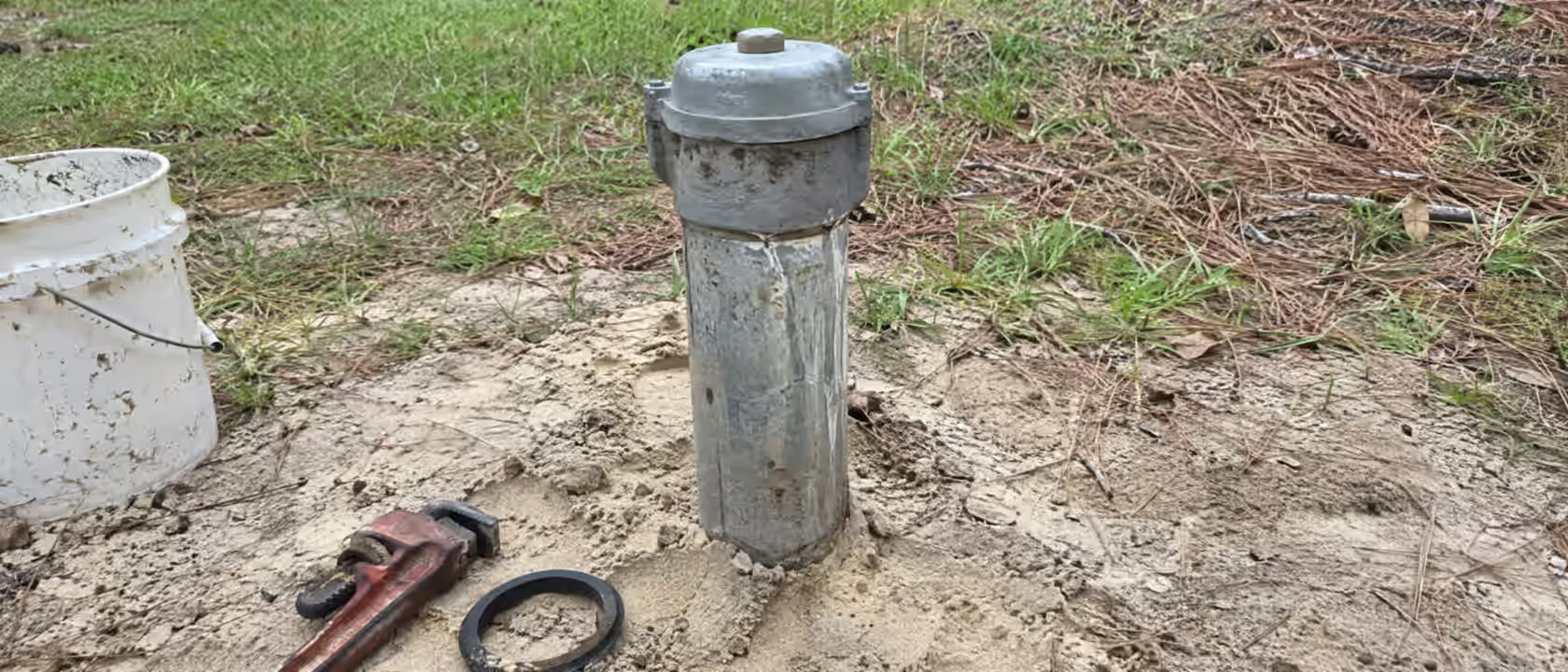
We drill, case and grout to the same construction standard as a house well, at $28 to $60 per ft. A Baker Water Systems cap closes the top exactly as it would on a domestic well, because the hole reaches the same water everyone drinks.
-
Test the yield against your schedule
We run 1 hour at design flow to see whether your well can sustain the largest zone. Sizing the pump before that test is how an irrigation system runs a well dry in its first summer.
An irrigation well is held to the same standard as any other
Construction rules do not relax
15A NCAC 02C applies no matter what the water is used for, because the hole reaches the same water either way. Casing depth and full grouting are requirements on your irrigation well exactly as they are on a house well.
No connection to the house
An irrigation supply tied into household plumbing risks backflow into your drinking water. Keeping the two physically separate is the simplest protection there is. That is why they never share a line, even where it would save a few feet of pipe.
Two wells, one water supply
Drawing hard on your irrigation well during a dry August affects the water level your house well sees, because both draw from the same ground. We plan spacing and scheduling together rather than treating the new well as independent.
Numbers worth knowing
| Drilling rate | $28 to $60 per ft |
|---|---|
| Casing | $400 to $1,200 |
| County permit | $275, no water sample |
| Sizing basis | Largest zone gpm and run time |
| Duty pattern | Long continuous runs |
| Cross connection | Never |
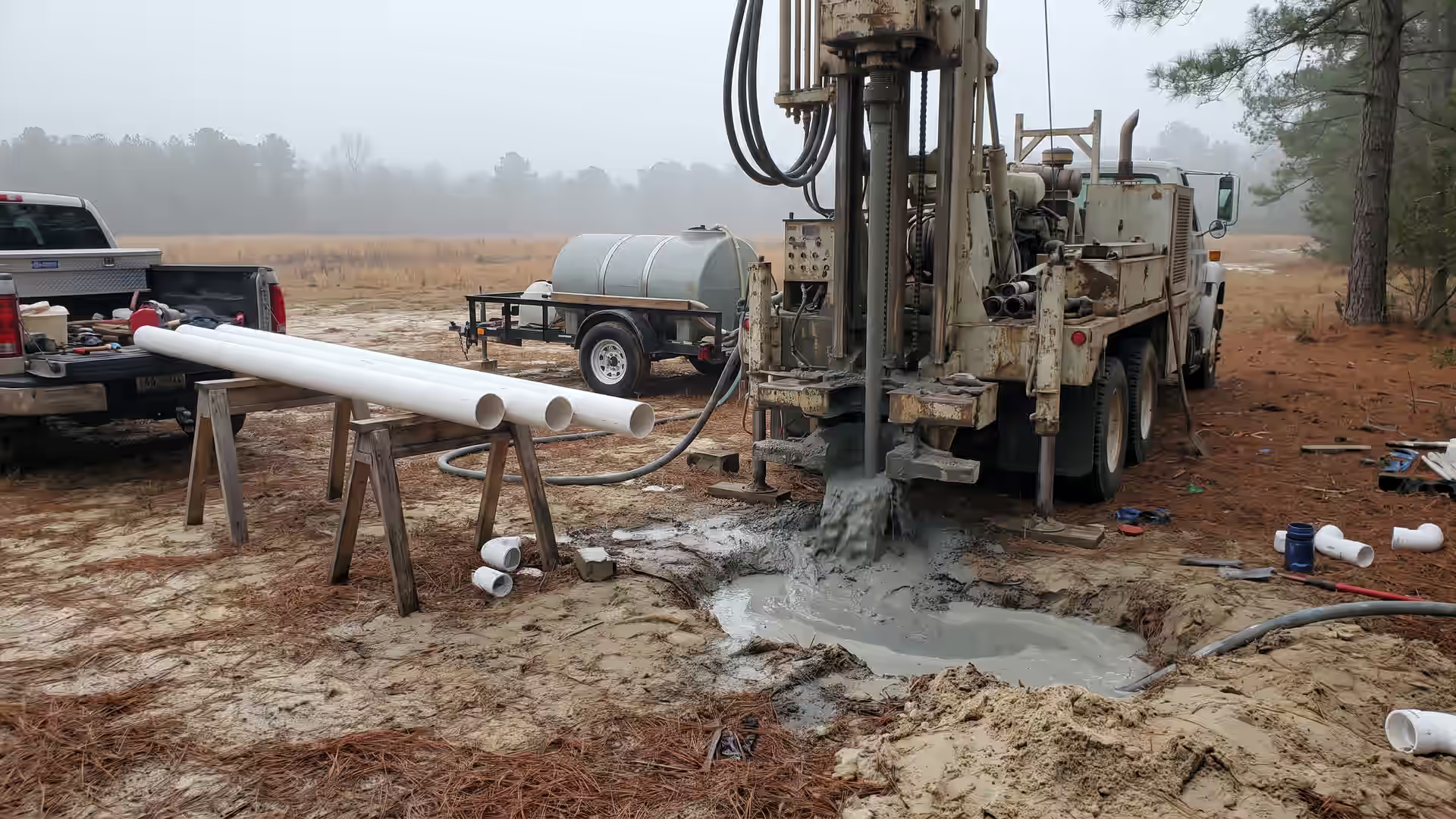
A complete residential well in the Fayetteville area runs $6,500 to $11,500. Coastal Plain sand drills faster and shallower than the Piedmont rock an hour west, which is why the same well costs less here than it does in Raleigh.
| What the job is | Typical range | Unit |
|---|---|---|
| Complete well, Coastal Plain (Fayetteville, Cumberland County)Typical depth 100 to 250 ft. Sand aquifers drill fast and predictably. | $6,500 – $11,500 | complete |
| Complete well, Sandhills transition zoneTypical depth 150 to 350 ft. West of the county line the geology starts changing. | $8,000 – $13,500 | complete |
| Complete well, Piedmont (for comparison)Fractured crystalline rock means slow drilling and real dry-hole risk. Not our geology. | $9,200 – $16,500 | complete |
| Drilling rate, North CarolinaExtra footage to reach a reliable aquifer bills at the same per-foot rate. | $28 – $60 | per foot |
| Casing, Coastal PlainCheaper here than the $1,200 to $3,000 a Piedmont well needs. | $400 – $1,200 | installed |
| Cumberland County well permitPaid to the county health department. A house well is $320 including the inspection and the bacteria, chemistry and nitrate samples; an irrigation or agricultural well with no sample is $275, from the county fee schedule posted in 2022. Well construction cannot legally start without it. | $275 – $320 | permit |
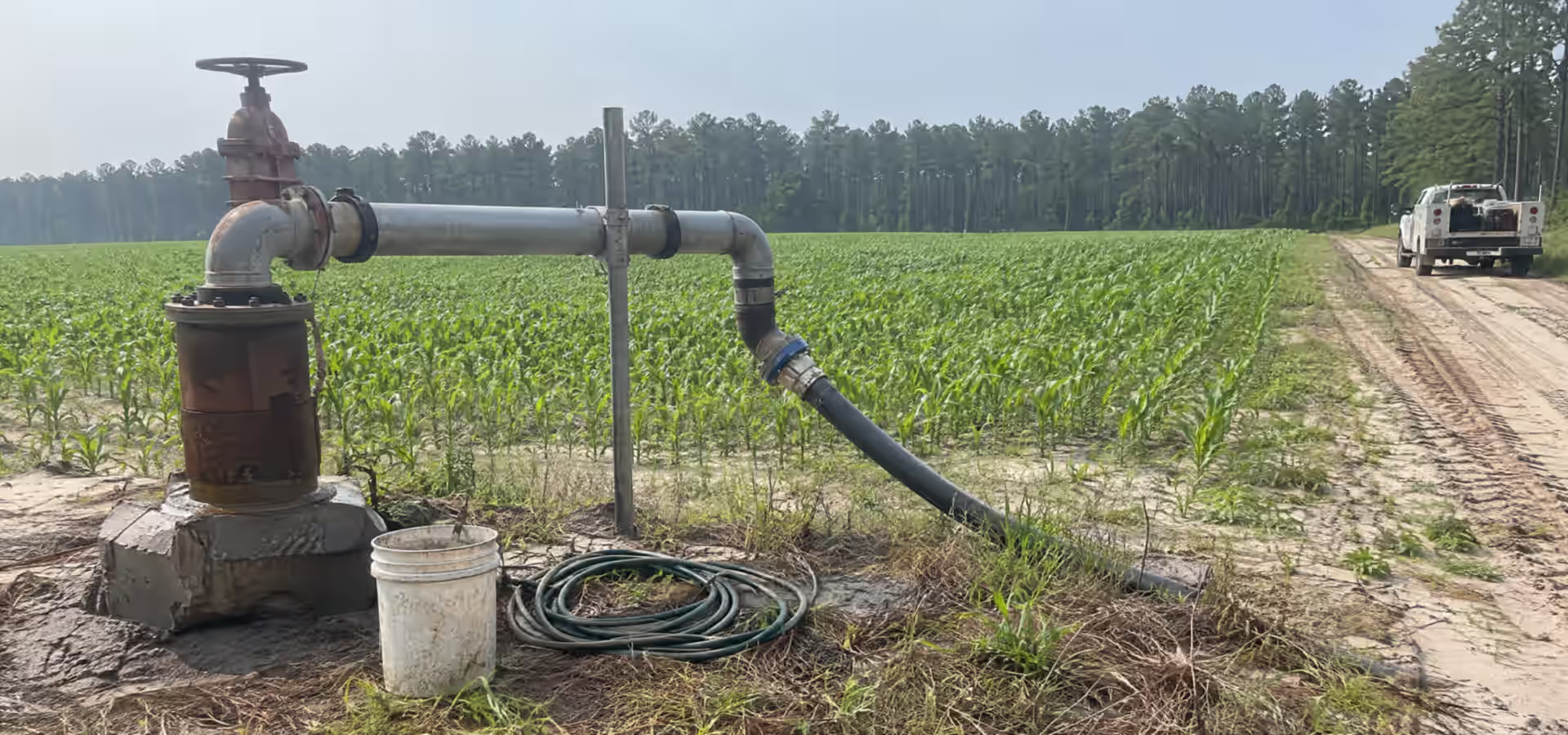
The lawn does not care that the water is softened. You paid for the salt anyway, and then you sprayed it on the grass.Cumberland County, NC
Who we work for
- Well and Pump Service for Farms Stock water, wash-down, irrigation and a farmhouse on one well. Sized on sustained draw, not acreage.
- Well Service for Mobile Home Parks Shared supply with tenants attached. Past 15 connections it stops being a private well at all.
- Well Service for Churches and Camps Idle most of the week, then a full building. The hardest duty cycle in private water supply.
Want it priced properly?
On-site estimates are free, itemized, and written down before any work starts.
Questions we get asked
Do I need a separate well for irrigation?
1 comparison answers it: the sustained flow your largest zone needs against what the existing well delivers over an hour. Irrigation draws steadily for hours where a house draws in short bursts.
How much does an irrigation well cost?
$28 to $60 per ft for drilling plus $400 to $1,200 for casing and a $275 permit, with the pump on top. Construction standards match a domestic well because the aquifer is the same.
Does an irrigation well need a permit?
$275 covers the county permit for an irrigation well, and it applies to irrigation wells as it does to domestic ones. Setback from any septic drainfield governs siting in exactly the same way.
Will irrigation water stain my driveway?
1 element causes it: iron in untreated well water oxidizing where the spray lands. An inline treatment on the irrigation line costs far less than the whole-house filtration a domestic supply needs.
Who drills irrigation wells near me?
Fayetteville Well Pump Repair drills and equips irrigation wells across Fayetteville and Cumberland County, sizing from the irrigation design and yield testing against the actual watering schedule.
Can I connect the irrigation well to my house?
No. A cross connection risks untreated water reaching the drinking supply, so the two systems stay physically separate even where sharing a line would be shorter and cheaper.
An irrigation well is worth drilling where the schedule is genuinely demanding, and worth skipping where a couple of zones run twice a week. The deciding number is the sustained flow the system asks for, and it comes off the irrigation design rather than off the acreage. Where the existing well is the one struggling, a well that has run dry covers why, and water well drilling covers construction in detail.